Distinctive Living’s 2026 senior living marketing trends report describes an industry that has shifted toward “meeting people where they are, with experiences that reflect the lives they want to keep living.” On paper, every agency agrees with that sentiment. In practice, a global consumer survey of nearly 12,000 people across eleven countries found that 78% of respondents said the businesses they deal with don’t genuinely care about them. That gap between intention and perception is the single biggest vulnerability in senior care marketing today, and it’s worth dissecting in detail because the agencies that close it are growing steadily while their competitors keep raising ad budgets.
The Referral Number Nobody Wants to Talk About
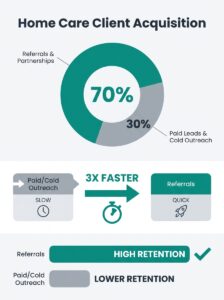
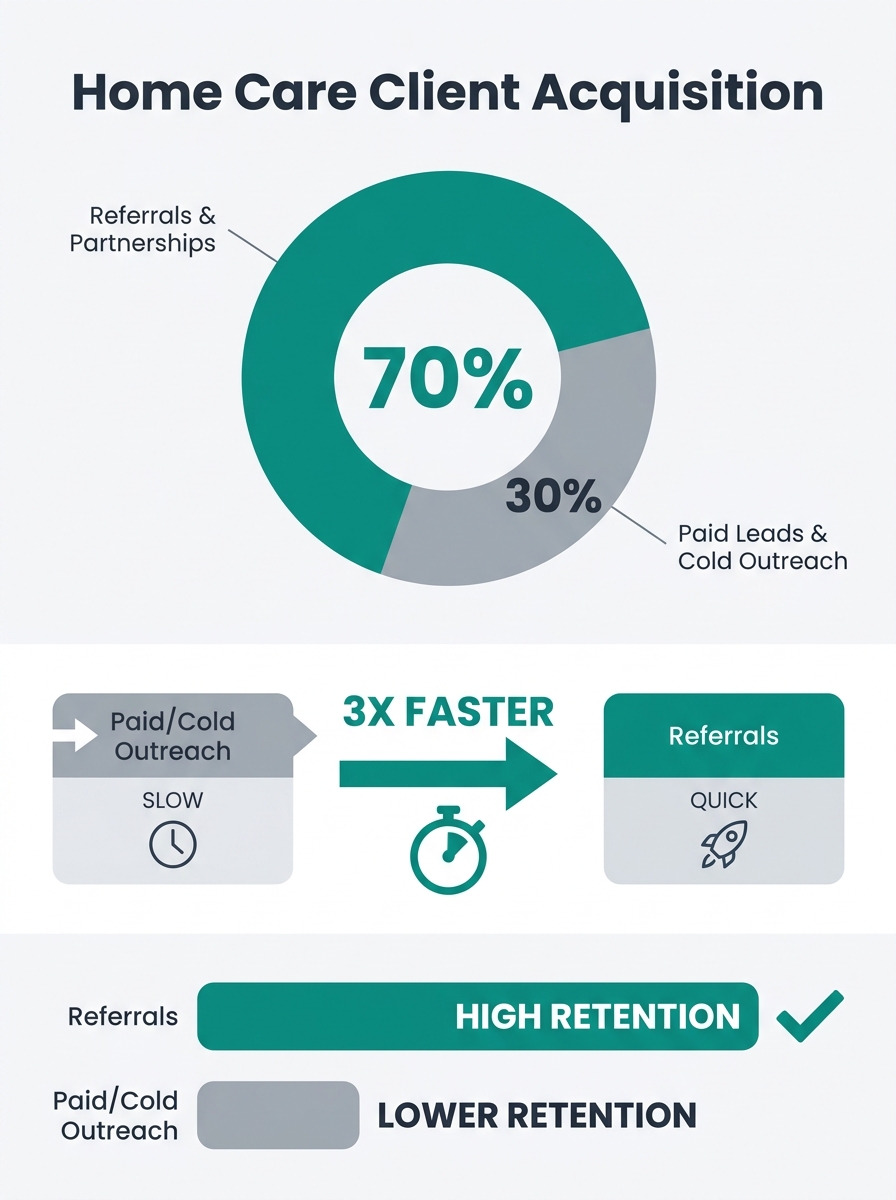
According to CareAcademy industry data, referrals account for nearly 70% of new home care clients. Referred families convert three times faster than paid or cold leads. They churn less frequently, stay longer, produce steadier revenue, and generate their own downstream referrals.
That 70% figure is uncomfortable for agencies that spend the bulk of their marketing budgets on paid search, display ads, and directory listings. If the overwhelming majority of new clients arrive through word of mouth and personal recommendations, then the core question for any home care messaging strategy isn’t “how do we reach more people?” The question is: “Are we giving our current clients and referral partners a reason to talk about us?”
And the answer, for many agencies, is no. The language on their websites is indistinguishable from competitors. The follow-up process after a family tour is transactional. The relationship with referral sources at hospitals and discharge planning offices is maintained by a quarterly lunch drop-off rather than genuine partnership.
Referral-driven growth is empathy-driven marketing for senior care by another name. A daughter who recommends your agency to her coworker does so because she felt heard during a difficult period in her family’s life. A hospital discharge planner who sends families your way does so because your team communicated clearly, showed up when they said they would, and made the transition feel less terrifying. These aren’t random acts of goodwill. They’re the measurable output of an organization that treats emotional attentiveness as operational infrastructure.
If you want to understand how referral sources actually develop in home care, the mechanics are well documented. But the precondition to all of it is trust, and trust starts with how you talk to people.
Seventy-Eight Percent of Families Feel Like Nobody’s Listening
The 78% empathy gap number from the global survey isn’t specific to senior care. It spans industries. But it lands harder here because the stakes are so personal. A family choosing a home care provider or assisted living community is making one of the most emotionally loaded decisions they’ll ever face. They’re navigating guilt, grief, logistical chaos, and often sibling disagreements, all while trying to do right by someone they love.
So when they land on an agency website that reads like a corporate brochure, the disconnect is jarring. Curis Digital’s research on how senior care marketing is evolving emphasizes that effective marketing for home healthcare agencies must resonate with both seniors and the family members helping to select care, “speaking to the unique priorities” of each group. That means your website copy, your Google Business Profile, your email nurture sequences, and your social media posts all need to reflect an understanding of what these families are actually going through.
This is where relationship-based care provider marketing separates itself from feature-based marketing. Feature-based marketing says: “We offer 24/7 care, medication management, and a 1:3 caregiver-to-client ratio.” Relationship-based marketing says: “Your mom might be scared about losing her independence. Here’s how we’ve helped other families work through that fear together.”
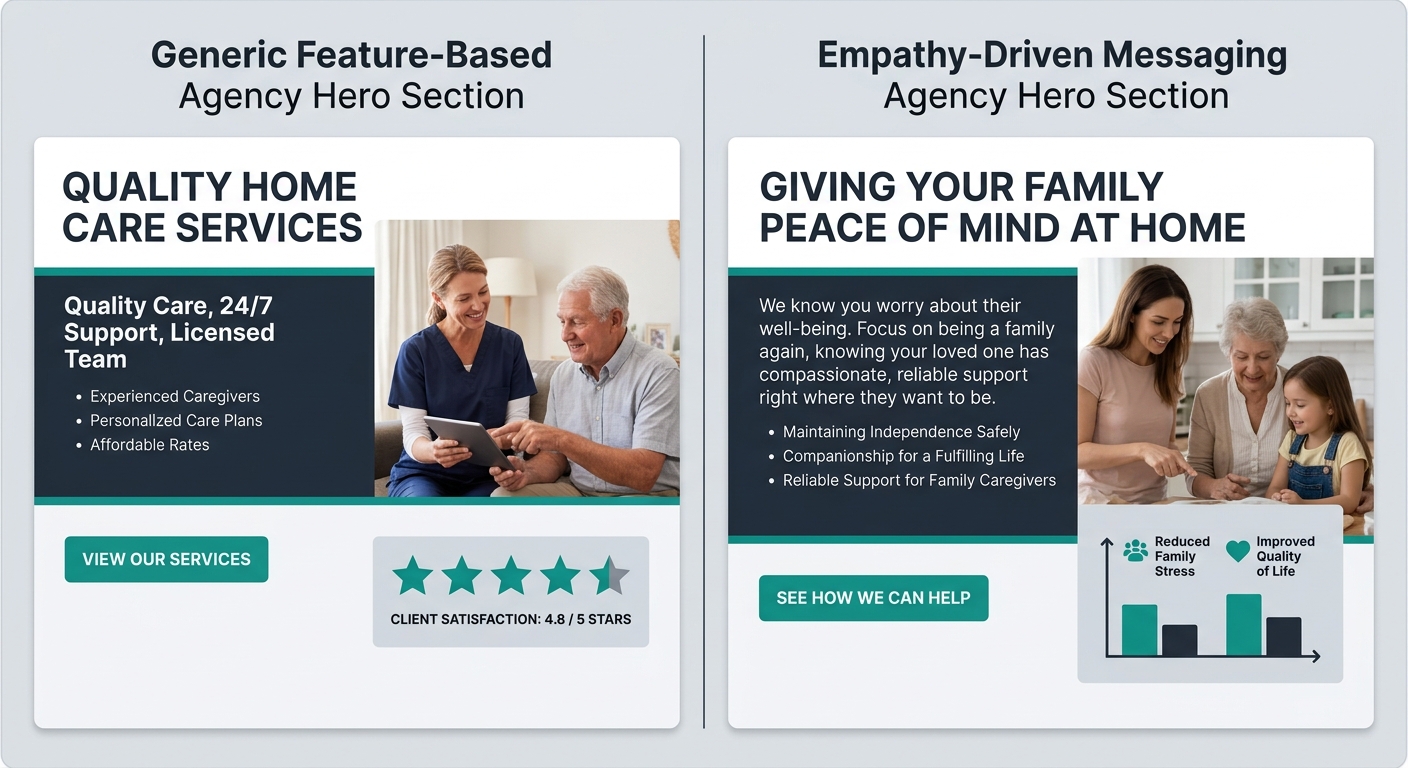
The first approach provides information. The second provides recognition. Families remember the second one. Research into why families choose care facilities based on trust signals rather than feature lists confirms that emotional resonance during the research phase predicts conversion more reliably than amenity checklists.
Families don’t choose the agency with the longest feature list. They choose the one where they felt like someone actually understood what they were going through.
And the dual-audience challenge is real. Adult children and seniors evaluate care options through entirely different lenses. If your SEO strategy and site architecture don’t account for how these two personas search differently, you’re likely speaking past one group entirely.
Trust Before the First Phone Call
Trust-centered senior living campaigns don’t start when a prospect picks up the phone. They start weeks or months earlier, during the quiet research phase when a family member is scrolling Facebook at midnight, reading Google reviews during a lunch break, or comparing agencies on A Place for Mom after a parent’s fall.
The content that matters during this phase has three characteristics: it’s specific, it’s honest, and it acknowledges difficulty. A blog post titled “What to Expect During Your Parent’s First Week of Home Care” that talks openly about adjustment challenges, caregiver personality matching, and the emotional toll on adult children does more trust-building work than a dozen banner ads.
Paradigm Senior Services’ best practices framework for home care agencies points to community involvement as another trust signal that compounds over time. Agencies that participate in volunteer initiatives or organize local fundraising demonstrate genuine commitment to their communities, and those efforts lead to referrals. The dog daycare program in Madeira, Ohio, that brings therapy animals to a local memory care unit is a small example of this principle in action. The partnership generates goodwill, local press, and organic word-of-mouth that no paid campaign could replicate.
For agencies handling sensitive service lines, the trust equation is even more delicate. If your organization provides hospice or end-of-life services, marketing for palliative care requires a level of emotional precision that generic ad templates can’t deliver. The families you’re trying to reach are often in crisis, and they can detect performative empathy immediately.
Client testimonials remain one of the most effective trust accelerators available, but only when they’re presented authentically. A testimonial that reads like it was edited by a marketing department (“The care was wonderful and the staff were amazing!”) does less work than one that includes specific, imperfect, human detail (“Mom didn’t want anyone in the house at first. Diane won her over by bringing puzzles and just sitting with her for the first few visits until she felt comfortable.”).
The Channels That Carry Warmth and the Ones That Don’t
Not every marketing channel is equally suited to empathy-driven messaging. Paid search ads have word count limits that make emotional nuance nearly impossible. Directory listings reduce your agency to a bullet-point comparison. These channels serve a purpose in awareness and lead capture, but they’re terrible at conveying warmth.
The channels where relationship-based care provider marketing thrives are the ones with enough room for storytelling:
- Facebook and Instagram, where adult children do early-stage research and where informal, sincere content performs best. A short video of a caregiver talking about why they love their work lands differently than a stock photo carousel.
- Email newsletters, where a monthly staff spotlight or a short article about seasonal wellness tips keeps your agency present in a family’s inbox. Well-constructed email marketing for care providers builds familiarity over time without pressuring anyone to act before they’re ready.
- Google Business Profile, where review responses give you a chance to demonstrate empathy publicly. How you reply to a one-star review tells prospective families more about your culture than any About Us page.
- Direct mail, which remains effective for reaching seniors who aren’t active online. Personalized brochures or postcards that highlight specific care programs rather than generic promises can bridge the digital divide.
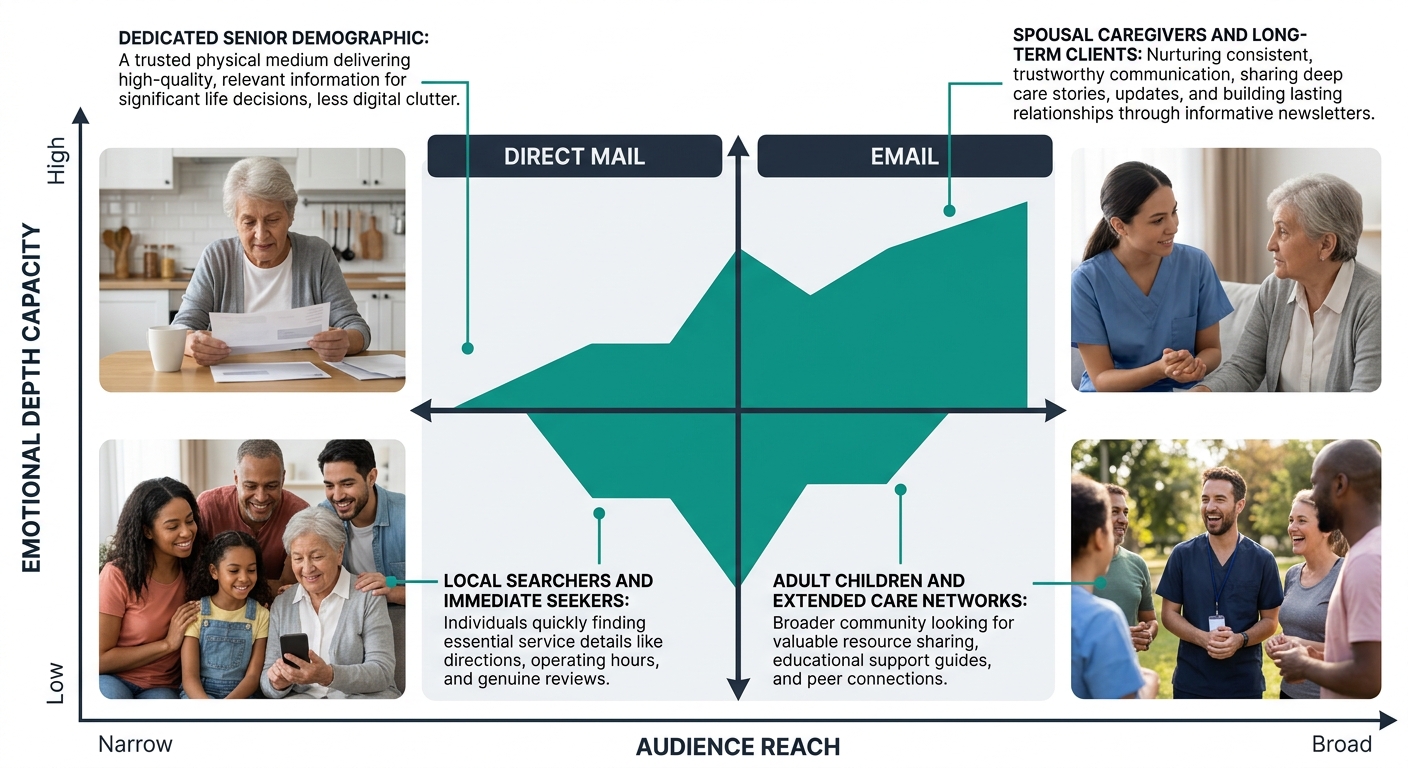
The point isn’t to abandon paid channels. It’s to recognize that your ad budget and your trust budget serve different functions. The ad gets a family to your website. What they find there determines whether they call. And what happens on that call determines whether they choose you. Every stage in this sequence either builds or erodes trust, and the agencies growing steadily have mapped their messaging to match the emotional needs of each moment.
Tip: Audit your agency’s first five touchpoints from a family’s perspective: the Google search result, your website hero section, your intake phone greeting, your follow-up email, and your first in-home visit. If any of those moments feel transactional rather than personal, that’s where trust leaks out.
Why the Quiet Agencies Keep Growing
The agencies that grow most consistently in this industry rarely have the biggest ad budgets or the flashiest websites. They grow because every interaction, from the first website visit to the six-month caregiver check-in, communicates the same thing: we see you, we understand what you’re dealing with, and we take this seriously.
This isn’t a branding exercise you finish in a quarter. It’s an ongoing discipline that touches hiring, training, operations, and yes, marketing. The caregiver who stays because your agency invested in real advancement pathways delivers better care, which generates better family experiences, which produces the referrals that drive 70% of your new business. The loop connects everything.
The 78% empathy gap exists because most organizations treat empathy as a marketing message rather than an operating principle. For senior care agencies willing to close that gap by actually listening to families, training caregivers in relational skills, and communicating with honesty instead of polish, the reward is a growth engine that compounds without requiring louder ads or bigger budgets. Families talk. Discharge planners remember. And the agency that made someone feel understood during the hardest season of their life earns a kind of loyalty that no competitor can buy.