
Elderbloom Strategies documented a senior living provider that executed a pre-built crisis plan after a state survey incident and negative coverage: reputation stabilized, tours resumed on schedule, and zero occupancy decline was recorded. The gap between that outcome and a months-long admissions collapse comes down to preparation, speed, and channel discipline.
Why the First 48 Hours Shape the Next 18 Months
A negative headline about a nursing home or assisted living community travels faster than any internal email chain can process. Family members text each other links. Adult children search the community’s name before their next scheduled visit. Referral sources at hospitals and discharge planning offices see the same story in their Google Alerts. The window between “this just happened” and “this is who they are” is astonishingly small, and the provider’s response during that window determines whether the story becomes a one-day event or an 18-month reputation drag.
Laura Gifford, Director of Marketing and Communications at Providence Place Senior Living, recommends that facilities develop both an annual communications plan and a crisis communications plan well before anything goes wrong. The annual plan governs routine outreach. The crisis plan governs what happens at 7:00 a.m. on a Tuesday when a local news van is in your parking lot. These two documents serve different functions, carry different approval chains, and involve different people. Building both during calm periods means your executive director isn’t drafting language under pressure while a reporter waits on hold.
The crisis plan should include a designated spokesperson, pre-approved holding statements that acknowledge the situation without speculating, and a clear internal escalation path. According to MedBest, crisis planning should include strategies for keeping residents, families, and staff informed through email, phone, text, and website updates simultaneously. A single channel won’t reach everyone. Families who signed up for email updates 3 years ago may not check that inbox regularly. Staff who work overnight shifts may miss a morning all-hands. The goal is redundancy: every stakeholder hears the provider’s account of the situation before they hear anyone else’s.
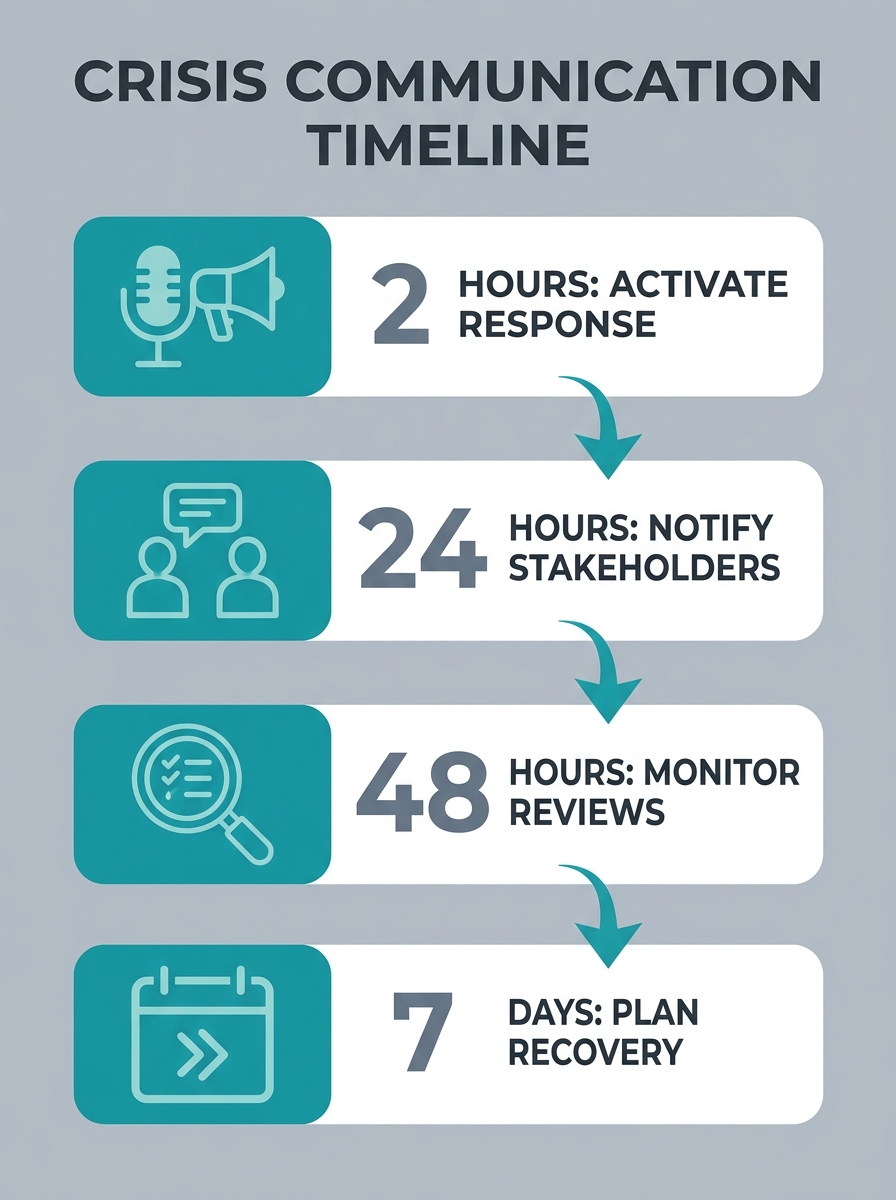
Pre-approved holding statements deserve specific attention because they’re where most providers freeze. A holding statement isn’t a press release. It’s 3 to 5 sentences that confirm awareness of the situation, express concern for residents and families, note that an internal review is underway, and promise a more detailed update within a specific timeframe. The specific timeframe matters because it gives the media a reason to wait rather than fill the silence with speculation. Saying “we will provide an update by 5:00 p.m. today” is measurably more effective at slowing the news cycle than saying “we will share more information soon.” Reporters have deadlines, and if your timeline aligns with theirs, you stay in the conversation rather than becoming the subject of a story built without your input.
The Architecture of a Senior Care Media Response
When a nursing home negative press response goes wrong, the failure almost always traces back to one of two mistakes: either the provider said nothing and let others define the narrative, or the provider said too much and created secondary headlines. The middle path requires discipline and specificity. Your response should confirm only what you know to be true, describe the actions you’re taking in concrete terms, and avoid language that sounds defensive or dismissive. “We take all concerns seriously” is the kind of phrase that sounds reasonable in a conference room and hollow in a news story. Compare it with: “We’ve initiated an internal review led by our Director of Nursing, and we’ve contacted the families of the residents directly affected.” The second version gives the reporter a fact to print and gives the family a reason to believe something is actually happening.
For providers managing an assisted living reputation crisis, the temptation to issue a long, explanatory statement is strong. Resist it. Long statements get edited by newsrooms, and the sentences that survive the edit are the ones that sound worst out of context. Keep initial statements under 100 words. Save the longer explanation for direct family communications, where you control the format and the audience is already invested in hearing your full account. SmartBug Media confirms that sending recorded telephone messages and emails to residents and their families simultaneously covers the most ground in crisis notification. That dual-channel approach ensures the family member who doesn’t check voicemail still gets the email, and the one who ignores email still gets the call.
Your staff needs its own version of the message, too, and they need it before the media version goes public. Caregivers, CNAs, and front-desk staff will be asked questions by visiting family members and by their own relatives who saw the story. If they don’t have a clear, simple understanding of what happened and what the provider is doing about it, they’ll fill the gap with their own interpretation. Given that the home care industry reported 79% caregiver turnover rates and many staff members are relatively new to their roles, assuming institutional knowledge during a crisis is a mistake. Write a one-page internal FAQ that gives staff approved language for common questions: “What happened?” “Is my loved one safe?” “Who do I talk to for more details?” Each answer should be 2 sentences and should direct the conversation to the designated spokesperson for anything beyond the basics.

Rebuilding Trust When the Coverage Goes Evergreen
The initial crisis passes in days. The Google results last for years. This is where senior care crisis communication transitions from reactive media management to active care provider online reputation repair, and it’s the phase most providers underestimate. Search your community’s name right now, and whatever appears on the first page of results is what every prospective family sees during their research process. If a negative news article sits in position 3 or 4 on that results page, it’s influencing decisions regardless of how old it is.
The repair work begins with review volume. A single 1-star review stings, but 2 positive reviews published in the same week dilute its visibility significantly. Building a consistent review generation system through Google Business Profile gives you the volume you need to push negative sentiment down the page. One senior care facility described their approach to iAdvance Senior Care: “We use Reputation as our review management platform, so we get all of our reviews in one spot with daily alerts.” That centralized monitoring means the person responsible for responses sees every review within hours, not days. When a negative review arrives, Cardinal Digital Marketing advises taking the conversation offline to hear the complainant out in a private setting, because public debates on review platforms produce no winners.
One critical warning on response tone: Craft and Communicate found that “automated responses that feel robotic can harm your reputation” rather than help it. Using AI tools as a starting draft is fine, but every response needs personalization that reflects your community’s actual tone and the specific concern raised. A response that says “Thank you for your feedback, we value all our residents” reads as a template. A response that says “I’ve shared your concern about the dining schedule with our food services director, and she’d like to speak with you directly” reads as a facility that listened and acted.
The positive content side of the equation matters equally. Elderbloom Strategies showed that proactive PR efforts produced 14 media placements in 90 days for a community facing a census crisis, driving occupancy from 61% up to 97%, a 36-percentage-point swing. That kind of recovery doesn’t come from paid ads alone. It comes from publishing resident stories, hosting community events that attract local press, creating educational content around family decision-making processes, and ensuring your Google Business Profile is fully optimized so your owned content outranks third-party coverage. Every piece of positive content you publish pushes negative coverage further down the search results, and search position decay is your best long-term ally.
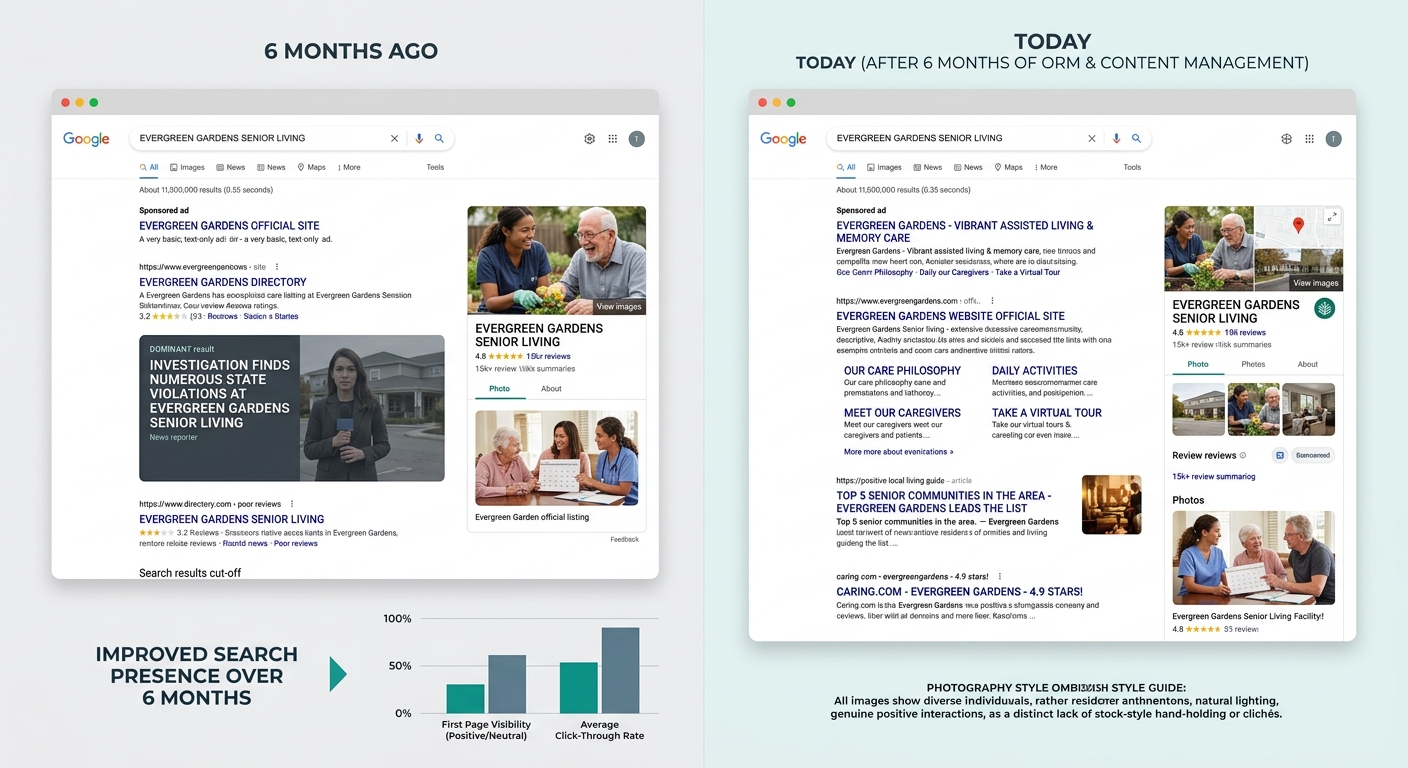
Every piece of positive content you publish pushes negative coverage further down the search results, and search position decay is your best long-term ally.
What Even Good Playbooks Miss
The honest reality of senior care media response planning is that no document fully prepares a team for the emotional weight of the moment. A crisis in senior care carries stakes that crisis plans in other industries don’t account for. The residents at the center of the story are someone’s parent, grandparent, spouse. The staff members reading the headlines are people who chose this work because they care, and watching their facility described in damaging terms hits differently than a product recall at a consumer goods company. A good playbook covers the mechanics. It rarely covers the morale.
There’s also the question of how deeply a crisis exposes operational gaps that existed before the headlines arrived. If the negative press stems from a staffing shortage, the communication plan can manage the story, but it can’t fix the underlying economics of caregiver turnover that created the shortage in the first place. If the crisis involves a compliance failure, the PR response buys time, but the compliance remediation is what actually resolves the risk. Providers who treat crisis communication as a substitute for operational improvement end up managing recurring crises rather than preventing them.
The providers who emerge from negative press stronger than before share one trait: they treat the crisis as diagnostic information. The coverage revealed a gap, and they closed it visibly, publicly, and permanently. Then they told that story through their own channels, their own content, and their own community relationships until the repair narrative became the dominant one. That process takes 6 to 12 months of consistent effort. It requires patience, resources, and a willingness to be transparent about what went wrong. And it remains the only reliable path from reputation damage back to trust.