
Senior living operators should educate families about proactive community transitions rather than crisis-driven placements, according to a commentary published July 11 by Lindsey Lavery, chief sales and marketing officer for Franciscan Ministries, which operates Franciscan Village in Lemont, Illinois.
TL;DR: Senior living executive argues emergency-driven moves strip families of choice and dignity; proactive planning allows seniors to select communities aligned with values rather than accepting whatever bed is immediately available during hospital discharge.
Lavery’s piece in the Times Leader contrasts what she calls the “compulsion mindset”—moves triggered by falls, acute medical events, or rapid health decline—with deliberate planning that allows families to tour multiple options and evaluate cultural fit. The commentary offers senior care providers a consumer-education framework for marketing messaging that positions early planning as preferable to crisis decision-making.
The Crisis-Driven Placement Pattern
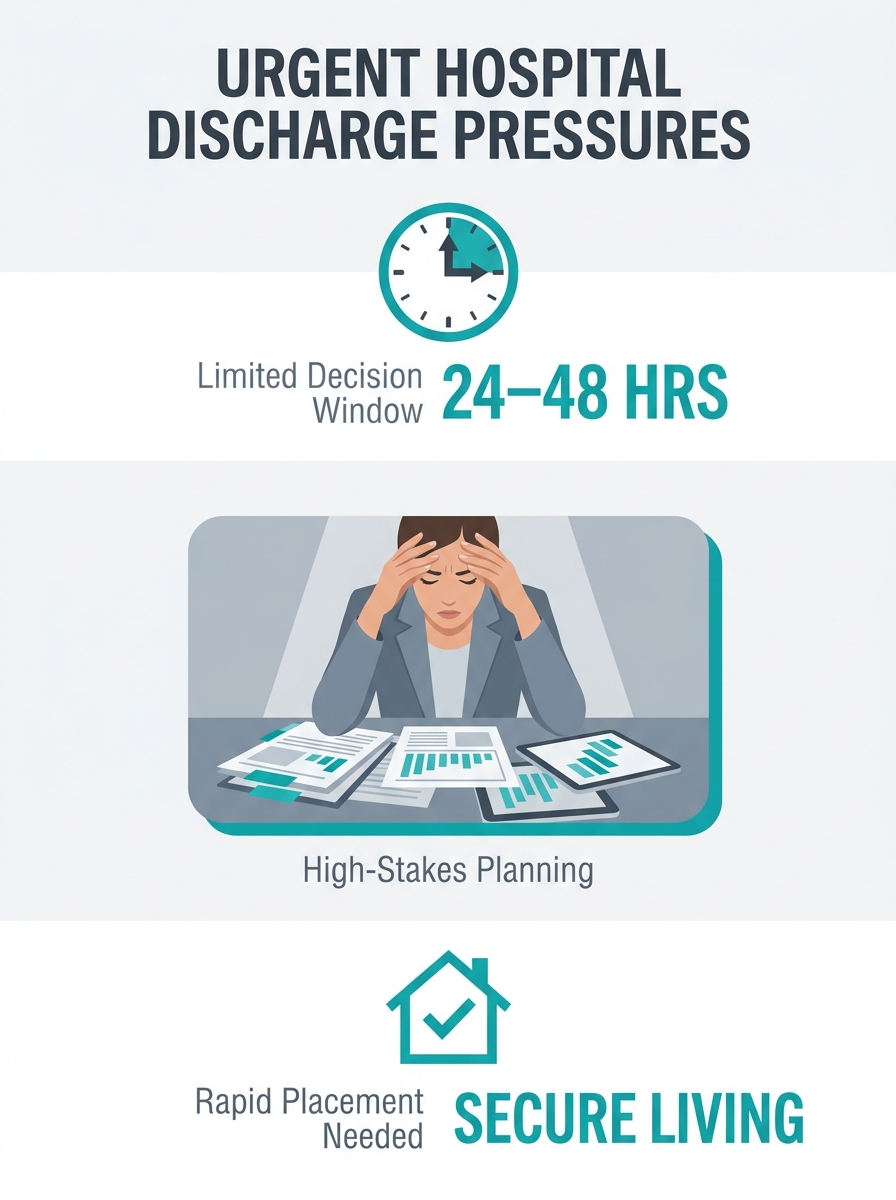
Families arrive at Franciscan Village “exhausted, overwhelmed and under immense pressure” every week following late-night emergency calls, Lavery wrote. Hospital discharge planners must secure immediate destinations for rehabilitation or long-term care to free hospital beds, compressing the decision timeline into days or hours.
“When a family waits for an emergency to dictate a move, they unknowingly surrender their power of choice,” Lavery stated in the commentary. Under crisis conditions, families choose “what is available and immediate, rather than what is optimal and fulfilling.”
Emergency-driven moves shift focus entirely to physical care needs, overshadowing emotional, social, and spiritual wellness dimensions, according to Lavery. Seniors often experience resentment because the decision felt forced by circumstance rather than chosen with dignity.
The Proactive Alternative
When seniors explore community living before a health crisis, the transition becomes “an enabling step forward” rather than a reactive retreat, Lavery wrote. Independent living residents moving on their own terms prioritize reducing property maintenance burdens and winter snow removal stress while cultivating passions in social communities.
Proactive planning allows time to identify campuses aligned with personal values. Many Franciscan Village residents sought a faith-based setting where they could walk a Stations of the Cross path or attend Mass in the campus chapel, according to Lavery.
“One of the greatest acts of stewardship we can practice is protecting our families from future chaos,” Lavery wrote. Early transitions give adult children “the gift of relief” by eliminating crisis management scrambling rather than forcing them to piece together emergency care plans.
Senior care providers can use this consumer-education angle in content marketing that frames the decision timeline, helping families understand the trade-offs between emergency-driven and planned transitions. The messaging aligns with research showing care seekers benefit from staged decision-making processes rather than compressed timelines.
Industry Context on Decision Timing
Lavery’s commentary echoes findings from senior living operators who track admission patterns. Families making proactive moves typically tour three to five communities and spend weeks evaluating options, while crisis-driven placements often involve accepting the first available bed that meets immediate medical needs.
The distinction matters for reputation management for home care and senior living operators, whose online reviews and referral patterns reflect whether families felt rushed or supported during the decision process. Providers that educate families about planning timelines before emergencies strike position themselves as advisors rather than vendors competing for urgent placements.
Continuing care retirement communities like Franciscan Village operate under a model where residents enter at independent living levels and access higher care tiers as needs change. The proactive-planning message suits this structure, which requires families to understand long-term care continuums rather than emergency rehabilitation beds.
What Happens Next
Senior care marketing teams can adapt Lavery’s “compulsion mindset” framing into educational content that helps families recognize the difference between planned and emergency-driven transitions. Blog posts, email nurture sequences, and family consultation scripts that contrast the two paths give decision-makers permission to plan before a crisis forces action.
The commentary provides a consumer-education template that positions communities as advocates for family dignity rather than transactional bed-fillers. Operators who publish similar thought leadership—bylined pieces in regional news outlets, case studies showing proactive vs. reactive admission patterns, or testimonials from families who avoided emergency placements—build trust with referral sources and direct-inquiry families.
Providers should consider developing planning-timeline content that walks families through the questions proactive transitions allow them to answer: Which communities align with faith values? What social activities match hobbies? How does the campus layout support long-term mobility needs? Families making decisions under hospital discharge pressure rarely ask these questions, according to Lavery’s account.