Quinard McDonald founded Someone To Lean On (SOLO), a national caregiver support community, after spending eight years as his mother’s full-time caregiver following a decision that ended his 36-year career in military and government service, according to International Business Times. The organization addresses isolation among the approximately 59 million family caregivers nationwide who provide unpaid care for aging relatives while balancing financial responsibilities and their own health.
TL;DR: A veteran who left his career to become his mother’s caregiver launched Someone To Lean On to connect isolated family caregivers with peer support and resources, highlighting community-building as a retention strategy for the nation’s 59 million unpaid caregivers.
McDonald served 21 years in the military and another 15 years in government before his mother’s serious fall forced him to choose between his career and caregiving. “Nobody’s ever called me and said, ‘Do you need any help,’ and that made me think that I can’t be the only one going through that,” McDonald said in the interview published July 1.
The Isolation Pattern Behind Caregiver Burnout
Family caregivers nationwide report that isolation compounds the physical demands of care work. McDonald’s experience mirrors findings in a recent national survey showing 90% of family caregivers report burnout symptoms, with emotional isolation cited as a primary factor. “Caregivers should actually talk to other caregivers because nobody truly knows what you’re experiencing unless they’ve been through it themselves,” McDonald explained.
Gloria Moore, whose caregiving experience spans more than 40 years beginning in 1984 when she became her mother-in-law’s caregiver, reinforced McDonald’s observation. Moore cared for multiple family members with Alzheimer’s disease and other conditions, often without formal support networks. “My husband and I, we did the majority of the caregiving. You just have to step up and do what you need to do because of the love you have for your loved one,” Moore said.
Moore’s caregiving responsibilities eventually affected her own health, a pattern she believes many caregivers share. “A lot of times, the caregiver themselves, their body starts to break down, and then the mind begins to weigh in,” Moore said. She experienced depression for years before recognizing the symptoms, an outcome she now sees as common among isolated caregivers.
Community Model Connects Caregivers to Resources and Peers
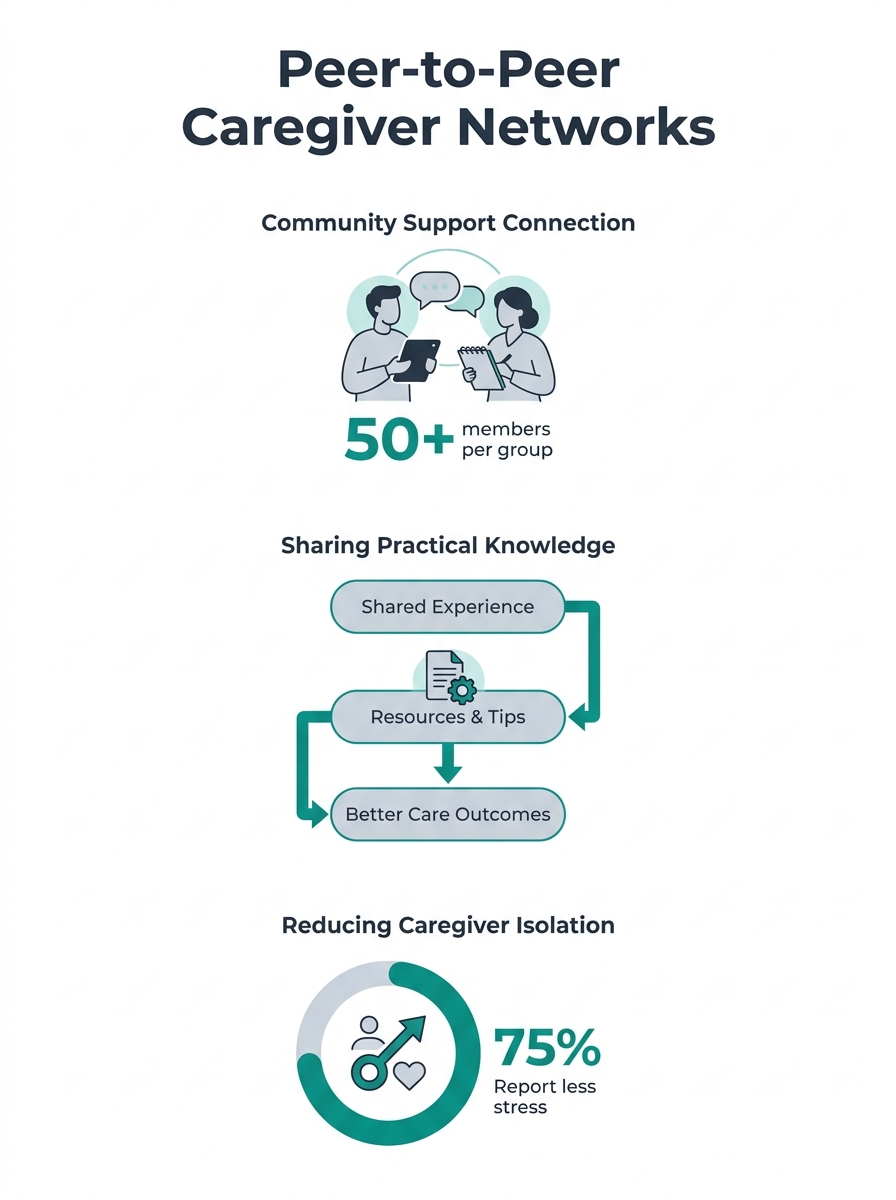
Someone To Lean On operates on the principle that caregivers need both practical resources and human connection. McDonald reported learning about public programs offering in-home caregiving assistance only after years in the role—opportunities many families miss because information doesn’t reach them. The organization aims to surface these resources while building peer networks where caregivers share strategies and emotional support.
McDonald emphasizes self-care as essential to sustainable caregiving. “You’ve got to exercise your mind, body, and spirit. If you slow down, you go down,” he said. SOLO plans future podcasts and community programming featuring healthcare professionals, attorneys, psychologists, and wellness experts covering topics from stress management to dementia care and legal planning.
Moore developed a therapeutic program during her mother’s care that combined social activities rooted in her mother’s pre-illness experiences. Moore reported the approach contributed to her mother’s progression from stage 7 dementia to stage 1, though the article does not specify the timeframe or medical verification of this outcome. “I can get you back to some sort of independence, but it will take work,” Moore recalled telling her mother.
Advance Planning as Crisis Prevention
McDonald encourages families to establish powers of attorney and healthcare directives before caregiving crises arrive. “People need to have those things established ahead of time. Caregivers give up so much of their lives,” he said. The guidance addresses both legal protection for aging relatives and financial security for family members who leave careers to provide care.
Moore believes advance planning prevents family conflict during medical emergencies. After navigating legal and financial challenges while caring for multiple relatives, she treats early documentation as a protective measure for both care recipients and caregivers.
The organization’s focus on preparation reflects McDonald’s view that healthcare systems emphasize patient care while overlooking the people providing daily support. “Caring for someone shouldn’t mean feeling like you’re by yourself. Something needs to be addressed right now,” McDonald said.
Reading Between the Lines
Home care agencies, nursing homes, and assisted living communities competing for caregiver workforce face the same isolation dynamic that Someone To Lean On addresses for family caregivers. Professional caregivers frequently work solo shifts, miss team connection, and experience the emotional weight of client relationships without structured peer support—conditions that drive the turnover patterns agencies track through onboarding metrics.
The SOLO model offers a template worth examining: peer networks, resource navigation, and proactive wellness programming. Agencies that treat caregiver retention as a community-building challenge rather than a compensation-only problem may find McDonald’s emphasis on “someone to lean on” applies as directly to professional staff as to family caregivers. The 59 million unpaid caregivers represent both the audience agencies serve and a talent pool that understands care work intimately—if the job offers the connection their family role lacked.
Moore’s four-decade caregiving arc demonstrates retention through meaning and support rather than isolation and depletion. Agencies competing in tight labor markets might audit whether their careers page messaging speaks to that need for community or simply lists shifts and pay rates.