
According to the Private Duty Benchmarking Study, 19.5% of home care agency referrals come from past and current clients and their loved ones, making personal recommendations the single largest source of new business. That same word-of-mouth dynamic applies to staffing. Employees who already know what it’s like working for your agency are uniquely well-positioned to evaluate whether someone in their network would thrive in an open caregiving role, as AxisCare’s recruitment white paper notes. When you formalize that instinct into a structured caregiver referral program, you convert scattered recommendations into a reliable pipeline.
The rest of this piece breaks down how to build one, what the numbers say about incentive structures, and where agencies tend to lose momentum.
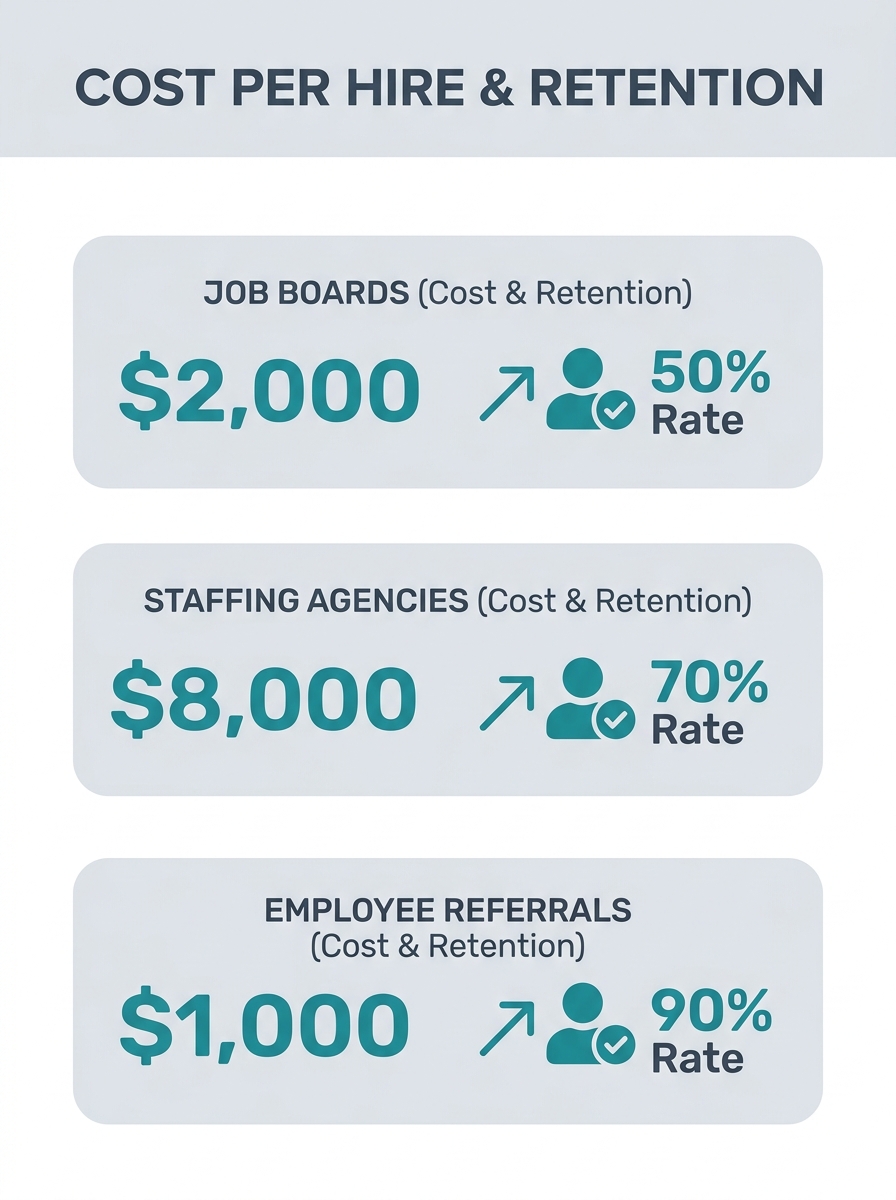
Why Referrals Outperform Job Boards on Cost and Retention
Traditional recruiting channels eat budget fast. Between posting fees on Indeed, sponsored listings on CaregiverJobs, and the administrative time spent screening unqualified applicants, many agencies spend $1,200–$2,500 per hire. Referral programs shift a portion of that spend directly to your existing workforce, and the economics tend to be favorable: you pay only when a referred candidate actually starts working, and the cost per hire is typically lower than third-party recruiter fees.
But the real advantage isn’t financial. Referred caregivers arrive with a built-in understanding of your agency’s culture, schedule expectations, and client population because the person who referred them has already explained all of it. That pre-screening, informal as it is, tends to produce better retention. Agencies with active employee recruitment incentives regularly report that referred hires stay longer than hires sourced from cold applications.
If you’ve been spending most of your energy on finding external referral sources for your home care agency, internal referrals deserve equal attention. They’re a different channel solving the same problem.
Designing an Incentive Structure That Actually Motivates
The biggest mistake agencies make is assuming a flat $50 gift card will generate referrals. It won’t. Your caregivers are doing physically and emotionally demanding work for modest pay. A referral bonus needs to feel meaningful relative to their income.
Chosen Family Home Care, for example, pays $300 for every qualified referral, with the first $100 hitting the referrer’s paycheck after the new hire’s first day. That tiered structure does two things: it creates an immediate reward (which keeps participation high) and a delayed reward (which incentivizes the referrer to help the new hire succeed during onboarding).
Aaniie, formerly Smartcare Software, recommends offering a combination of incentives rather than a one-size-fits-all bonus. Their reasoning is sound: some caregivers prefer cash, others value paid time off, and still others respond to gift cards for specific retailers. Surveying your team about what they’d actually want is a ten-minute exercise that can dramatically change participation rates.
A Sample Tiered Payout Schedule
Here’s one structure that balances urgency with retention:
- $75 when the referred caregiver completes their first shift. This is the quick win that keeps your staff thinking about referrals.
- $100 at the 30-day mark. By now you know whether the hire is showing up reliably.
- $125 at the 90-day mark. This is your retention milestone. If the new hire is still active at 90 days, your referrer has earned $300 total.
You can adjust these numbers based on your market. Agencies in high-cost metro areas with fierce competition for caregivers may need to push the total to $400–$500 to compete. Rural agencies with lower turnover might do fine at $200.
Tip: HHAeXchange suggests building a broader point system where caregivers earn points for on-time arrivals, client satisfaction scores, and referrals. Points can be redeemed for bonuses or perks. This wraps your referral program into a larger recognition framework and keeps it visible week to week.
Keeping the Submission Process Simple
A caregiver referral program dies when the process feels like paperwork. If your staff has to fill out a three-page form, email it to HR, and then follow up to confirm it was received, they won’t bother.
The most effective programs use one of two approaches:
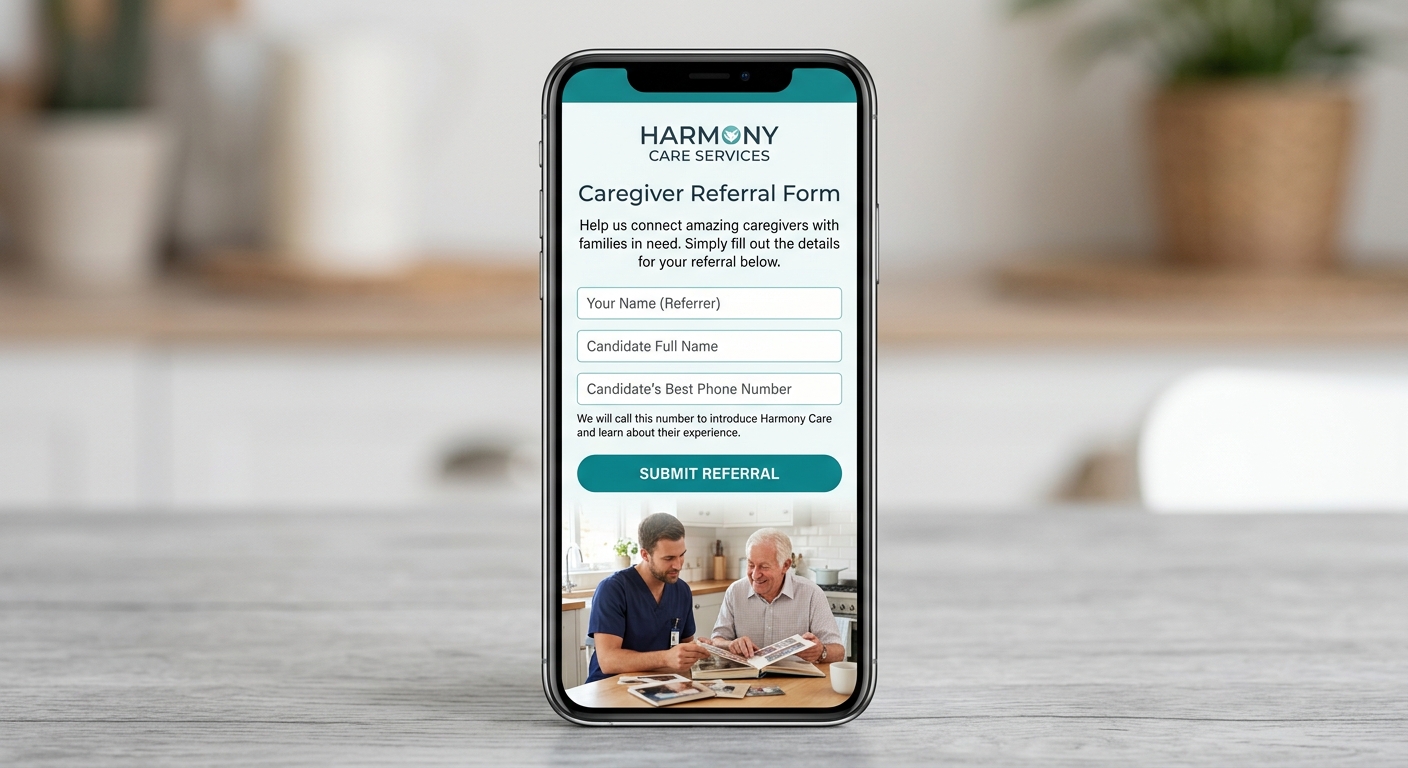
- A simple online form with three to five fields: referrer’s name, candidate’s name, candidate’s phone number, candidate’s relationship to referrer, and an optional note about why they’d be a good fit.
- A dedicated phone number or text line where a caregiver can send a referral in under 60 seconds.
Either approach needs to be accessible on a phone. Your caregivers are working in clients’ homes, not sitting at desks. If you’ve read about why clunky mobile applications lose caregiver candidates, the same principle applies here. A referral form that doesn’t load properly on a smartphone is a referral form nobody uses.
Track every submission in a spreadsheet or your ATS so you can measure which caregivers refer most often, which referrals convert to hires, and which referral hires stay past 90 days. This data tells you whether your program is working and where to invest more.
Promoting the Program Without Letting It Go Stale
Launching a referral program is easy. Keeping it alive three months later is the hard part. Agencies that treat the program as a one-time announcement see participation spike in week one and flatline by week six.
Build referral reminders into the rhythms your team already follows:
- During onboarding: New hires should learn about the referral program on their first day. They’ve just left another job and likely know other caregivers who might be considering a change.
- At weekly or biweekly check-ins: A 15-second mention from a care coordinator keeps the program top of mind.
- Through group text or app notifications: If you use a scheduling app like ClearCare or AxisCare, post a monthly update showing how many referral bonuses have been paid out. Social proof works on your staff the same way client testimonials work on prospective families.
- Seasonal pushes: Increase the bonus by $50–$100 during your historically hardest months to fill shifts. January and summer tend to be rough for many agencies.
A referral program that lives only in your employee handbook is already dead. It needs to show up in conversations your caregivers are already having.
Recognizing Top Referrers Publicly
When a caregiver refers someone who gets hired and sticks, celebrate it. A shout-out in a team group chat, a small additional gift, or a “Referrer of the Quarter” recognition costs almost nothing and signals to the rest of your staff that the program is real, active, and valued. Agencies that invest in home caregiver marketing services often find that internal culture-building and external brand-building reinforce each other: happy staff refer better candidates, and better candidates deliver better care, which drives client satisfaction and online reviews.
Expanding Beyond Internal Referrals
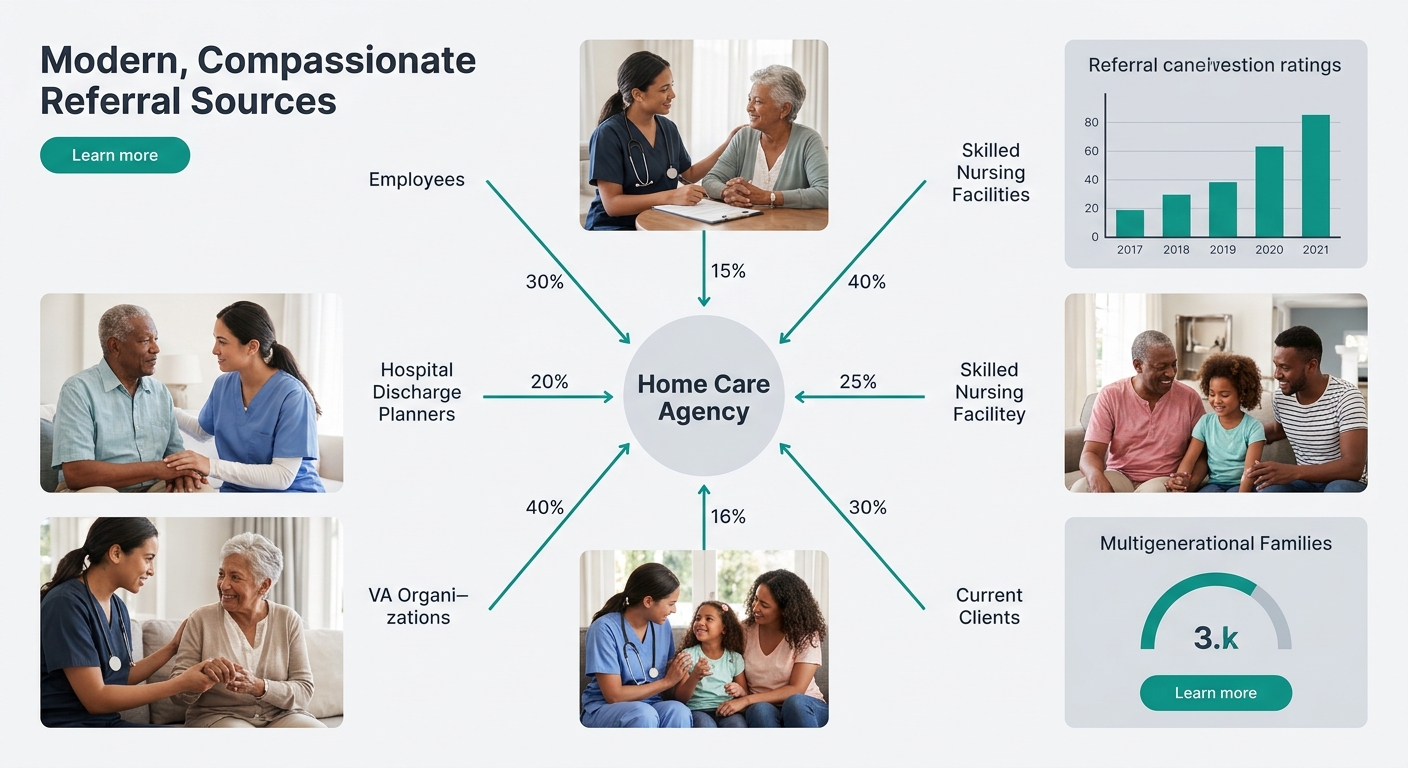
Your employees are the core of a word-of-mouth hiring system, but they aren’t the only channel. The same benchmarking data that shows 19.5% of business referrals from clients also reveals that 8.8% of referrals come from hospital discharge planners and 5.9% from skilled nursing facilities. These relationships can generate candidate referrals too. A discharge planner who trusts your agency may also know CNAs or HHAs looking for home care positions.
Veterans organizations represent another overlooked pipeline. Third-party groups that help veterans access Aid & Attendance benefits often contract directly with preferred home care agency partners, and the VA’s Homemaker Program channels funded referrals through regional VA hospitals. If you serve veteran clients, the staff connections that come with those contracts can also surface caregiver candidates.
And if you’re investing in writing stronger caregiver job ads, consider adding a line about your referral bonus at the bottom. Candidates who see that you reward referrals understand they’re walking into a workplace where the existing team wants to be there. That’s a signal worth sending.
Measuring Program Health Over Time
A referral program needs a handful of metrics tracked monthly:
- Referral submission rate: How many referrals are coming in per month, and from how many distinct employees?
- Conversion rate: What percentage of referred candidates actually get hired?
- 90-day retention rate for referral hires vs. non-referral hires: This is the number that justifies the program’s existence. If referral hires retain at 60% and job-board hires retain at 35%, the math speaks for itself.
- Cost per referral hire: Total bonus payouts divided by total referral hires. Compare this to your cost per hire from other channels.
- Time to fill: Referral candidates often move through the hiring process faster because they arrive pre-vetted by someone who understands the role.
If your submission rate drops below two or three referrals per month across your entire team, something is wrong. Either the incentive isn’t compelling enough, the process is too cumbersome, or your staff has stopped hearing about it. Each of those problems has a different fix, and the data will tell you which one you’re facing.
What The Numbers Still Can’t Predict
The data makes a strong case for building your home care staffing solutions around employee referrals. The cost savings are real, the retention improvements are documented, and the benchmarking studies consistently rank personal recommendations as the top channel.
What the numbers can’t capture is the quality of the relationships your caregivers bring into the agency. A referred hire who’s the referrer’s close friend may stay longer because they have a social anchor at work. Or they may leave faster if that friend burns out and quits. The interpersonal dynamics are invisible in the spreadsheet but very real in your day-to-day operations. Agencies that pair referral programs with genuine investment in caregiver wellbeing, fair scheduling, and competitive wages tend to see the compounding effect: good conditions produce good referrals, and good referrals reinforce the culture that attracted them. Agencies that bolt a referral bonus onto a workplace people are quietly trying to leave will find the program generates noise but little signal. The bonus gets you attention. The work environment determines whether that attention converts into applicants who stick around.