
California Gov. Gavin Newsom signed Assembly Bill 2324 on July 17, integrating youth caregiving experience into the state’s Career Technical Education framework and creating a formal pathway for hundreds of thousands of young caregivers to enter healthcare and social service professions starting January 1, 2027, according to an announcement by Assemblyman Jeff Gonzalez, R-Indio, the bill’s sponsor.
TL;DR: California’s AB 2324 recognizes informal caregiving by youth as qualifying experience for vocational healthcare training, addressing workforce shortages by legitimizing skills developed through family care responsibilities.
Law Formalizes Caregiving Experience as Professional Credential
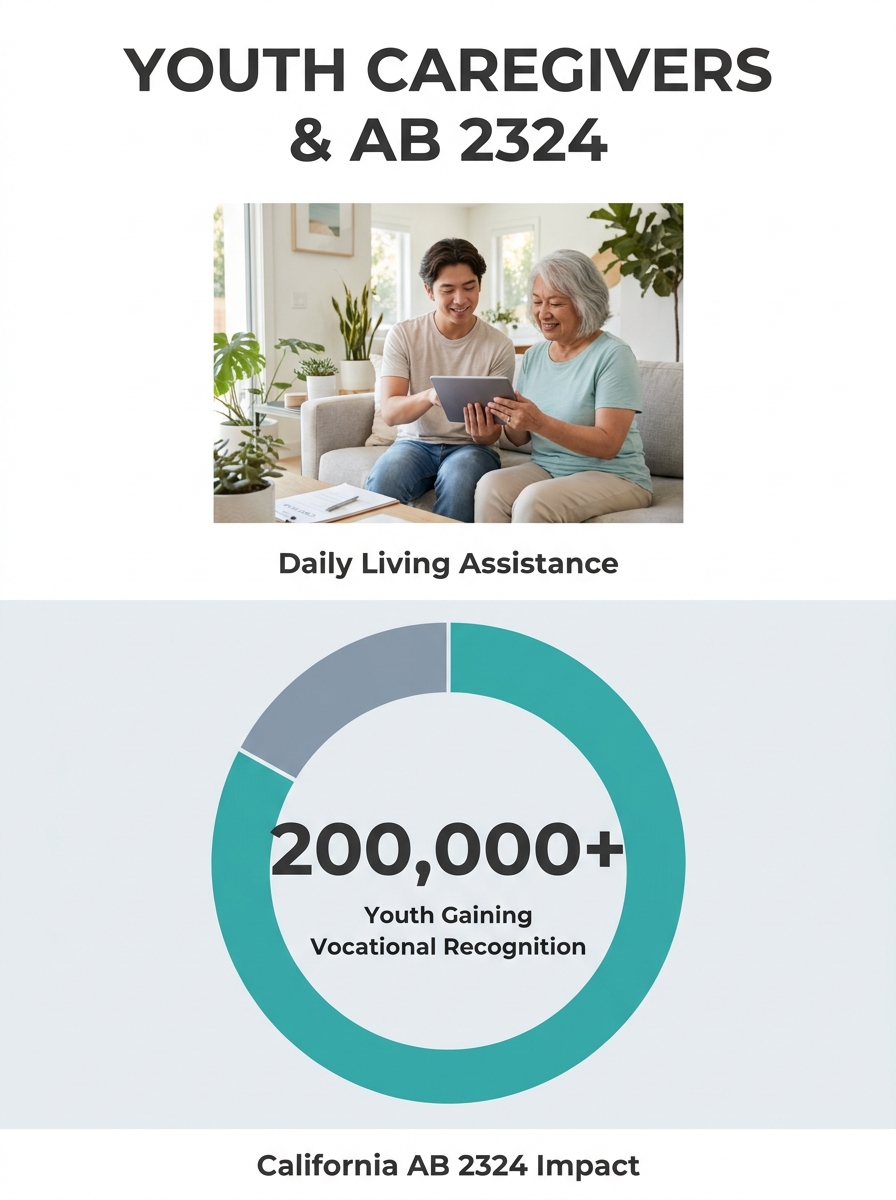
The legislation directs California’s vocational curriculum to recognize skills developed by children and teenagers who assist parents, grandparents, or siblings with chronic illnesses, disabilities, or aging-related needs. AB 2324 aligns hands-on home caregiving experience with formal Career Technical Education pathways in nursing, medical assisting, clinical support, social work, community advocacy, and direct support professions serving individuals with intellectual and developmental disabilities.
Young caregivers frequently balance household care responsibilities with education, the bill’s text notes. By acknowledging these responsibilities as vocational preparation rather than academic obstacles, the law creates structured entry points into professions facing documented workforce shortages.
Sponsor Cites Personal Experience Caring for Son
Gonzalez said the legislation stems from his family’s experience caring for his son, RJ. “My wife, our children, and I have experienced firsthand the love, sacrifice, and responsibility that come with caring for RJ,” Gonzalez said in the announcement. “Across California, hundreds of thousands of young caregivers quietly do the same every day for someone they love.”
The assemblyman added that the law sends a direct message to young caregivers: “We’re telling those young people that we see them, we value them, and the skills they’ve developed matter.”
Bipartisan Coalition Backs Workforce Pipeline
AB 2324 secured bipartisan support in the California legislature and sponsorship from the Association of Regional Center Agencies, the California Association of Public Authorities for IHSS, and the California Association of Local Behavioral Health Boards & Commissions. Gonzalez credited Newsom with “bridging the political aisle to support California’s families” and creating “opportunities for the next generation of healthcare and direct support professionals.”
The law takes effect at the start of 2027, with implementation details to be determined by the California Department of Education’s CTE division in coordination with regional occupational programs.
Providers Implications
Senior care operators facing caregiver recruitment challenges now have regulatory precedent to accept documented informal caregiving as qualifying experience in hiring decisions. California providers can align marketing for caregiving agencies with the new CTE framework by targeting young adults who completed family caregiving responsibilities and are seeking formalized career entry.
The law addresses a gap in caregiver recruitment pipeline messaging: applicants with years of hands-on care experience but no formal credentials previously lacked a recognized pathway. Agencies should audit job descriptions to explicitly value CTE-recognized youth caregiving alongside traditional certifications, particularly for entry-level direct care and companion positions where lived experience translates immediately to client outcomes.
Multi-state operators should monitor whether other legislatures follow California’s model. The bipartisan backing and advocacy group coalition suggest replicable frameworks in states where caregiver shortages intersect with large populations of multigenerational households where informal caregiving is common.