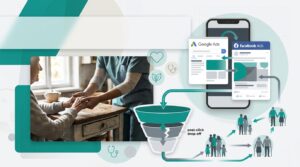
A digital marketing consultancy published a paid advertising framework October 1 that identifies post-click failures—slow homepages, absent after-hours coverage, and incomplete lead tracking—as the primary cause of underperforming home care ad campaigns, repositioning the problem from platform selection to intake execution, according to DiscoverMyBusiness.
TL;DR: DiscoverMyBusiness released a Google Ads and Facebook advertising framework for home care agencies that shifts focus from ad creative to post-click intake speed, after-hours response capacity, and lead-to-assessment tracking.
The framework addresses a pattern the consultancy reports seeing across client engagements: agencies with established caregiver networks and intake processes that cannot trace which marketing channels produce started cases. The publication identifies evening and early-morning inquiry windows as a conversion failure point, noting families typically contact multiple agencies and commit to whichever responds first with clarity on coverage acceptance and availability.
Pre-Campaign Readiness Requirements
DiscoverMyBusiness recommends agencies confirm four operational elements before activating paid campaigns. The framework requires a documented intake process identifying who takes initial inquiries, gathers insurance or Medicaid authorization paperwork, and schedules nurse assessments. Agencies must establish after-hours coverage through trained answering services or automated systems that capture lead details and schedule next-business-day callbacks.
Speed to first contact determines competitive outcomes, according to the consultancy. The framework states families researching care options contact several providers simultaneously, and the first agency to respond with specific answers about payer acceptance and start timelines typically secures the assessment appointment.
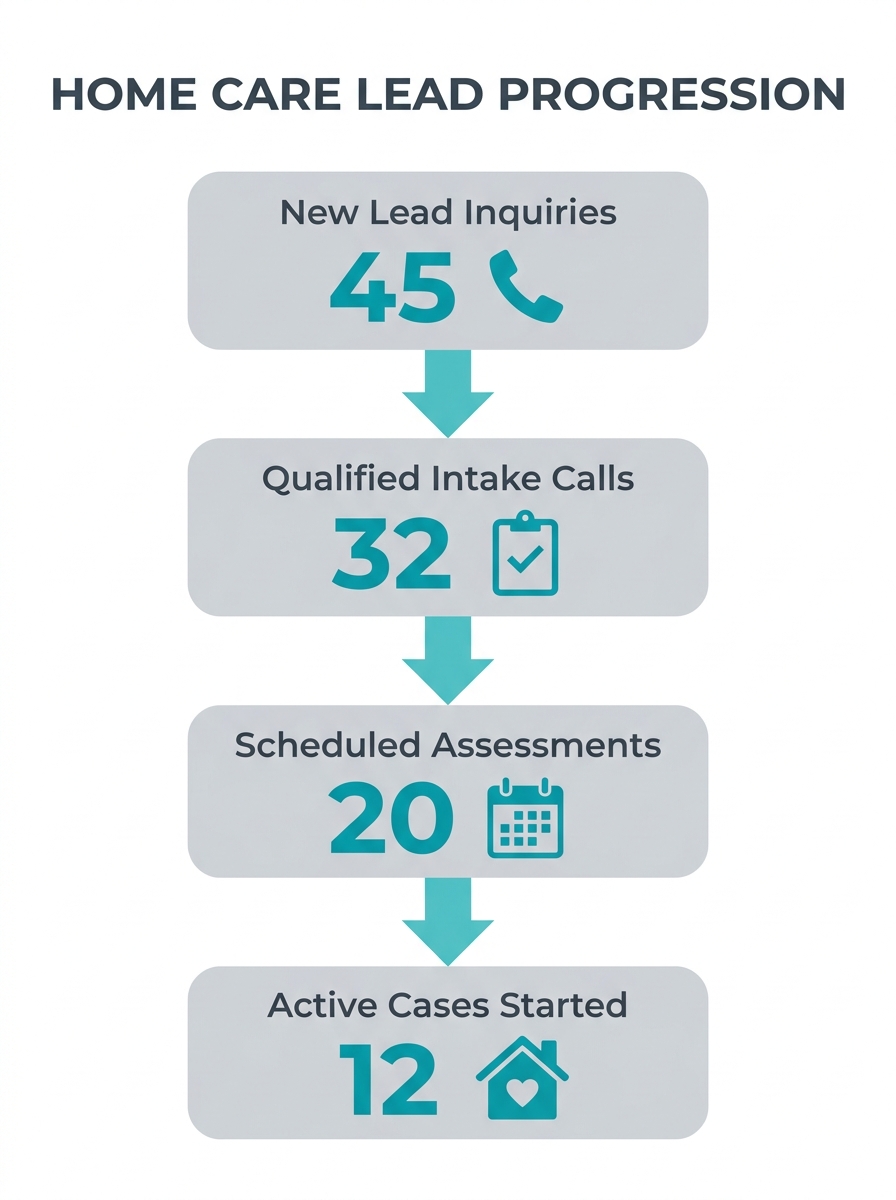
The fourth requirement mandates lead outcome tracking beyond inquiry counts. The consultancy recommends agencies log which leads progressed to intake conversations, nurse assessments, service authorizations, and started care—data needed to calculate cost-per-started-case rather than cost-per-click.
Google Ads Framework for Search Intent
The framework positions Google Ads as the primary channel for capturing families actively searching terms like “caregiver for my mom near me” or “home attendant for my father.” DiscoverMyBusiness identifies three conversion paths: form submissions triggering immediate SMS and phone follow-up, direct calls from mobile search results, and AI-powered chat tools that pre-qualify payer type and authorization status before booking intake appointments.
The consultancy’s approach directs all ad traffic to single-purpose landing pages rather than agency homepages. The framework specifies landing pages should state coverage types accepted, service area, and a single call-to-action, eliminating navigation menus that allow visitors to browse career pages or resource libraries instead of initiating contact. This mirrors findings from a recent home health marketing analysis that identified message misalignment between ads and landing pages as a primary waste point.
Meta Platform Strategy for Trust Development
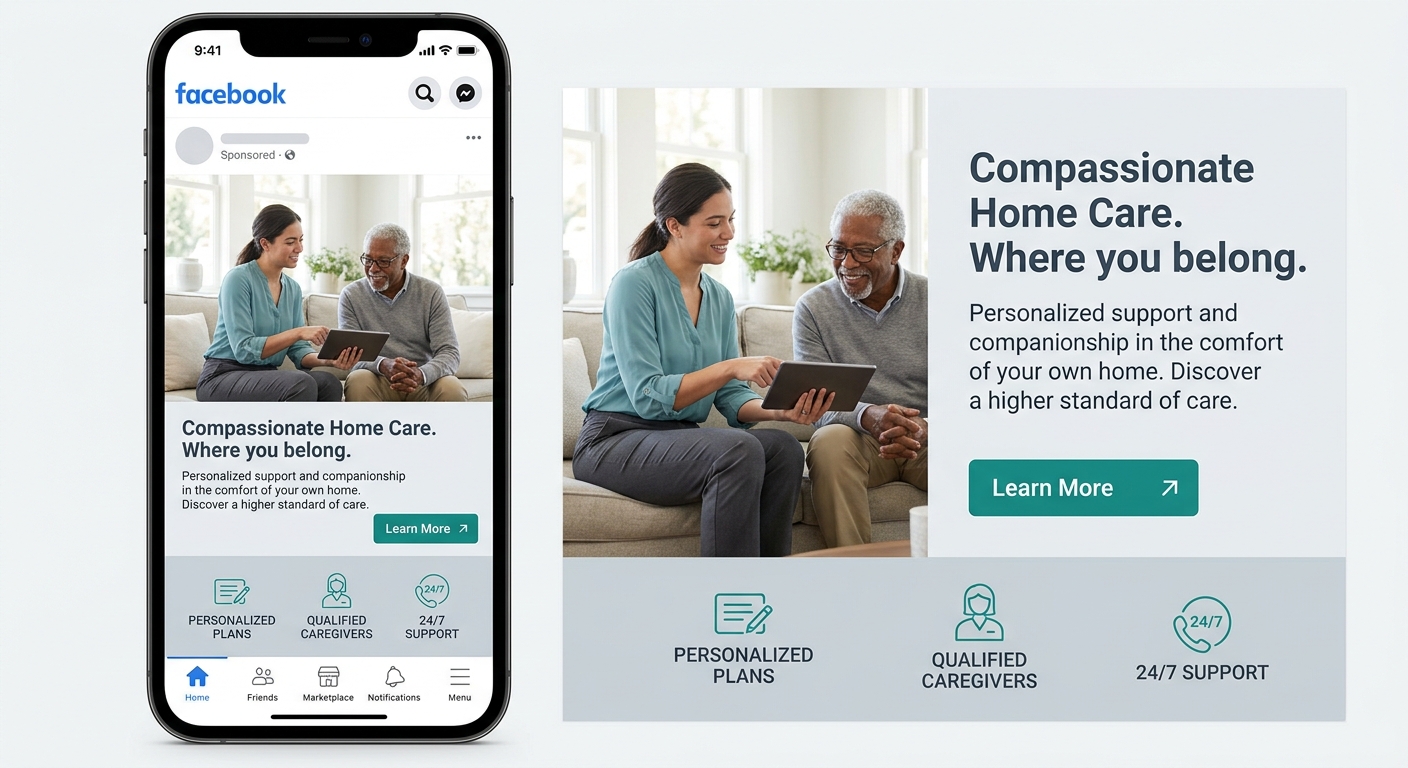
Facebook and Instagram advertising requires different execution than search campaigns, according to the framework. DiscoverMyBusiness describes Meta platforms as “interruption marketing” where ads must earn attention before requesting action. The consultancy recommends short, unpolished video featuring actual agency staff or caregivers over commercial-style production, noting families seek visual confirmation of who they would trust with care responsibilities.
Geographic targeting should match population density—five-mile radius in urban markets, 25- to 50-mile reach in rural counties, the framework states. The consultancy advises agencies to produce multiple video variations addressing specific service offerings like caregiver transportation or specialized dementia care, filtering inquiries toward families whose needs match capabilities.
The framework positions Meta advertising as a trust-building channel rather than immediate-conversion tool, distinct from Google’s search-intent capture. Agencies building comprehensive reputation management strategies often pair Meta video content with review solicitation to reinforce trust signals across channels.
Landing Page and Conversion Path Requirements
DiscoverMyBusiness specifies landing pages must eliminate navigation options and secondary calls-to-action. The framework requires visible phone numbers formatted for one-tap mobile calling, forms requesting only essential contact information and care need details, and immediate confirmation messaging after form submission.
The consultancy identifies evening inquiry volume as a differentiator between agencies that convert paid traffic and those that waste it. Families researching care options after standard business hours need either live after-hours intake staff who understand payer rules or automated systems that capture details, confirm receipt, and schedule specific callback times.
Agencies with established intake operations gain the most from paid advertising activation, according to the framework. The consultancy states advertising “multiplies whatever your operation already does”—effective intake teams process more qualified families, while slow or inconsistent intake processes produce higher cost-per-acquisition without corresponding case starts.
Context and Outlook
The October 1 framework arrives as home care agencies face intensifying competition for both families seeking care and caregivers to staff cases. Multiple consultancies have published digital marketing frameworks in recent months, indicating growing recognition that admissions growth requires documented processes beyond referral relationships and word-of-mouth.
DiscoverMyBusiness’s focus on post-click failures rather than ad creative or platform selection reflects broader industry movement toward conversion optimization. Agencies tracking leads through intake, assessment, and case-start stages can calculate true acquisition costs and identify whether budget constraints lie in ad spend or intake capacity. The framework’s emphasis on after-hours coverage addresses a structural reality: families research care options during non-business hours, and agencies without evening response capabilities lose inquiries to competitors who answer immediately.
The consultancy’s integration of AI chat tools for pre-qualification and appointment scheduling aligns with automation adoption across senior care operations. Agencies unable to staff 24-hour intake lines can deploy conversational interfaces that capture insurance details, urgency level, and preferred contact times—qualifying leads before human involvement. Implementation success depends on whether agencies have the intake infrastructure to process the volume paid advertising generates, confirming the framework’s central premise that campaign performance is determined after the click.