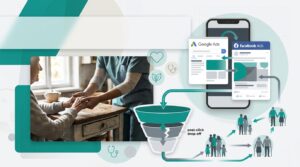
Senior Care Marketing Max, a digital marketing consultancy, published a six-tactic framework on August 10 designed to help home health care agencies generate more patient inquiries through online visibility and trust-building strategies, according to the firm’s announcement. The framework targets agencies that rely heavily on referrals but lack consistent digital marketing systems to capture families researching providers online.
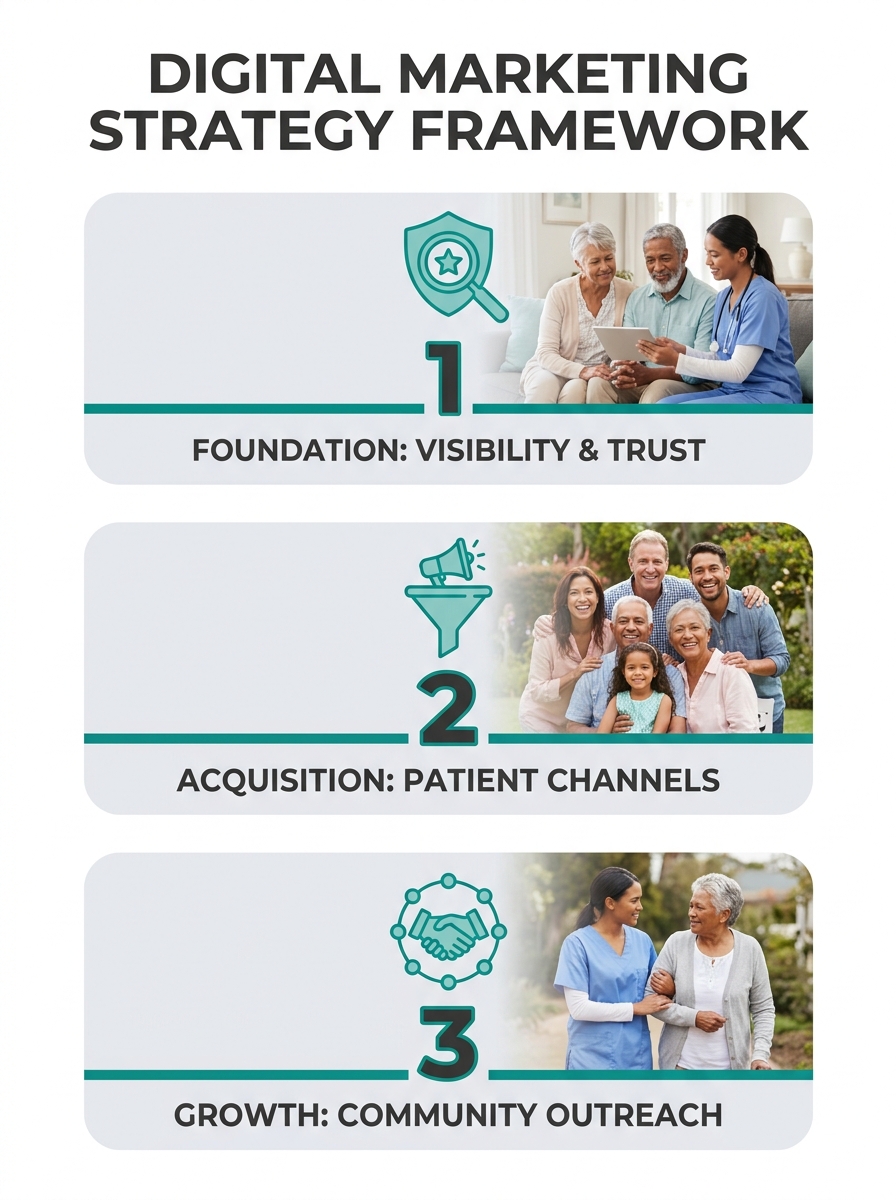
TL;DR: A senior care marketing consultancy released a tactical guide on August 10 outlining six digital strategies—website optimization, Google Business Profile management, local SEO, content marketing, reputation management, and paid advertising—that home health agencies can deploy to drive qualified patient inquiries.
Six-Tactic Framework Released
The framework prioritizes website trust signals as the first intervention point. Senior Care Marketing Max’s guidance directs agencies to simplify service explanations, display contact information prominently, and add staff credentials and certifications to reassure families during initial website visits. The consultancy positions the website as the primary trust-building tool before families initiate contact.
The second and third tactics focus on local search visibility. The framework calls for agencies to maintain complete Google Business Profile listings with accurate hours, service areas, and professional photos while encouraging authentic patient reviews. Parallel to profile management, the guide recommends location-based keyword strategies and dedicated city pages to improve rankings in geographic searches families conduct when evaluating nearby providers.
Content marketing occupies the fourth strategy position. The framework directs agencies to publish condition-focused blog posts addressing dementia care, post-surgical recovery, and chronic illness support—topics the consultancy identifies as high-intent search queries from families researching care options. The guide suggests using questions from patient consultations as content inspiration.
Reputation and Advertising Tactics
The fifth tactic addresses online reputation management. Senior Care Marketing Max’s framework recommends agencies request reviews after positive patient experiences, monitor review platforms regularly, and respond to all feedback with empathy and professionalism. The consultancy notes that families compare reviews before initiating contact and that referral sources evaluate online reputation when directing patients.
Paid advertising rounds out the six-strategy framework. The guide directs agencies to target high-intent local search keywords and focus messaging on education and accessibility rather than promotional language. The consultancy positions paid advertising as a support channel for faster inquiry growth when managed alongside organic visibility efforts.
The framework does not include case study data, performance benchmarks, or agency examples. Senior Care Marketing Max’s guidance centers on tactical execution rather than outcome measurement. Agencies seeking to implement the strategies would need to establish their own tracking systems to measure inquiry volume changes and conversion rates from digital channels.
Context and Outlook
Home health agencies face increasing pressure to build digital marketing systems as families shift care research online. The framework published by Senior Care Marketing Max aligns with broader industry emphasis on local search visibility for care providers and content marketing strategies that answer family questions during the decision process. Agencies that historically relied on referral relationships now compete on Google Business Profile ratings, review volume, and website clarity—factors that directly influence whether families submit inquiry forms.
The six-tactic model mirrors approaches outlined in earlier industry guidance, including the three-pillar framework linking content, reviews, and local search rankings published by a healthcare platform earlier this year. That framework similarly emphasized review density and location-specific content as foundational to visibility. The consistency across multiple consultancy frameworks suggests convergence on a standard set of digital marketing practices for home health agencies.
Agencies implementing the strategies face execution challenges around content production capacity, review-request systems, and PPC budget allocation for home care campaigns. The framework provides tactical direction but does not address resource constraints or staffing requirements for ongoing digital marketing management. Agencies with limited administrative capacity may need to prioritize one or two tactics rather than deploying all six simultaneously.