
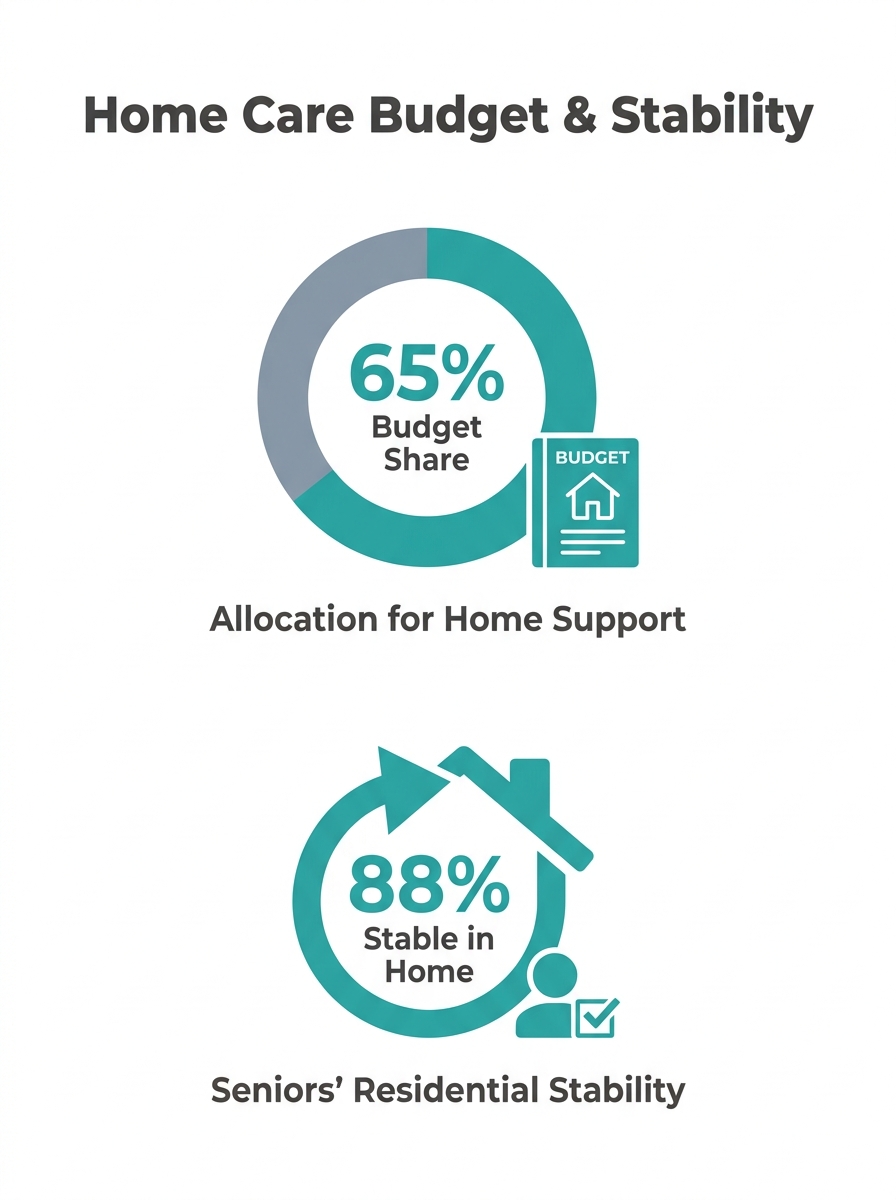
A 20-percentage-point increase in state spending on home- and community-based services corresponds to a 2.6-percentage-point reduction in nursing home and assisted living placement among older adults with independent living difficulties, according to a study published July 13 in JAMA Health Forum that analyzed U.S. Census Bureau data from 7.35 million older adults between 2009 and 2021.
TL;DR: States that allocate more long-term care dollars to HCBS see measurably lower rates of institutional placement and family co-residence among seniors who need care, shifting demand away from congregate settings.
The research examined whether state-level investments in home care and community-based services—categorized as HCBS in Medicaid spending—affected residential outcomes for older adults, including moves to group quarters, relocating to live with adult children, or remaining in their current homes, according to the study.
Researchers analyzed American Community Survey records spanning 13 years to measure the relationship between state HCBS funding levels and where older adults with functional limitations ultimately lived.
State Funding Shifts Correlate with Multiple Residential Outcomes
The same 20-percentage-point increase in HCBS spending share was associated with an 0.8-percentage-point decrease in older adults living with adult children and a 1-percentage-point increase in remaining in the same residence, the study found.
Researchers also documented lower rates of both in-state and out-of-state moves among seniors in states with higher HCBS investment.
“Most older adults prefer to remain in their own homes and communities,” the researchers wrote in the study. They cited factors including autonomy, maintaining community-based social ties, and avoiding the negative stigma associated with institutional living as drivers of aging-in-place preferences.
The study noted that changes in cognitive and functional status during aging increase the risk of dementia, relocation, entering institutional care, or moving in with adult children. “These risks may be mitigated through high-quality long-term care,” researchers wrote.
Modest Medicaid Enrollment Effect Observed
The analysis found some evidence that expanded HCBS availability may increase Medicaid enrollment among certain older adult populations, but researchers described the effect as modest and inconsistent across different analytical models.
While public programs fund a significant portion of aging-in-place services, many older adults and families also use personal resources to pay for home modifications and in-home care. The study noted that homeowners with significant equity may use reverse mortgages to fund accessibility improvements and long-term support needs.
The U.S. population is aging rapidly, with older adults expected to represent a growing share of the population in coming decades, the researchers said. As demand for long-term care rises, policymakers face increasing pressure to expand noninstitutional care options.
Why This Matters Now
Nursing home operators and assisted living communities competing for occupancy in states with rising HCBS investment face structural headwinds that marketing alone cannot overcome. The Census data shows that every dollar reallocated from institutional care to home-based services measurably reduces the pool of seniors entering congregate settings—a trend accelerated by Medicaid policy shifts favoring community-based alternatives over facility placement.
Facilities in high-HCBS states need dual-track strategies: marketing to stay-at-home seniors who require eventual placement when home care reaches its limits, and positioning institutional care as a proactive choice rather than a crisis response. The same Census data that documents aging-in-place trends also identifies the cohort of older adults whose functional decline will eventually exceed what home-based services can support—these are the families most responsive to early-stage senior living messaging that emphasizes safety, socialization, and medical support unavailable at home.
Providers should audit whether their digital presence reaches family caregivers before home care arrangements fail, and whether their messaging addresses the specific concerns that delay facility consideration even when aging in place becomes unsafe. States allocating more resources to HCBS are simultaneously creating demand for marketing that speaks to referral sources and families exhausted by home care coordination—a narrow but high-value segment that most senior living advertising currently misses.