
Eighty percent of New York nursing homes operate below the 4.1 hours of direct care per resident per day needed for safe care delivery, according to a June 16 analysis by the Long Term Care Community Coalition based on Centers for Medicare & Medicaid Services data. Only one in five facilities across the state meet or exceed the research benchmark federal studies identify as necessary to prevent neglect and adverse outcomes.
TL;DR: Four out of five New York nursing homes fail to meet the 4.1 direct-care hours per resident benchmark that federal research associates with safe, adequate care; the state ranks among the lowest nationwide in nurse-to-patient staffing levels.
The staffing shortfall affects certified nurse aide and registered nurse positions most severely, the Center for Health Workforce Studies at SUNY Albany reported. New York ranks among the lowest states nationwide in nurse-to-patient staffing ratios, the center’s analysis shows, creating conditions that Matthew Rice, an attorney at Fellows Hymowitz Rice specializing in elder care neglect cases, said directly threaten resident safety when facilities cannot respond quickly to medical needs or emergencies.
Workforce Recruitment and Retention Failures Drive Shortages
Certified nurse aide and registered nurse positions remain the most difficult to recruit and retain across New York’s health care system, according to CHWS research. The pandemic intensified burnout and turnover rates that many facilities have not recovered from three years later, leaving chronic vacancies even as resident acuity levels rise.
The New York State Nurses Association documented parallel failures in hospital staffing during 2024, reporting that many intensive and critical care units did not maintain the required 1:2 nurse-to-patient ratio mandated by state law. While those findings apply specifically to acute-care settings, they illustrate workforce challenges that ripple across long-term care facilities competing for the same qualified personnel pool.
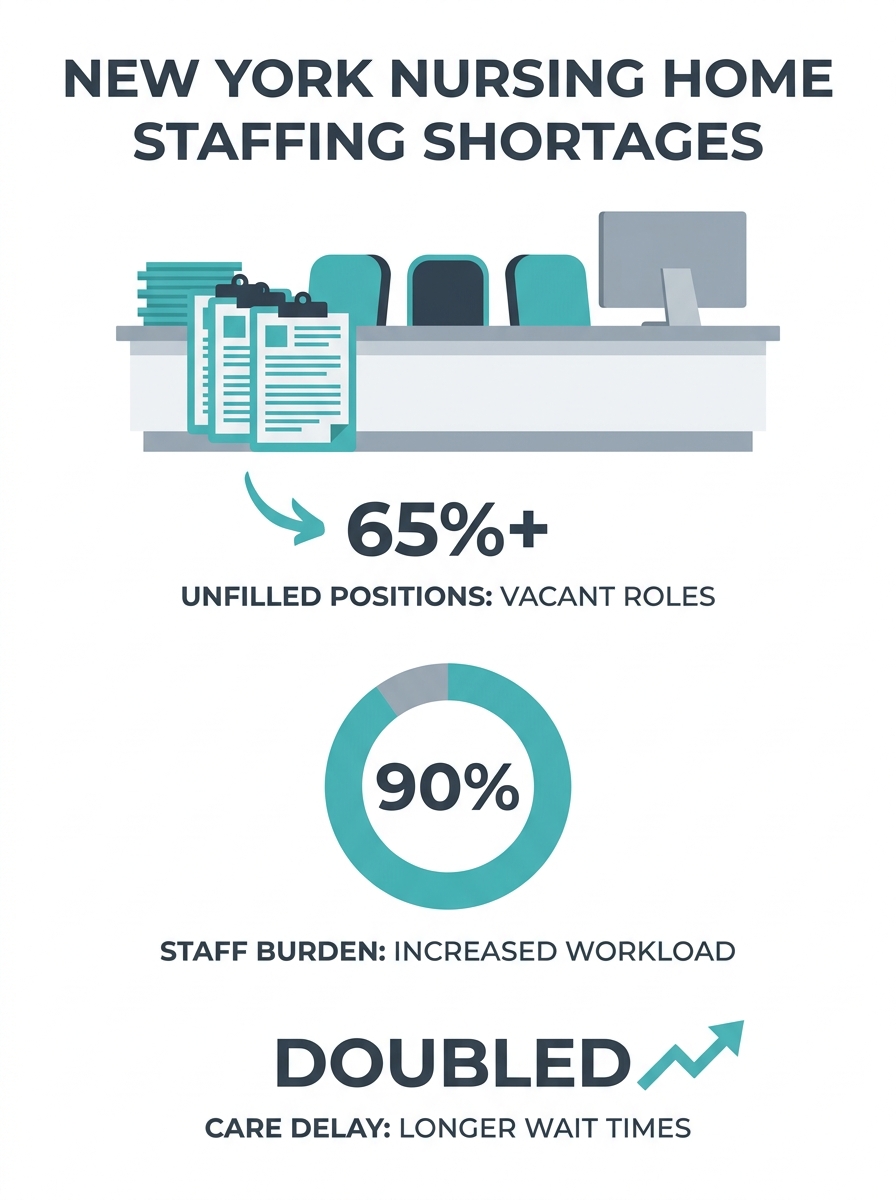
High turnover rates undermine continuity of care and increase the likelihood of preventable medication errors, delayed treatments, and missed observations of residents with complex conditions or dementia, the analysis notes. Overworked nursing staff face greater risk of mistakes; the Centers for Disease Control and Prevention links inadequate staffing directly to increased infection and fall rates in long-term care settings.
Geographic Disparities Compound Access Problems
The Health Resources and Services Administration designates multiple Medically Underserved Areas and Populations across New York State, including rural regions and urban neighborhoods within New York City. Competition for qualified nurses remains particularly acute in the city, forcing facilities to operate with minimal staffing levels even when state and federal regulations require personnel sufficient to meet residents’ needs at all times.
New York Public Health Law Article 28 mandates that nursing homes maintain adequate staffing to deliver appropriate care and supervision. Federal regulations impose parallel requirements on Medicare- and Medicaid-certified facilities. The New York State Department of Health monitors compliance through inspections and citations, though enforcement mechanisms have proven inconsistent, the Long Term Care Community Coalition analysis shows.
Families often struggle to interpret publicly available staffing data or identify warning signs of inadequate coverage. Rice outlined indicators that point to systemic understaffing: unexplained injuries, poor hygiene, pressure ulcers, sudden behavioral changes in residents, or repeated delays when staff assistance is requested. These patterns frequently signal that a facility lacks enough qualified personnel to deliver baseline care safely.
Context and Outlook
The staffing crisis in New York’s nursing home sector parallels workforce shortfalls documented across home care agencies, where 79 percent annual turnover rates drain operational capacity and marketing budgets. Sustainable recruitment strategies that address working conditions, competitive compensation, and retention infrastructure remain sparse even as demand for long-term care climbs. Similar staffing failures in Utah nursing homes left residents at risk when federal minimum standards expired, demonstrating the national scope of inadequate workforce planning.
For facility operators facing recruitment challenges, structured onboarding content systems have reduced time-to-fill by 40 percent in home care settings—a model that nursing home administrators may adapt to certified nurse aide pipelines. The Long Term Care Community Coalition and the Office of the State Long Term Care Ombudsman continue to advocate for stronger transparency requirements, public reporting of facility-level staffing ratios, and enforcement mechanisms that carry financial penalties sufficient to drive compliance. Until facilities invest in recruitment and retention at levels that match resident acuity, the 4.1-hour benchmark will remain out of reach for the majority of New York’s nursing homes.