
WTWH Media released findings from its 2026 M2: Marketing to Health Care research on June 9, analyzing responses from 905 health care professionals including 16% from senior housing providers, according to Senior Housing News. The data reveals that senior care operators prioritize best-practice guides, case studies with measurable outcomes, and research reports when evaluating vendor partnerships, while 72% cite quality concerns as the primary barrier to working with unfamiliar vendors.
TL;DR: Senior care providers value educational content over vendor pitches, trust professional associations more than vendor sources, and require clear ROI evidence before engaging with new partners, according to WTWH Media’s 905-respondent survey published June 9, 2026.
The research comes as senior living operators balance cost pressures, staffing challenges, and resident expectations while evaluating an expanding vendor marketplace. The survey data provides concrete benchmarks on how providers research, vet, and ultimately select service partners.
What Content Formats Senior Care Providers Actually Use
Best-practice guides and how-to playbooks ranked as the most valuable content type at 64% of respondents, according to the M2 report. Case studies demonstrating measurable outcomes placed second at 53%, followed by research reports containing data and benchmarks at 51%.
The content preference data suggests providers seek operational frameworks they can adapt rather than promotional material. A provider evaluating home care SEO strategies, for example, would prioritize implementation guides over vendor feature lists.
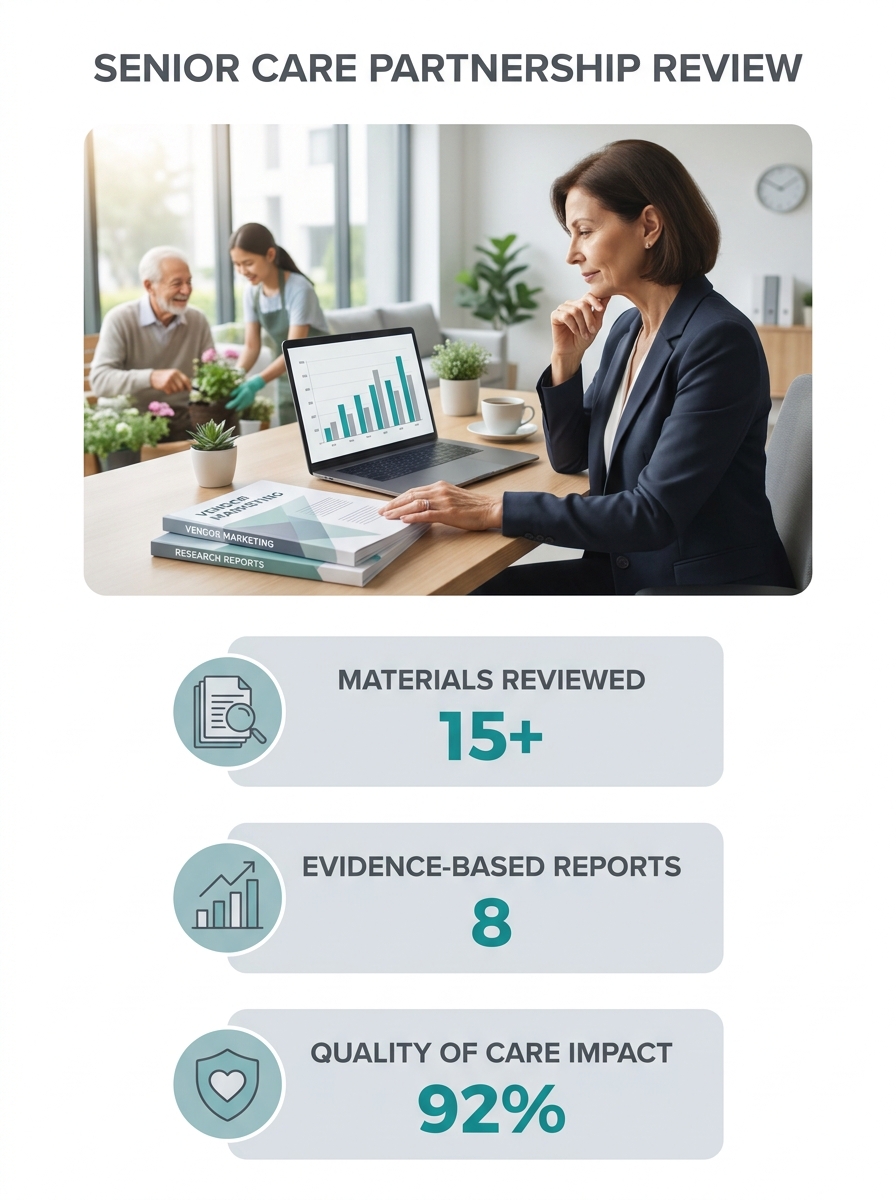
The format hierarchy contrasts with vendor marketing practices that often lead with product demonstrations before establishing educational credibility. Providers indicated they use content to solve immediate operational challenges, with 50% reporting they search for keywords tied to current projects and 20% conducting problem-solving queries through search engines.
Trust and Source Hierarchy in Vendor Selection
Professional associations and accreditation bodies emerged as the most trusted content sources at 63%, the report shows. Conferences and live events ranked second at 54%, with academic or research journals placing third at 47%.
Vendors as direct content sources did not rank in the top three, signaling that providers value third-party validation over vendor-generated marketing. The trust gap extends to unfamiliar vendors specifically, where 72% of respondents cited quality concerns and 33% expressed doubts about long-term stability.
Compliance with standards and regulations represented another barrier, with 32% of respondents noting concerns about new vendors’ regulatory understanding. This finding aligns with broader compliance pressures documented across the senior care sector, where regulatory complexity continues to shape operational decisions.
How Search Behavior Shapes Vendor Discovery
Half of survey respondents reported using search engines to find keywords tied to specific projects or operational challenges. Another 19% search for best practices and guidelines, while 20% conduct problem-solving queries.
The search behavior data indicates providers enter the vendor evaluation process through practical need rather than brand awareness. A marketing director researching referral source mistakes or decision-maker alignment issues likely begins with problem-focused searches before evaluating specific vendor solutions.
When assessing content value before clicking through, 57% of respondents evaluate the source’s reputation, 54% seek concise summaries or insight previews, and 42% consider data timeliness. The criteria emphasize that providers filter search results based on credibility signals rather than ranking position alone.
The Brand Familiarity Barrier
Quality concerns dominate provider reluctance toward unfamiliar vendors at 72%, followed by stability doubts at 33% and compliance concerns at 32%, according to the M2 data. The barrier suggests that vendor marketing must establish credibility through third-party validation and documented outcomes before providers will engage.
The familiarity gap also shapes how providers define buying intent. Top signals include attending vendor-presented webinars, requesting product demonstrations, downloading clinical or operational guides, conducting healthcare-specific searches, and reviewing case studies from comparable providers.
Clear and concise communication drove vendor engagement for 66% of respondents, while 46% cited evidence of return on investment or cost savings. Another 36% required demonstrated understanding of specific market challenges before engaging with vendor partners.
Signals That Indicate Purchase Readiness
Webinar attendance where a vendor presents ranked as the strongest buying-intent signal in the survey data. Product demonstration requests and downloading operational guides followed as secondary indicators. The progression suggests providers move through an educational phase before entering direct vendor conversations.
Case study reviews from similar providers and healthcare-specific search activity also indicated purchase readiness, according to the report. The pattern reinforces that peer validation shapes provider decisions more than direct vendor claims.
Respondents shared mixed views on AI-generated content, with 52% neutral depending on quality and 20% positive if vendors disclose AI use transparently. Seventeen percent preferred human-authored content. The AI sentiment data suggests providers evaluate content based on utility rather than creation method.
Looking ahead, 67% of respondents identified value-based care and cost efficiency as the trend most likely to influence vendor evaluation in the coming year. Patient engagement technology placed second at 51%, followed by data interoperability at 50%. Staff shortages, regulatory changes, and generative AI automation trailed closely behind.
The Takeaway
Senior care providers evaluate vendor marketing through an educational lens that prioritizes independently validated information over promotional content. The WTWH Media data reveals a clear hierarchy: providers trust professional associations and conferences more than vendor sources, value implementation guides over feature lists, and require ROI evidence before engaging with unfamiliar partners.
For home care agencies, nursing homes, and assisted living facilities marketing their own services, the survey findings translate directly into family-facing strategy. Families researching care options follow similar patterns—searching for problem-focused content, trusting third-party reviews, and requiring proof of outcomes before making decisions. Providers who build educational content libraries, maintain verified review profiles, and document measurable care outcomes gain the same trust advantages that successful vendors demonstrate in this research.
The quality-concern barrier that affects 72% of vendor evaluations mirrors the credibility challenge every senior care provider faces when unfamiliar families discover their agency through search. Building trust signals through transparent credentials, third-party validation, and clear communication remains the most reliable path to converting both vendor-buyer and provider-family relationships.