Eighty-nine percent of medical decision-makers now trust AI-generated healthcare information to help them select senior living and care providers, yet most operators remain invisible to AI search tools because their digital strategies were built for 2019 search behavior, according to a nationwide study released April 27 by Advance Healthcare Marketing.
The October 2025 survey of 500 medical decision-makers found that 18% already use ChatGPT, Gemini, or similar large language models to research senior care options. Among baby boomers—the oldest of whom turn 80 this year—80% indicated openness to trusting AI-generated healthcare information.
The findings arrive as senior living operators face an optimization gap: families have shifted to AI-assisted search while providers continue using outdated keyword tactics that large language models cannot interpret, according to Eric Hultgren, national director of content at Advance Healthcare Marketing and author of the white paper summarizing the study.
AI Evaluates Trust Signals Across Digital Footprint
“Large language models work by interpreting intent the moment a user submits a prompt, then evaluating trust signals and synthesizing your brand presence across every place you exist online,” Hultgren said in the report. “If that presence is thin, inconsistent or buried in jargon, AI skips you.”
The study breaks down how each generational cohort searches for care, what content builds trust, and what factors cause families to abandon a provider before making contact. Operators must audit websites to ensure clear, succinct language that answers caregiver questions in formats both humans and AI tools can parse, according to the white paper.
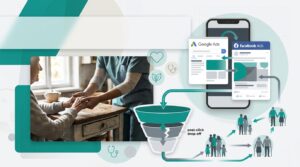
Search engines remain the starting point for most decision-makers, with paid ads capturing 43% of traffic, the study found. Families then consult provider websites (42%), social media (35%), word of mouth (34%), insurance directories (27%), and community outreach (25%). PPC for home care must be tailored to each stage of the search funnel and each generational segment or operators risk remaining invisible online, according to the report.
Adult Children Drive 75% of Decisions
Three-quarters of senior living and care decisions are made by adult children rather than seniors themselves, the Advance Healthcare Marketing data shows. That demographic mismatch creates a strategic gap for providers targeting older adults.
“The person in the bed isn’t on your website at 11 pm. Their daughter is,” Hultgren said. “If your message, your intake process and your website aren’t designed for a stressed millennial juggling a job and a 7-year-old, you’re optimizing for the wrong person.”
A Gen Z grandchild coordinating care and a baby boomer spouse making end-of-life decisions represent distinct audiences who do not use the same channels or respond to the same content, Hultgren noted. The study provides generational breakdowns of where each cohort looks, what they need to see, and what breaks their trust—data that makes one-size marketing strategies obsolete, according to the white paper. Providers can cross-reference those findings with research on how adult children and seniors choose care differently to refine targeting.
Rate Transparency Tops List of Family Frustrations
More than 20% of decision-makers cited inability to find rate or insurance information as their single biggest frustration when researching senior care providers, rising to 30% among baby boomer respondents, the study found. Families who cannot locate pricing information do not call to request it—they move to the next provider, according to Hultgren.
“The absence of that information is an answer, and the answer sends them somewhere else,” Hultgren said.
What makes families choose one provider over another comes down to clear rate and insurance information, recommendations from family and healthcare professionals, positive stories and testimonials, quick access to care, certified staff credentials, and easy-to-navigate websites, the Advance Healthcare Marketing data shows. Guides, checklists, testimonials, and Q&A sections build trust across all age groups, yet few providers create downloadable guides that are useful, most do not answer real questions, and most underutilize video testimonials, the white paper found.
The report recommends operators avoid creating content in isolation by ensuring every piece serves a specific stage in the decision-making process. Those stages align with the trust signals families prioritize when evaluating care facilities.
“The senior care marketing landscape in 2026 isn’t complicated because tactics are hard. It’s complicated because decision makers expect everything, everywhere, all at once,” the white paper concluded. “They want your website to load fast, your content to be comprehensive, your costs to be transparent, your staff to be reachable, and your care to start now.”
What This Means for Owners
Operators who publish rates upfront, optimize site copy for AI readability, and segment campaigns by generational cohort will capture search traffic that competitors lose to opacity and jargon. The 18% of families already using AI tools to research care options represents early-adopter behavior; that share will grow as large language models become default search interfaces for younger decision-makers.
Providers can begin by auditing every website page to ensure language directly answers caregiver questions—”What does memory care cost in Phoenix?” rather than “compassionate solutions for your loved one.” Adding downloadable comparison guides, transparent rate sheets, and video testimonials from current residents’ families addresses the trust factors the study identified as decisive. Those updates serve both human readers and the AI tools synthesizing recommendations for 89% of decision-makers who now trust machine-generated information.
The 75% of decisions made by adult children, not seniors, requires recalibrating intake processes and website design for stressed professionals researching care options after work hours. Operators who continue targeting messaging to seniors themselves will remain invisible to the majority stakeholder in the decision.