
Healthcare communications platform Emitrr published a comprehensive Healthgrades profile management guide on August 30, 2026, citing research that 63 percent of patients consult online reviews before selecting a physician, according to the company’s blog post. The guide details the platform’s National Provider Identifier integration, step-by-step profile claiming procedures, and review optimization strategies for healthcare providers.
TL;DR: Emitrr released a Healthgrades optimization guide on August 30, 2026, targeting healthcare providers seeking to improve online visibility through review management on a platform that profiles every doctor in America.
The publication addresses a gap in actionable guidance for senior care providers, nursing homes, and home health agencies seeking to strengthen their presence on Healthgrades, a platform that automatically generates profiles for all physicians listed in the government’s National Provider Identifier directory. “If you are not listed on the NPI, you will not be listed on Healthgrades,” the guide states, establishing NPI registration as the prerequisite for platform visibility.
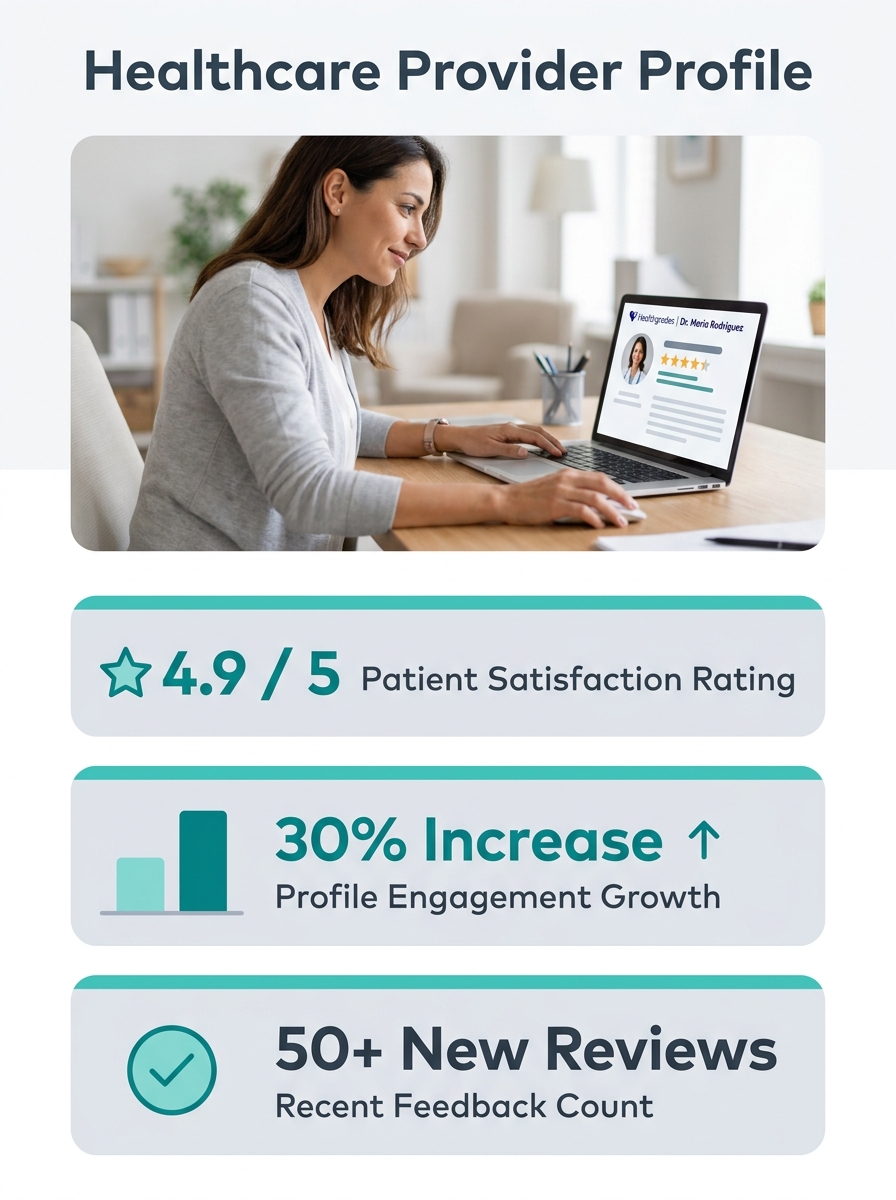
Platform Mechanics and Provider Requirements
Healthgrades aggregates physician data from the National Provider Identifier registry to create baseline profiles for every practicing doctor in the United States, according to the Emitrr analysis. The platform requires providers to furnish additional information beyond basic NPI data, including treated conditions, performed procedures, academic credentials, accepted insurance types, and hospital affiliations when claiming their listings.
The guide notes that patients use Healthgrades reviews to evaluate treatment quality and overall experience before making appointment decisions. For senior care providers, this creates a reputation management imperative in a sector where family decision-makers frequently research multiple providers before committing to nursing home placements or home health services.
Unclaimed profiles display limited information pulled from government directories, while claimed profiles allow providers to showcase specialties, credentials, and patient testimonials. The platform offers free profile claiming, positioning itself as a zero-cost visibility channel for healthcare operators managing tight marketing budgets.
Six-Step Claiming Process
The Emitrr guide outlines a six-step process for claiming Healthgrades listings, starting with visiting the platform’s home page and selecting the “claim your profile” option. Providers then enter their name and optional city location to narrow search results, select their profile from the results list, and click “Get Started.”
The claiming workflow presents three role options: the physician claiming directly, an employee of the physician’s practice or hospital claiming on behalf, or a third-party firm representing the provider. Claimants must then create an account using an email address and password meeting specific security requirements—one uppercase letter, one lowercase letter, one number, and a minimum eight-character length, according to the guide.
The process concludes with reviewing and accepting Healthgrades’ terms of service. Once claimed, providers gain access to profile editing tools, review monitoring dashboards, and patient inquiry management features.
Review Management Strategy
The guide positions Healthgrades reviews as a trust-building mechanism comparable to e-commerce product ratings, drawing parallels to Amazon laptop reviews and food delivery platform restaurant ratings. “No matter how good your services are, your potential customers won’t get to know about you unless they see some reviews about you as a practitioner,” the publication states.
For reputation management in senior care, the 63 percent patient review consultation rate means a majority of families evaluating nursing homes, assisted living facilities, or home care agencies will encounter provider Healthgrades profiles during their research phase. Providers without claimed profiles or with unmonitored negative reviews risk losing referrals to competitors with stronger online presence.
The platform allows patients to rate treatment experiences and leave written feedback, creating a permanent record that influences future patient decisions. Managing this feedback stream requires active profile monitoring and response protocols, particularly for senior care operators where a single negative review about care quality can derail multiple admission conversations.
Context and Outlook
The Emitrr guide arrives as senior care providers face intensifying competition for admissions in markets where occupancy rates have recovered to near 90 percent in some assisted living segments. Online review platforms have become de facto pre-screening tools for families researching care options, with Healthgrades serving as a physician-focused complement to facility-focused platforms like A Place for Mom and Caring.com. Nursing homes and home health agencies relying on physician referral networks may find stronger Healthgrades presence for affiliated medical directors and consulting physicians drives indirect facility visibility.
The 63 percent review consultation rate signals that nearly two-thirds of potential patients—and by extension, their family caregivers making senior care placement decisions—treat online ratings as non-negotiable research inputs. Providers ignoring this channel effectively exclude themselves from consideration by a majority of digitally engaged prospects. The guide’s emphasis on zero-cost profile claiming removes financial barriers for smaller operators competing against larger health systems with dedicated marketing teams.
Senior care operators managing multiple review platforms—Google Business Profile, Yelp, Facebook, Healthgrades—may benefit from unified review monitoring systems that aggregate feedback across channels rather than manually checking each platform. The publication provides technical claiming instructions but stops short of offering review response templates or reputation recovery strategies for providers managing negative feedback.