
Ninety percent of family caregivers nationwide report symptoms of burnout, with Generation Z experiencing the most severe professional and personal disruption, according to an April 2026 survey commissioned by LogicMark Inc. and conducted by Talker Research among 1,000 U.S. adults. The findings arrive as roughly 63 million Americans, nearly one in four adults, serve as unpaid family caregivers, according to the HousingWire report published June 29, 2026.
TL;DR: A national survey of 1,000 U.S. adults found 90% of family caregivers report burnout, with Gen Z caregivers experiencing greater job and relationship strain than older generations, a finding that challenges assumptions about who is most affected by informal caregiving.
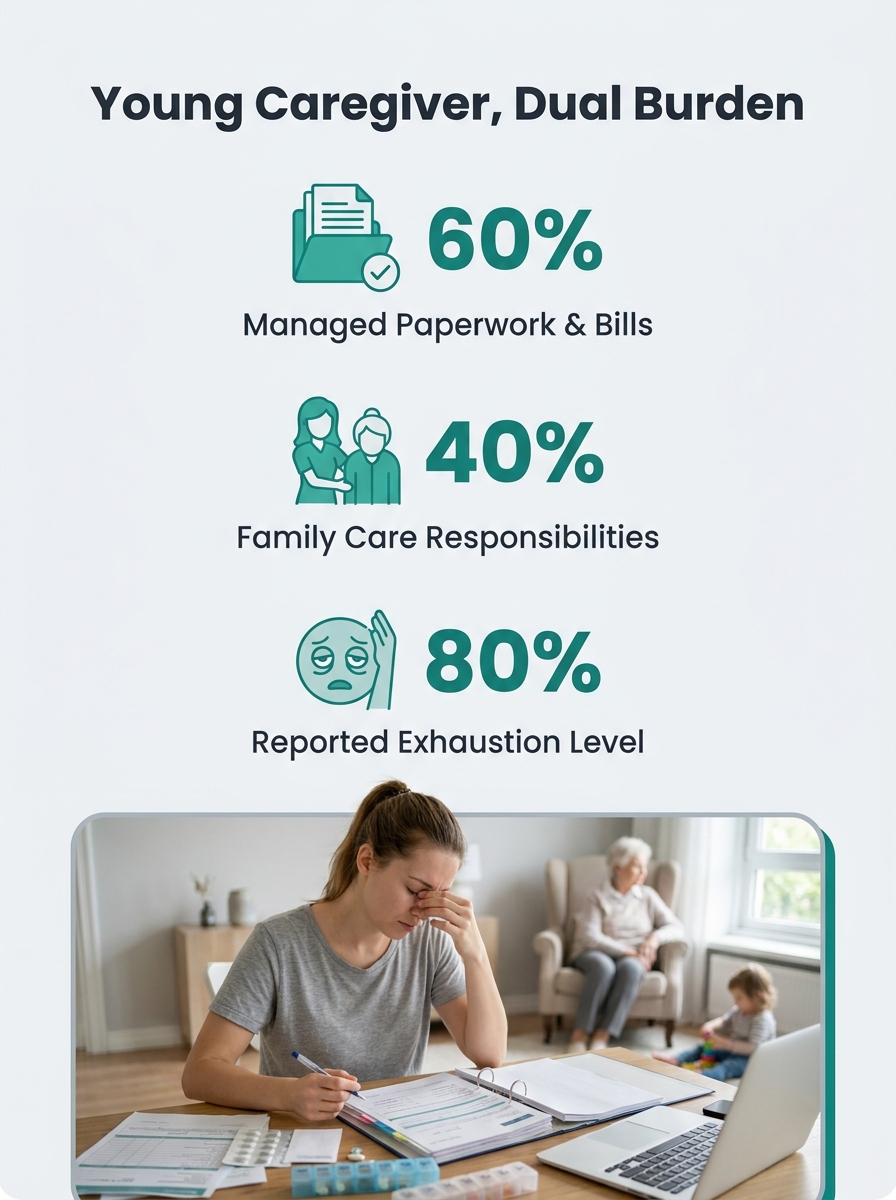
Twenty percent of caregivers described their burnout as severe. The survey challenges conventional assumptions that caregiving predominantly affects middle-aged adults, revealing instead that younger generations are carrying disproportionate strain without the financial cushions or workplace benefits older caregivers have had time to build.
Gen Z Reports Greater Strain Than Older Generations
Nearly two-thirds of Gen Z caregivers said caregiving hurts their job performance, compared with 44% of millennials and 45% of Gen X respondents. Half of Gen Z caregivers reported that caregiving has damaged personal relationships, exceeding rates reported by millennials (41%) and Gen X (38%).
“Most people picture caregiving as a middle-aged concern and, alarmingly, they are avoiding conversations around this phenomenon,” said Chia-Lin Simmons, CEO of LogicMark, in the company’s statement. “The data says something totally different. Gen Z adults are quietly carrying one of the heaviest loads, and doing it without paid leave, any financial cushion or the support systems older generations had time to build.”
The findings carry direct implications for home care agencies and senior care providers struggling to recruit professional caregivers. The same generational cohort reporting the highest informal caregiving burnout represents the entry-level talent pool for paid caregiver roles, a workforce segment providers depend on to address the healthcare system’s projected 4.6 million-worker shortage by year-end.
Financial and Career Consequences
Nearly three in four respondents (74%) said caregiving has had or will have a significant impact on their financial stability, while 67% reported a direct effect on their careers. Women and younger caregivers were among the groups most likely to report financial and professional setbacks. Lower-income families were disproportionately represented among caregivers facing the greatest strain.
The financial pressures coincide with rising long-term care costs and limited institutional capacity. Industry observers have noted that shortages in skilled nursing and assisted living facilities are pushing more families toward in-home care as a necessity rather than a preference, even as home environments often require costly modifications.
For agencies attempting to reduce time-to-fill for open caregiver positions, understanding the financial and emotional toll on prospective hires’ personal lives may inform more effective recruitment messaging and benefits positioning.
Women Bear Disproportionate Emotional Burden
Men were more likely to describe caregiving as rewarding, while women were more likely to describe it as overwhelming and worrying, the survey found. Women also reported greater concern about their own future care needs, with 43% saying they frequently think about the impact on their families, compared with 29% of men.
When asked about their greatest fear, caregivers most often cited a loved one refusing help, selected by 29% of respondents.
The gender disparity mirrors workforce patterns in professional senior care. Women comprise the majority of direct-care workers in home care, assisted living, and nursing homes, roles characterized by high emotional labor, modest wages, and elevated turnover rates.
Aging-in-Place Reality Drives Technology Adoption
More than three-quarters (77%) of caregivers in the LogicMark survey said they would embrace or try AI-powered health monitoring systems for a loved one. That openness aligns with a broader shift in how the home functions as care infrastructure rather than simply a residential space.
Experts estimate fewer than 5% of U.S. homes are fully suitable for aging in place without modifications. Cameron Carter, founder and CEO of Rosarium Health, told HousingWire that most families do not recognize accessibility issues until a health crisis forces the matter.
“There’s a misunderstanding of who the buyer is,” Carter said. “There’s still an assumption that we build homes and when someone turns 65, they sell it to a family in their early 30s who is going to renovate it for aesthetic needs.”
Carter argued that aging in place is becoming less about lifestyle choice and more about financial necessity as institutional care costs rise and waitlists for assisted living grow. “You’re trying to find ways to age in place before you’ll even be able to get into preferred institutional care,” he said.
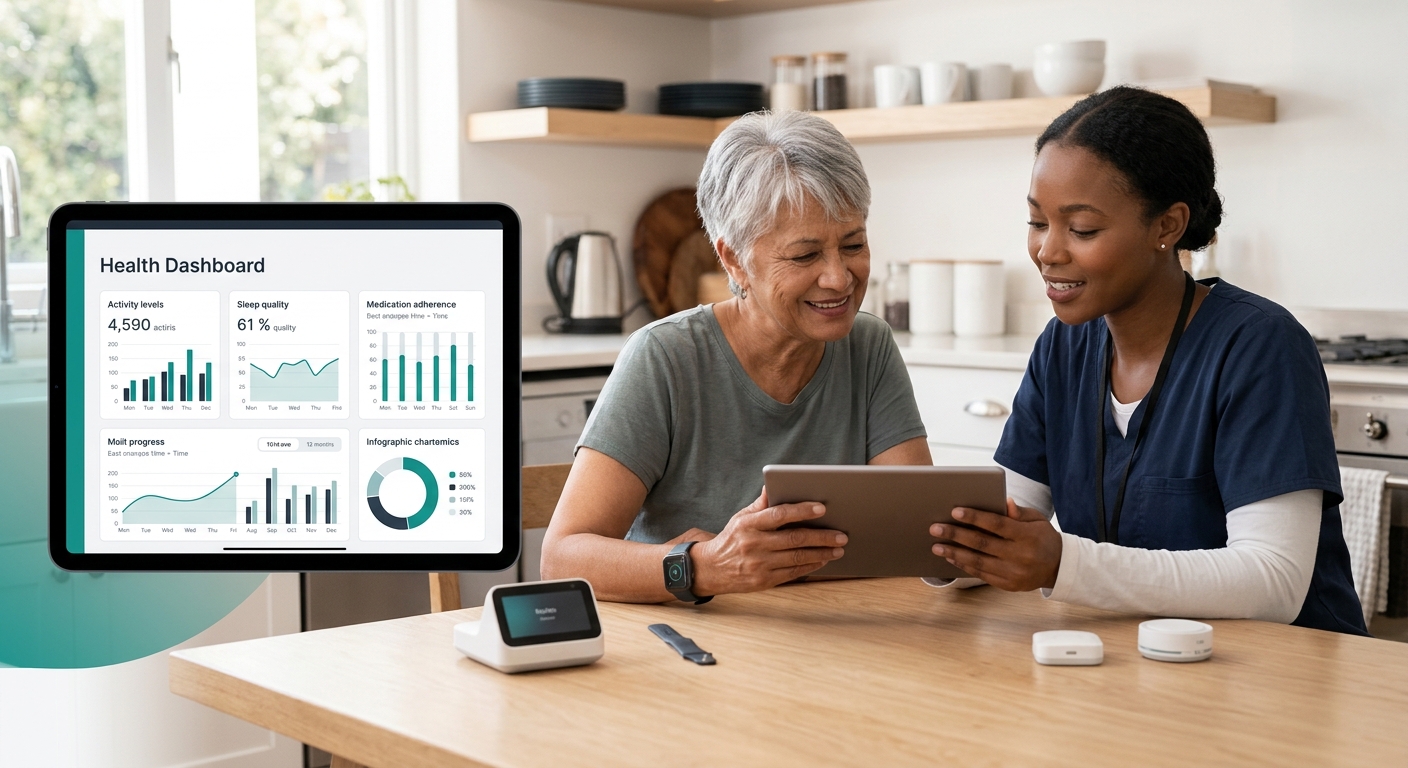
Chris Spearman, chief strategy officer for ScaleHealth, described an emerging ecosystem of aging technology at a recent National Reverse Mortgage Lenders Association meeting. “Technology is not a panacea; it’s not a perfect solution, but it will play a part in the shortages that we face for health care providers,” Spearman said. “Many of those shortages are being addressed at home because we don’t have enough places to put people.”
The Takeaway
The LogicMark survey data surfaces two converging workforce realities for senior care operators. First, the talent pool agencies rely on for entry-level caregiver recruitment is already experiencing burnout from unpaid family caregiving, with Gen Z reporting the highest strain. Providers who acknowledge this reality in recruitment messaging, addressing work-life supports, flexible scheduling, and mental health resources upfront, may differentiate themselves in a tight labor market.
Second, the 77% acceptance rate for AI-powered monitoring among family caregivers signals that resistance to technology-enabled care is overstated. Families choosing or being forced into in-home care arrangements are pragmatic about tools that reduce their burden. Agencies that position remote patient monitoring, telehealth integration, and caregiver-support platforms as load-reducing infrastructure rather than impersonal automation may find receptive audiences among the 63 million Americans managing informal care responsibilities.
The survey’s release comes eight months into 2026, as operator data from multiple sectors confirms caregiver shortages remain the primary constraint on home care capacity and nursing home census recovery. Recruiting from a generation reporting 90% burnout requires more than competitive wages, it requires acknowledgment that younger workers are entering the field already exhausted.