
Atria Senior Living, Beztak, and A Place for Mom have shifted their marketing strategies to family caregivers, deploying AI chatbots, cost comparison calculators, and authentic video testimonials to reach the adult children and spouses making senior living placement decisions, according to Senior Housing News. Louisville, Kentucky-based Atria now refreshes unit pricing every two hours on its website and operates 24/7 AI chat to accommodate caregivers researching after work hours.
TL;DR: National senior living operators are targeting family caregivers—not just seniors themselves—with cost transparency tools, AI chat, and caregiver-focused content, recognizing that adult children and spouses control most placement decisions.
Industry Reorients Messaging Around Caregiver Experience
Senior living marketing teams are broadening their traditional focus beyond the “adult daughter” archetype to include male caregivers and tech-savvy family members who research options online rather than requesting printed brochures. “They’re not really interested in being given a beautiful piece of collateral, where they can peruse your pictures and read about your services,” Graziose at Atria told Senior Housing News. “They need you to show them the proof to build that empathy, to build that connection and trust.”
A Place for Mom Chief Marketing Officer Chris Milone said the referral network is producing video content centered on caregiving costs and preparation. “If you look at a lot of our marketing now, it’s focused on caregiver conversations, what people are going through in real life,” Milone said. “Those are our most powerful pieces, our storytelling from actual live caregivers, because I think people feel like those folks are in a similar boat, and it speaks to them.”
The American Senior Housing Association and its Where You Live Matters platform released a guide in May 2026 comparing home care and senior living, developed with ATI Advisory to provide research-backed information on home-delivered services. ASHA President and CEO David Schless said the platform has incorporated video testimonials from residents and caregivers describing their decision journey. “We’ve really made a very concerted effort with the site to try and provide honest, trustworthy information, and not necessarily saying senior housing is the right choice for everyone at the right time,” Schless said.
Operators Answer Caregiver Questions With AI and Real-Time Pricing
Farmington Hills, Michigan-based Beztak uses AI chatbots to field questions from family caregivers about when to stop driving, when to consider senior living, and industry terminology. Jason Kohler, executive vice president of senior living at Beztak, said the inbound questions shape the company’s content strategy. “It’s really about answering these questions that people have,” Kohler said. “They’re not just searching for assisted living near me.”
Atria condensed informational materials into a caregiver’s guide covering industry terminology and signs a move may be appropriate. The operator expanded chat functionalities with AI to operate around the clock, recognizing that caregivers often research during evening hours after work. Atria’s website refreshes unit costs every two hours to maintain pricing accuracy.
The focus on caregivers reflects their role as decision-makers, according to the operators interviewed. Their opinions determine which community a family member selects, even when the senior is cognitively intact and participating in the decision. This understanding of how family decision journeys actually work has prompted operators to direct marketing resources upstream, reaching caregivers before a medical crisis forces an acute placement decision.
Cost Transparency Tools Counter Sticker Shock and Aging-in-Place Assumptions
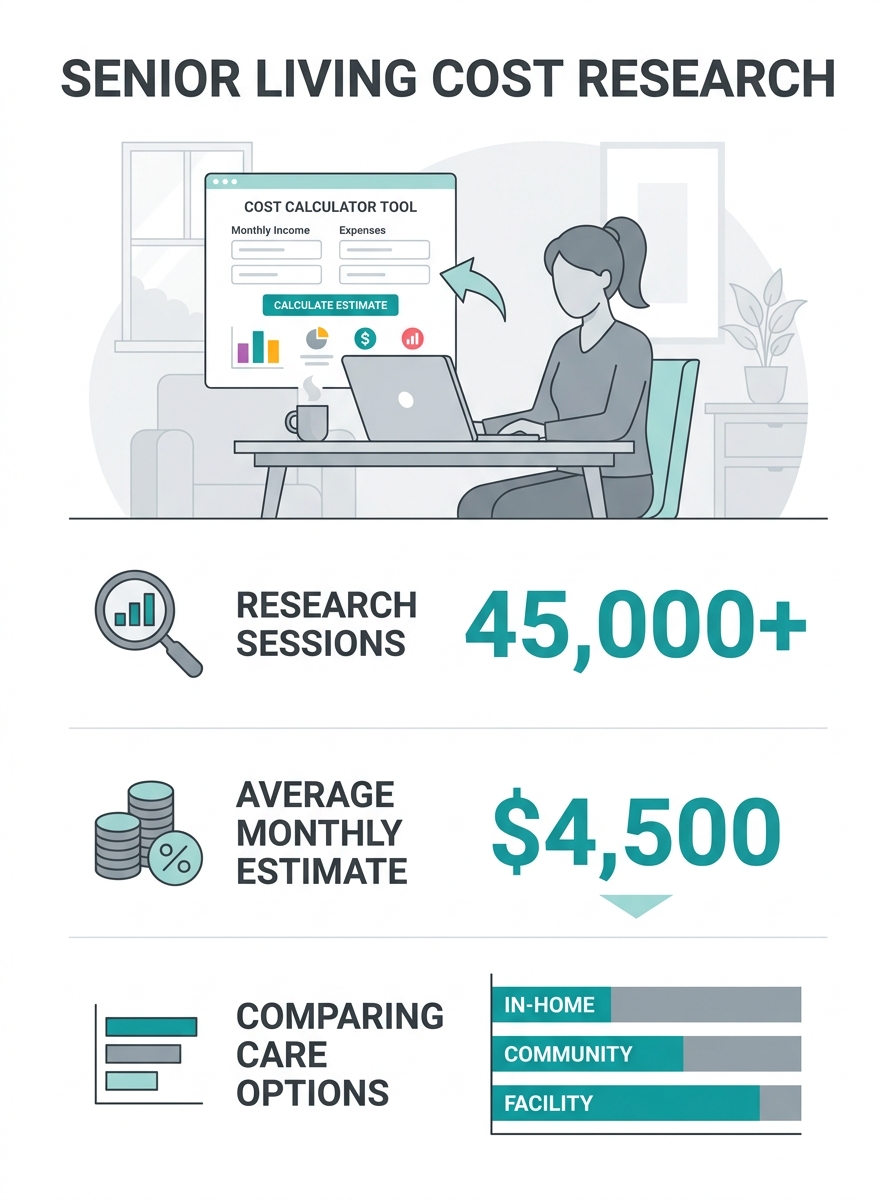
Operators are deploying cost calculators and comparison tools to address caregiver assumptions that senior living exceeds home care expenses. Atria’s website includes a calculator that tallies hidden costs of aging in place—vehicle maintenance, insurance, home modifications, and piecemeal service fees—that caregivers may not initially consider. “Sticker shock is real,” Graziose said. “When you start taking into account everything that’s included in senior living communities … We find that it’s generally much more expensive to try to piecemeal all those pieces at home.”
Beztak partners with third-party wealth advisory groups to counsel families on payment options given the upfront costs of senior living. The company presents side-by-side cost comparisons showing that senior living is not uniformly more expensive than coordinating in-home services, modifications, and family caregiver time.
The shift toward pricing comparison frameworks addresses aging in place as senior living’s primary competition. Older adults frequently assume they cannot afford communities or do not see themselves as senior living residents, prompting operators to use data-driven cost breakdowns to challenge those assumptions early in the decision process.
Providers Implications
Home care agencies face the same imperative driving these senior living marketing shifts: family members control referrals and placement decisions more than the seniors themselves. Agencies that direct marketing exclusively toward the senior—emphasizing independence, dignity, and personal choice—miss the adult child researching options at 10pm, comparing hourly rates, and calculating total monthly costs against assisted living. Your website needs the same infrastructure Atria and Beztak are deploying: real-time pricing, 24/7 chat availability, cost calculators that surface hidden expenses, and content that addresses caregiver guilt and decision fatigue rather than generic “compassionate care” messaging.
The content strategy Milone described—authentic caregiver testimonials and decision journey videos—translates directly to home care marketing. Families trust other families more than they trust agency branding. A three-minute video of a daughter explaining how she chose your agency, what the first week looked like, and how her father responded carries more weight than a hundred stock photos of hands holding hands. The operators interviewed are investing in this content because it performs; home care agencies should audit whether their content libraries include any first-person caregiver narratives or whether they rely entirely on third-person service descriptions.
Senior living operators targeting caregivers “upstream” before acute need creates a strategic opening for home care agencies. Many families researching assisted living are simultaneously evaluating whether in-home care can extend aging in place another 12 to 24 months. If your content addresses that comparison directly—acknowledging when home care is appropriate, when it is not, and what the transition signals look like—you position your agency as a credible partner rather than a vendor competing on price alone.