
Federal nursing home staffing mandates could return after November’s midterm elections unless providers propose credible quality-improvement alternatives, a former senior Centers for Medicare & Medicaid Services official warned at an industry conference this week, according to Skilled Nursing News.
Jonathan Blum, who served as CMS principal deputy administrator and chief operating officer during the Obama administration, told attendees at the LTC 100 Leadership conference that a version of the Biden-era minimum staffing regulations would likely resurface if Democrats retake the House in November. The Democrat who chairs the Senate Finance Committee pushed the original rule aggressively, Blum said, and providers should expect renewed regulatory pressure without alternative proposals to demonstrate improved care quality.
The comments signal that nursing home operators face a narrow window to shape future workforce policy. The Biden administration’s minimum staffing rule, which would have required facilities to maintain 0.55 hours of registered nurse care per resident day and 2.45 hours of nurse aide care per resident day, was effectively shelved earlier this year after legal challenges and political shifts. Blum’s warning suggests the policy debate remains active in Washington despite the current lull.
Providers Must Offer Alternatives
Blum framed the choice facing the sector plainly: develop flexible, measurable staffing approaches that raise care standards, or brace for another federal mandate. He emphasized that more constructive dialogue between policymakers and providers is needed now to avoid stringent top-down requirements later.
The former CMS executive pointed to a disconnect between agency staff focused on statutory requirements and the operational realities nursing homes face daily. Policymakers need direct exposure to care settings—visiting facilities, talking with frontline staff and residents—to understand why quality metrics vary across providers despite similar regulatory environments, he said.
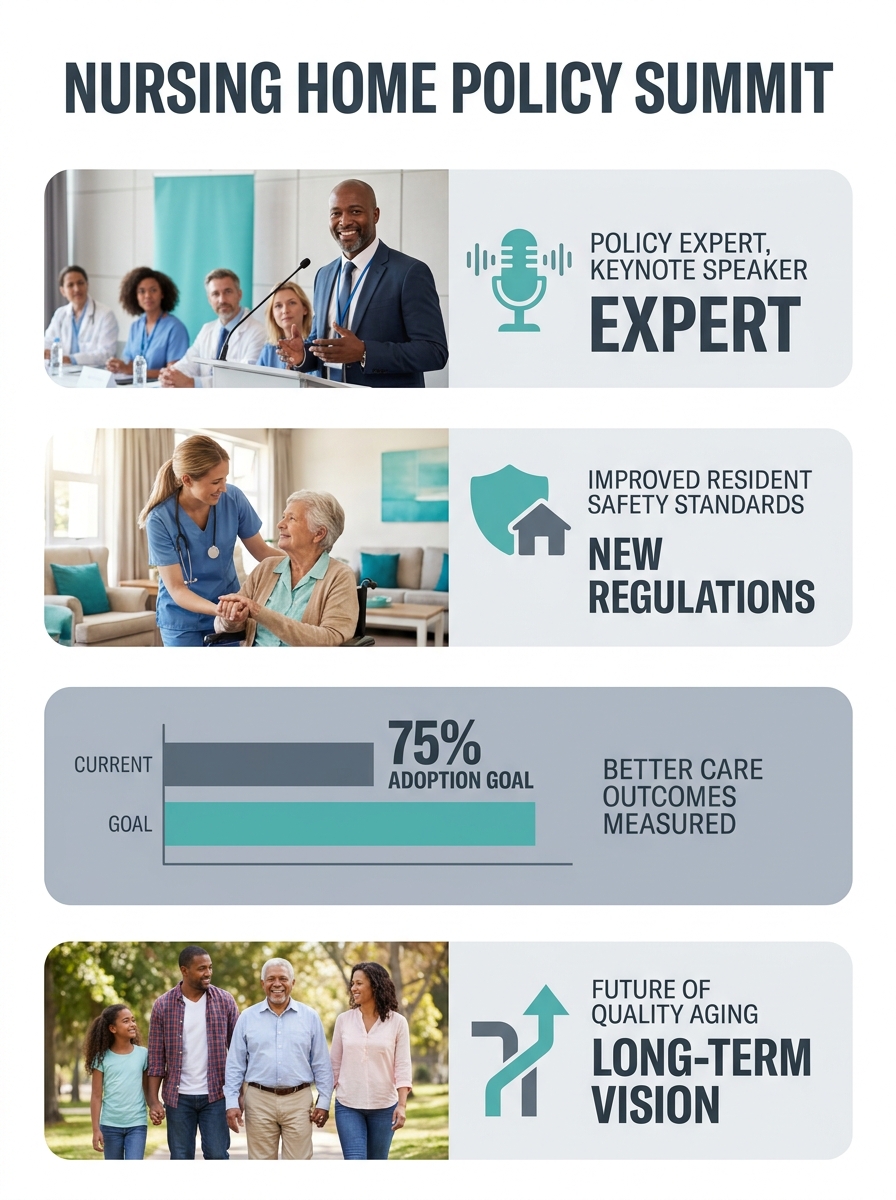
Blum urged operators to demand that members of Congress, congressional staff, and CMS policy leaders spend time in the field rather than relying solely on regulatory calculations and quality measure formulas. Providers should push policymakers to ask why some facilities continue showing low star ratings despite efforts to improve after surveys, he said, and what specific support would help raise performance across the board.
Better storytelling from nursing homes could help bridge the understanding gap and influence more practical policy decisions, according to Blum. Facilities that can articulate their workforce retention strategies and demonstrate measurable quality outcomes may have more credibility when regulators revisit staffing requirements.
Medicaid Financing Shift Expected
Blum also addressed broader payment policy changes affecting nursing homes. The One Big Beautiful Bill Act passed earlier this year will reset the Medicaid financing balance, shifting more fiscal responsibility back to states, he said. Federal per-capita spending on Medicaid has reached historic highs, and Congress has moved to limit tools states previously used to shift costs back to the federal government.
Budget pressures at the state level could lead to provider rate cuts regardless of federal carveouts in the reconciliation process, Blum warned. Political dynamics around the November midterms will likely determine whether these policies are implemented as written, delayed, or revised. If health care becomes a central campaign theme and Democrats gain seats, members of Congress may reconsider whether federal cuts have gone too far and coverage needs protecting, he said.
Medicare Advantage Critique
On Medicare Advantage, Blum expressed concern that plans have shifted toward competing on supplemental benefits and lower premiums rather than quality and care coordination. The program’s original purpose—incentivizing plans to manage care more effectively—has been lost, he said, with lower-income beneficiaries increasingly relying on MA plans that compete on benefits rather than outcomes.
CMS is transitioning away from paying for individual services and toward total-cost-of-care models covering entire episodes or populations, Blum noted. Nursing homes are viewed as part of the broader care continuum in these accountable care organization frameworks, and operators face mounting pressure to demonstrate value through quality outcomes rather than service volume.
Reform legislation including the Medicare Advantage Improvement Act of 2026, developed with input from the American Health Care Association, reflects the sector’s push to realign MA payments with patient outcomes. Similar state-level efforts are underway in California.
Provider Implications
Nursing home operators should treat Blum’s warning as a planning trigger, not speculation. The former deputy administrator’s comments reflect ongoing Washington conversations about workforce standards, and facilities that wait for final rule text to react may find themselves caught short on both staffing capacity and policy influence.
Administrators can use the next six months to document measurable quality improvements tied to current staffing levels, demonstrate retention programs that reduce turnover costs, and quantify how additional mandates would affect admission capacity in their markets. Facilities that engage state Medicaid directors and congressional offices now—before November—with specific operational data will shape the next round of regulations more effectively than those that file comments after proposed rules publish.
The Medicaid financing reset Blum described compounds workforce pressure: nursing homes reliant on Medicaid revenue may face simultaneous state rate cuts and federal staffing mandates if Democrats retake the House. Operators should model budget scenarios that account for both dynamics and begin exploring partnerships with accountable care organizations or MA plans to diversify revenue sources before payment pressures intensify. Facilities that position themselves as value-based care partners rather than fee-for-service volume providers may navigate the transition Blum outlined with fewer disruptions to admissions and census.