
Connecticut became the latest state to push mandatory training for homemaker companion workers when its House passed a training bill this week with overwhelming support. Florida already enforces Alzheimer’s-specific training under statute 400.6045. These tightening rules force every home care agency to face the same question: should you meet the bare minimum, adopt a third-party certification program, or build your own training curriculum?
Each approach carries different costs, different liability risks, and different marketing payoffs. The choice shapes how families perceive your senior care agency credibility and whether you can turn compliance into a competitive advantage. Here’s an honest look at all three options.
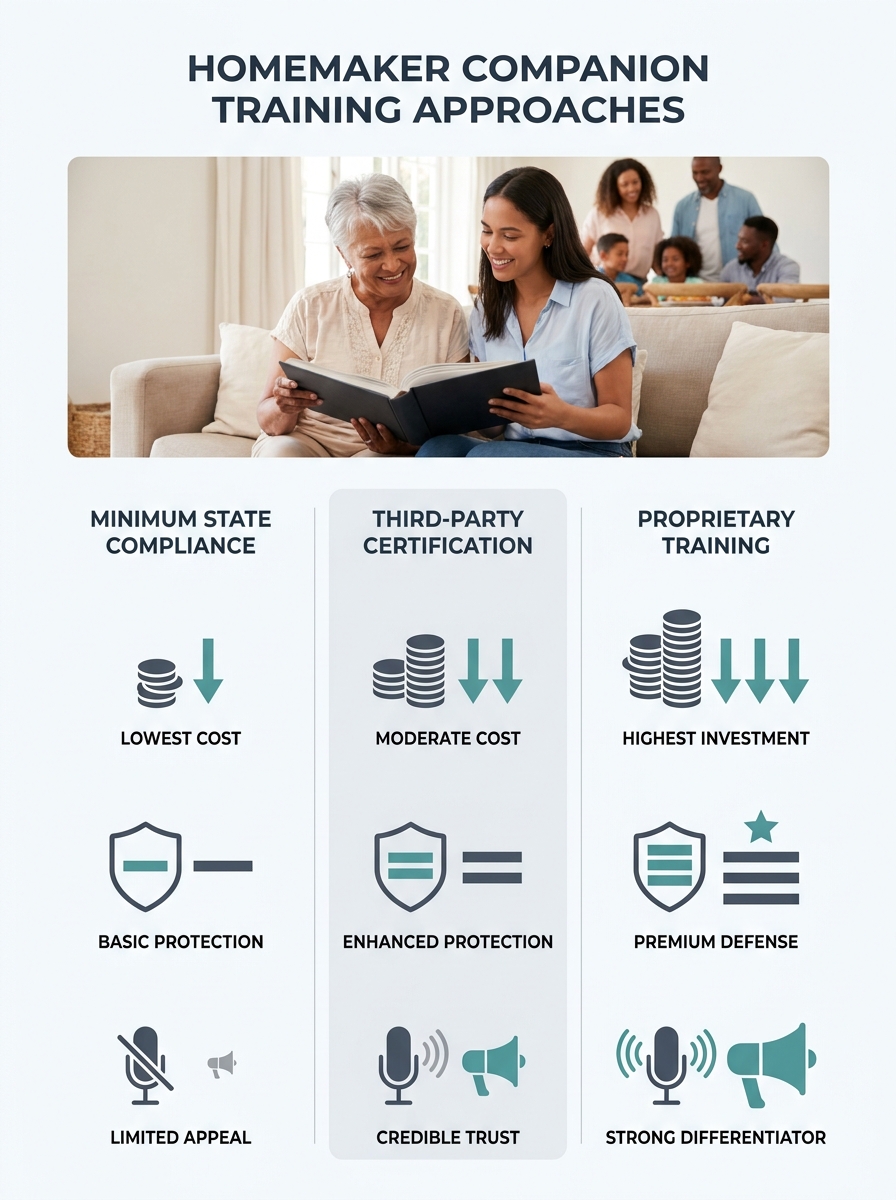
When Minimum State Compliance Is All You Do
Every state sets its own rules for caregiver training, and the requirements vary widely. Some states require dozens of hours. Others barely require any documented training at all for homemaker companion roles. Connecticut’s new bill exists precisely because homemaker companion agencies have operated with almost no oversight.
Meeting the minimum means your staff completes whatever your state mandates and nothing more. In Florida, that includes ADRD training for anyone serving dementia clients. Surveyors routinely issue citations (tagged CZ875 and ZZ875) when agencies fall short. So even “minimum compliance” demands real attention to paperwork and scheduling.
The upside
Cost stays low. You don’t need to license a platform or develop courses. You can onboard new caregivers faster, which matters when you’re competing for a thin labor pool. If you’re investing in recruiting through alternative channels, a shorter onboarding period means new hires start generating revenue sooner.
The downside
From a marketing standpoint, you have almost nothing to say. Competitors who invest in training can point to specific certifications, course hours, and competency benchmarks. You can’t. When an adult daughter compares two agencies on Google, “we meet state requirements” reads like table stakes, not a reason to choose you.
Liability exposure stays elevated, too. If a caregiver makes a mistake that better training could have prevented, your legal position weakens. State surveyors have started paying closer attention. The CT bill signals where the regulatory trend is heading. An agency doing the bare minimum today may find that minimum rising sharply within a year or two.
What Third-Party Certification Programs Get You
Programs from organizations like Relias Academy, the American Red Cross, and Home Care Pulse offer structured training with formal certificates. Relias, for example, has a companion homemaker course covering professional skills, communication, and specific companion care duties.
Adopting one of these programs means your caregivers earn credentials that families and referral partners recognize by name. You can list specific certifications on your website, your Google Business Profile, and your A Place for Mom listing.
The marketing payoff
This is where caregiver certification marketing delivers real traction. When families research your agency, seeing recognized certifications builds trust faster than any tagline. Research on senior care marketing confirms this: highlighting certifications, specialized training, and staff qualifications strengthens agency credibility and positions you as a trusted resource in a crowded market.
Well-trained staff also deliver better client experiences. That leads to stronger reviews and more referrals over time. Positive reviews on Google and Yelp compound. If you’re also investing in SEO for your home care agency and content marketing, those trust signals reinforce each other. A five-star review from a family praising your “well-prepared caregivers” does more for your pipeline than a dozen keyword-stuffed pages ever could.
Compliance as competitive advantage works because most agencies don’t bother. The bar is still low enough that clear, documented **homemaker companion training standards** set you apart from the majority.
The tradeoff
Third-party programs cost money. Licensing fees, per-seat charges, and the hours caregivers spend training instead of working all add up. For smaller agencies running on thin margins, this can feel like a stretch. You also depend on an outside vendor’s quality and update schedule. If your provider changes pricing or drops a course, you adjust on their timeline.
And you share these credentials with every other agency using the same provider. Your training story gets harder to tell when three agencies in the same ZIP code all display the same certification badge.
The Case for Building Training In-House
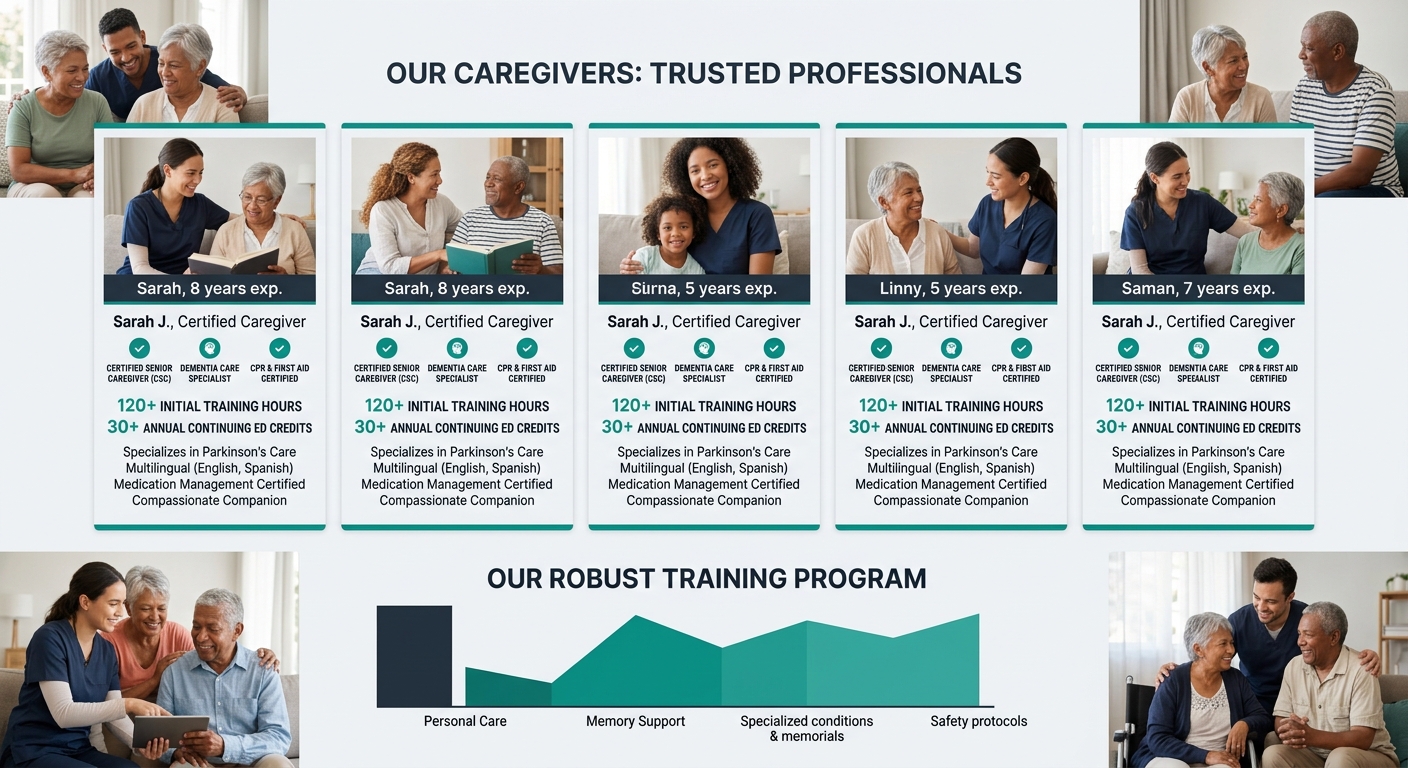
Some agencies develop proprietary training programs tailored to their specific client population, geography, and brand promise. This might include dementia care protocols beyond state minimums, cultural competency modules for a specific community, or scenario-based training filmed in actual client homes.
This approach takes serious effort. You need someone with clinical or training expertise to design the curriculum. You need a consistent delivery method. And you need to document everything, because that documentation protects you when a surveyor visits or a family files a complaint.
Where this shines
Your training becomes a brand asset no competitor can copy. You can describe it in detail on your website, feature it during family tours, and reference it in conversations with hospital discharge planners and social workers. When families are choosing based on trust signals rather than feature lists, a distinctive training program tells them your agency thinks carefully about quality.
Proprietary training also lets you build a visible career advancement path for caregivers. Level 1 companions complete the basics. Level 2 adds dementia-specific modules. Level 3 qualifies them for more complex cases. This structure helps with retention, and retained caregivers provide more consistent care, which generates better reviews, which feeds your marketing flywheel.
Family trust through staff qualifications becomes tangible when you can say: “Every companion in our agency completes 40 hours of training, including 8 hours focused on Alzheimer’s and related dementias, before their first solo visit.” That sentence is specific. It’s verifiable. It gives a worried adult child something concrete to hold onto during an overwhelming decision.
Where this falls short
Cost and complexity are real barriers. Developing curriculum requires expertise your team may not have. Keeping it current requires updates as regulations shift. An agency with five or ten caregivers may not justify the investment when a third-party program covers 90% of the same ground for less money.
There’s also a recognition problem. Families don’t know your internal program the way they recognize a Red Cross certification or a state CNA license. You’ll need to invest in explaining what your program includes, why you built it, and how it compares to standard offerings. That explanation is worth doing, but it requires consistent messaging across every channel where families find you.
Tip: Whatever training approach you choose, document everything and make it visible. Add specific training details to your Google Business Profile description, your website’s About page, and every intake packet a family receives. Vague claims like “our caregivers are trained” carry no weight. “40 hours including ADRD certification” does.

Who Should Pick Which
The honest answer depends on your agency’s size, budget, client mix, and local competition.
Choose minimum compliance if you’re a brand-new agency that needs to get operational fast and plans to upgrade within 12 months. Treat it as Phase 1, not a permanent strategy. Accept that you’re trading higher liability exposure and weaker marketing for speed to market.
Choose third-party certification if you want strong, recognizable credentials without the overhead of building your own program. This fits mid-size agencies serving a general senior population where families expect to see familiar certification names. The marketing lift is almost immediate. You can start featuring certifications on your website and in your outreach to referral partners within weeks.
Choose proprietary training if you serve a specialized population (dementia, multilingual communities, post-surgical recovery), you have the staff to develop and maintain curriculum, and you want training to become a genuine differentiator. This path takes longer and costs more, but it creates a marketing story no competitor in your market can replicate.
Many strong agencies blend options two and three. They require a baseline third-party certification for all new hires, then layer proprietary modules on top. That combination gives you external credibility and internal distinctiveness. It also creates a training story that holds up under scrutiny from families, referral partners, and regulators.
Connecticut’s bill passing this week is a directional signal. States are moving toward more oversight for homemaker companion services, not less. Agencies that treat homemaker companion training standards as both a compliance and marketing investment now will be well positioned when their own state follows suit. Those that wait will scramble to catch up, and the families doing their research will notice who was ready and who wasn’t.