An analysis from Your Lead Matrix found that automation cuts manual follow-up tasks by 80%. Apply that figure to a typical home care agency running six to ten new inquiries per week, and the math gets personal fast: your intake coordinator is spending roughly four out of every five follow-up hours on work a well-configured system could handle without them. Those hours aren’t just administrative waste. They’re the gap where families slip away, referral partners lose confidence, and your cost-per-acquisition climbs without anyone noticing until quarterly reviews.
The problem isn’t that agencies don’t care about follow-up. The problem is that intake follow-up automation has never been standard operating procedure in most small-to-midsize home care shops. Intake coordinators juggle phone calls, CarePort or WellSky referrals, family questions about insurance, and caregiver scheduling all at once. Something always falls through. And the something that falls through is almost always the family who called once, didn’t hear back within an hour, and moved on to the next provider on their list.
The Five-Minute Window Your Team Keeps Missing
HubSpot’s widely cited research puts the number at 21x: leads contacted within five minutes convert at twenty-one times the rate of leads contacted after thirty minutes. For home care, that window matters more than in almost any other service category. When an adult daughter calls three agencies during her lunch break, the provider who calls back first wins the initial conversation. The provider who calls back at 4 p.m. gets voicemail.
CareFunnels, a CRM built specifically for home care agencies, frames this as a direct marketing ROI problem: “Your marketing dollars work hard to generate interest. Don’t let slow or missed responses waste that investment.” Their system pairs AI voice and chat to ensure every lead gets immediate attention, even when your intake team is already on another call.
This is where marketing automation home care tools diverge sharply from general-purpose platforms like HubSpot or Mailchimp. A home care CRM understands that an inquiry about dementia care at 9 p.m. on a Tuesday isn’t a lead that can wait for business hours. The family member making that call is scared, overwhelmed, and comparing you to competitors in real time. Understanding how families make trust-based decisions means recognizing that your response speed is itself a trust signal.
Where the Handoff Actually Breaks
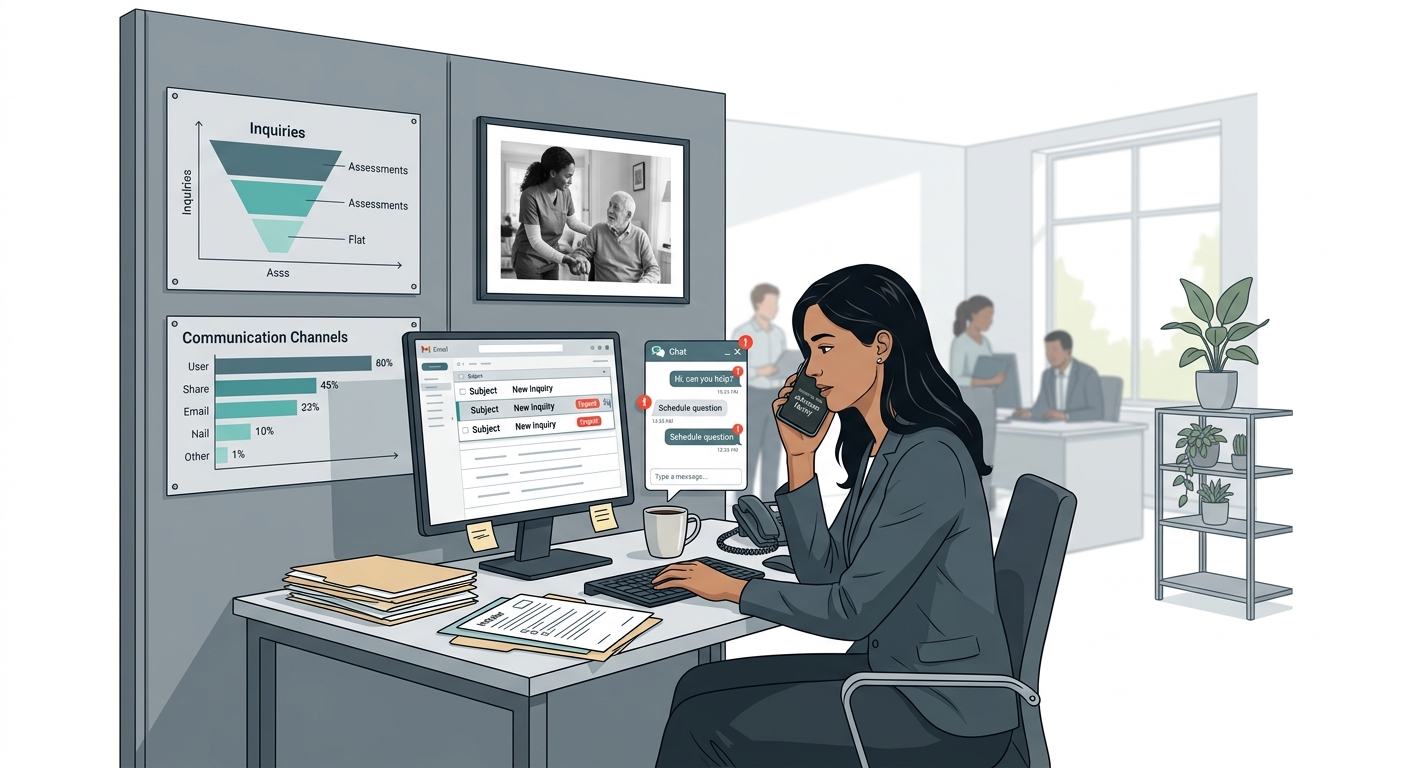
Talk to any intake coordinator who’s been on the job more than six months, and you’ll hear the same frustration described in different ways. The lead comes in, gets documented somewhere (a spreadsheet, a sticky note, a half-completed CRM entry), and then sits. The coordinator means to follow up. They will follow up. But three new referrals came in, a caregiver called out sick, and by Thursday, that Monday inquiry is buried.
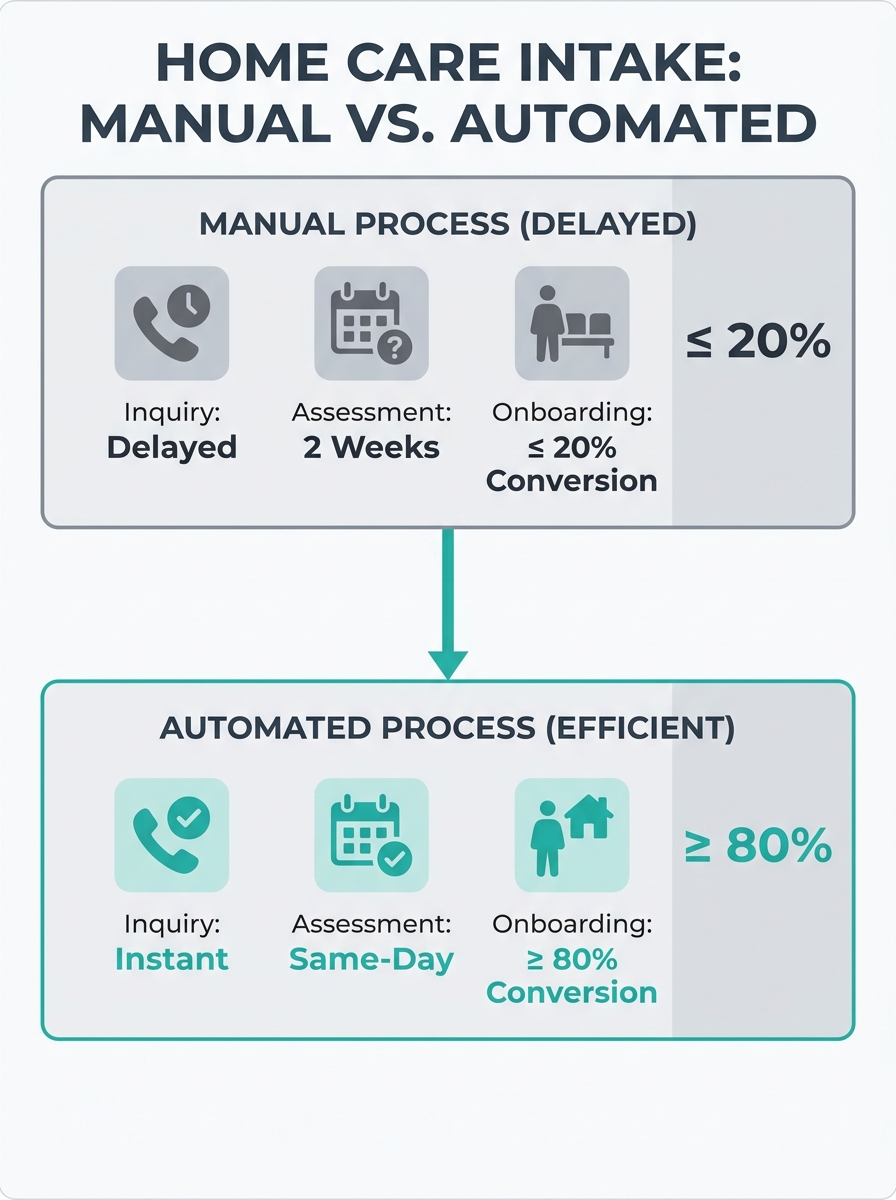
The handoff breakdown in home care agency operations typically happens at one of three points:
- Between marketing and intake. A web form submission or A Place for Mom referral arrives, but nobody owns the next step in the first ten minutes. There’s no automated text confirmation, no immediate email with your agency’s name and a human point of contact.
- Between intake and care coordination. The intake call goes well. The family is interested. But scheduling the in-home assessment takes two more phone calls, a check on caregiver availability, and coordination with the client’s existing medical providers. Each manual step introduces delay.
- Between assessment and first visit. The assessment is done. The care plan is ready. But the gap between “yes, we’d like to start services” and a caregiver actually showing up at the door can stretch to five or seven days if scheduling isn’t automated. That gap is where families second-guess their choice.
Platforms like Aline address this by connecting their contact center and marketing automation tools directly to the intake workflow, tracking the preferences, needs, and history of each prospect from first touch through service delivery. The idea is that no handoff requires a human to remember to do something. The system triggers the next step automatically.
What a Client Retention Workflow Looks Like in Practice
A client retention workflow built on automation doesn’t look like a robot sending impersonal emails. It looks like your best intake coordinator’s process on their best day, replicated every single time without fail.
Here’s a realistic sequence for a home care agency:
- Minute 0: Inquiry arrives via web form, phone, or referral portal. Automated SMS and email go out immediately confirming receipt and providing the coordinator’s direct line.
- Hour 1: If no live conversation has happened, an automated call or text checks in: “Hi, this is [Agency Name]. We received your inquiry about care for your mother. Can we schedule a quick call today?”
- Day 1: Welcome email with a brief overview of your services, a link to your Google reviews, and a family FAQ document.
- Day 3: If the family hasn’t scheduled an assessment, a follow-up text goes out. Not pushy. Something like: “We know choosing care is a big decision. We’re here when you’re ready.”
- Day 7: Internal alert to the intake coordinator that this lead hasn’t converted. Time for a personal phone call.
- Day 14: If still no conversion, the lead enters a longer-term nurture sequence with monthly educational content about home care options.
This kind of lead nurturing system mirrors what healthcare lead generation strategists recommend across the industry. Monday.com’s research on healthcare sales strategies emphasizes the need to set up automated workflows that maintain consistent touchpoints with prospects over extended evaluation periods. In home care, where families often research providers for weeks or months before committing, that patience built into your automation is what separates you from agencies that give up after two callbacks.
If you’ve already explored how to structure lead follow-up automation, the retention workflow extends that same logic past the first conversion. Once a client starts services, automated check-ins at the 72-hour mark, the two-week mark, and monthly thereafter catch dissatisfaction before it becomes a cancellation. This is where retention gets built, in the quiet follow-through that manual processes almost never sustain.
The gap between “yes, we’d like to start services” and a caregiver actually showing up at the door is where families second-guess their choice.
The Referral Partner Effect
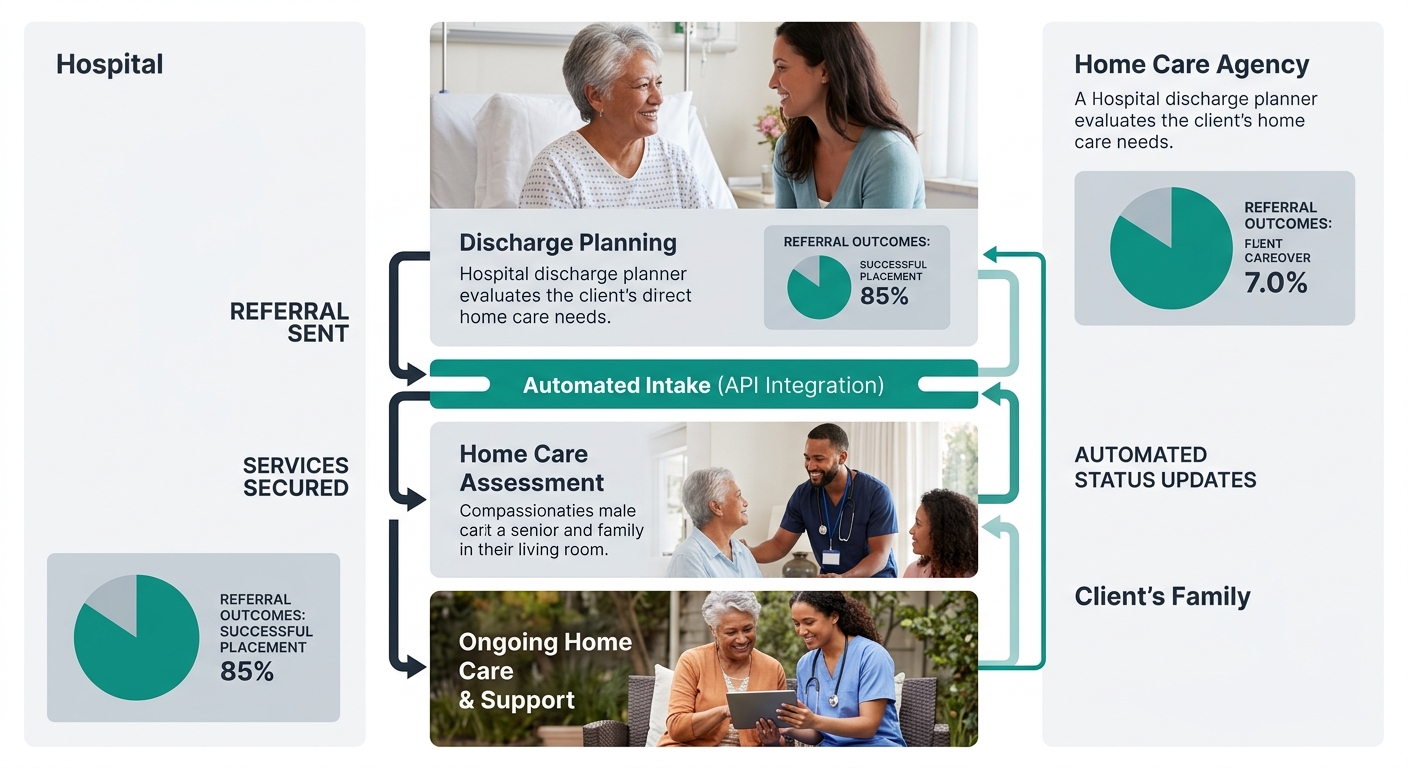
Automation’s retention benefits extend beyond direct-to-consumer inquiries. Referral partners like hospital discharge planners, skilled nursing facilities, and rehab centers send patients to agencies they trust to respond quickly and close the loop. When a discharge planner sends a referral and hears nothing for 48 hours, that planner stops sending referrals to your agency. It’s that simple.
AutomationEdge’s work on referral management for home health agencies describes intake automation as the process of collecting, verifying, and organizing patient information at first contact. When that process is automated, the referral partner gets an instant acknowledgment that the referral was received, a timeline for when the patient will be contacted, and a status update once the intake call is complete. That kind of closed-loop communication is what earns you the next ten referrals from the same source.
This applies whether you’re running a home care agency, a home health organization, or marketing for rehab centers that discharge patients into home-based services. The referral partner’s experience with your intake process shapes their perception of your clinical quality, fair or not.
Building those referral relationships manually takes enormous effort. Automating the communication layer around them lets your business development team focus on deepening those relationships in person, while the system handles the transactional updates that keep partners informed. If you want to dig deeper into finding and developing referral sources, the automation layer we’re describing here is what makes those relationships sustainable at scale.
Choosing the Right Tools Without Overbuilding
The home care CRM market has grown significantly, and agencies now face a genuine paradox: too many options and too little clarity about what they actually need. CareFunnels, Aline, AxisCare, CareVoyant, and WellSky all offer some version of intake and marketing automation. The differences are in how tightly the marketing automation connects to scheduling, billing, and caregiver management.
For agencies billing under $2 million annually, the priority should be a system that handles three things reliably:
- Instant lead response (SMS + email)
- A timed follow-up sequence that runs without manual intervention
- Referral source tracking so you know which partners and marketing channels produce clients who actually start and stay on services
Everything else is nice to have. Predictive analytics, AI-powered caregiver matching, and behavioral scoring all add value, but they add complexity too. And complexity is the enemy of adoption. The best automation system is one your intake coordinator will actually use every day, not the one with the longest feature list.
Tip: Before committing to any platform, ask the vendor how many clicks it takes to get from “new inquiry received” to “first automated response sent.” If the answer is more than zero, the system isn’t truly automated.
Agencies that send personalized emails as part of their nurture strategy see stronger engagement than those blasting generic newsletters. The automation tool you choose should support personalization tokens at minimum: the prospect’s name, the type of care they inquired about, and the specific location or service area relevant to them.
Questions The Numbers Still Can’t Answer
The 80% reduction in manual tasks is real and well-documented. The 21x conversion advantage for five-minute response times is real. But a few important questions remain unanswered by the current data.
How much automation is too much for a population that skews older? Adult children of seniors are typically comfortable with text messages and email sequences. But when the client themselves is the one making the inquiry, an aggressive automated cadence can feel impersonal or confusing. No study has yet measured the threshold where automated touchpoints start hurting conversion among seniors contacting agencies directly.
What’s the retention lift specific to home care? The 52% retention improvement cited in broader service-industry automation studies may or may not transfer directly to home care, where retention depends heavily on caregiver consistency, scheduling reliability, and the deeply personal nature of in-home services. Home Care Pulse publishes annual benchmarks on client satisfaction and retention, but we don’t yet have controlled studies isolating the impact of intake automation on twelve-month client retention in home care specifically.
Does automation help or hurt caregiver retention? When your systems promise rapid response and smooth onboarding to families, your caregiving staff bears the pressure of delivering on those promises. AxisCare’s guidance on attracting and retaining home care clients rightly emphasizes staff training and engagement alongside marketing tools. Automated systems that overcommit on timelines without accounting for caregiver availability can create a different kind of breakdown, one that happens after the sale instead of before it.
These gaps in the data don’t argue against automation. They argue for measuring what happens after you implement it. Track your inquiry-to-assessment conversion rate before and after. Track your 90-day client retention rate. Track how many referral partners increase their volume to you over six months. The numbers will tell you whether your specific implementation is working, even where the industry-wide research still has blind spots.