
David Smith and Brad Johnson released “Fair Share: How Men and Women Can Create an Equitable Workplace Together” on August 2, presenting a systemic retention framework for the 70% of workers who identify as caregivers of children, elders, or people with disabilities, according to Forbes. The book, which completes the authors’ allyship trilogy following “Athena Rising” and “Good Guys,” argues that traditional workplace structures ignore caregiving responsibilities, causing measurable talent loss.
TL;DR: Workplace culture experts published a retention framework August 2 addressing the 70% of workers who provide caregiving, citing manager training, paid leave policy, and returnship programs as critical retention levers for senior care employers facing staffing shortages.
The publication arrives as senior care operators report workforce challenges that directly affect admissions capacity and service delivery. Smith and Johnson position caregiving support as a business imperative rather than a benefits add-on, arguing that organizations lose top talent when policies exist on paper but managers lack training to execute them without penalizing employees.
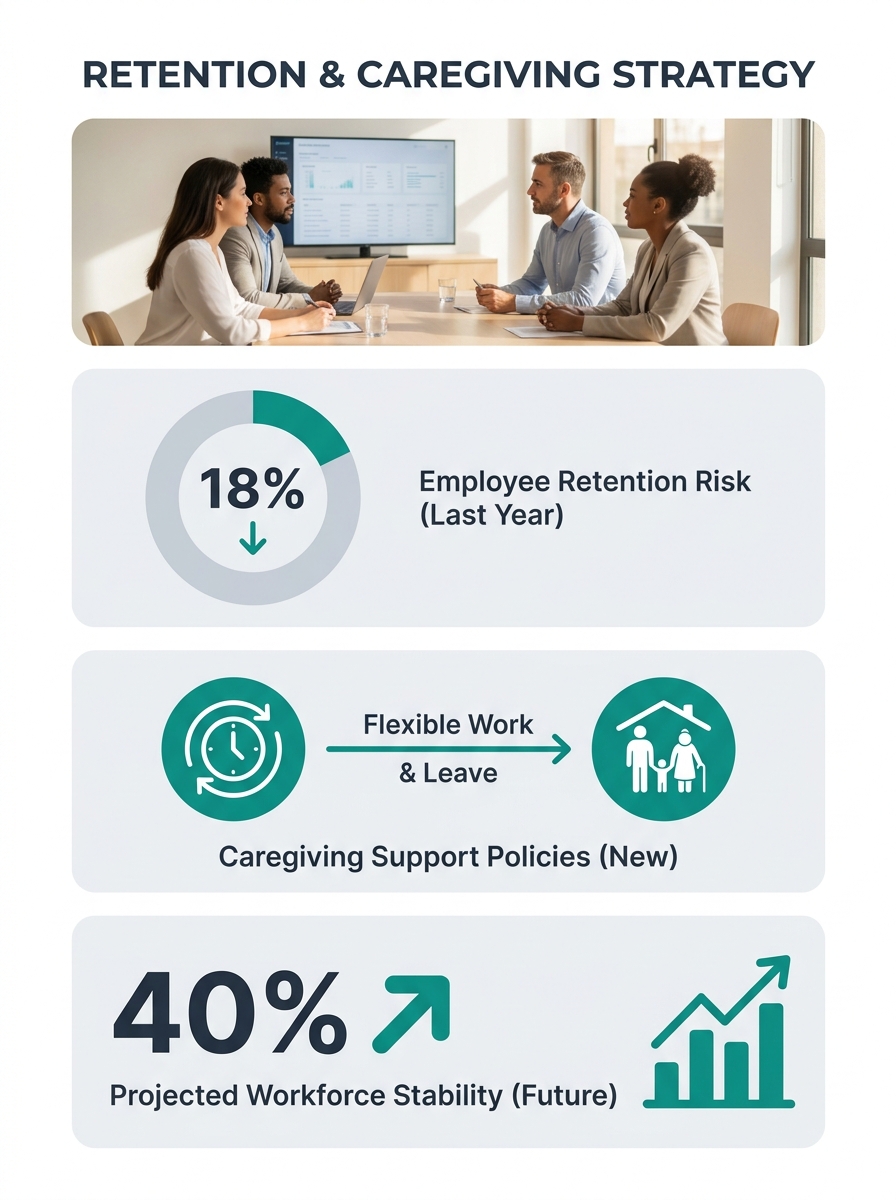
Caregiving Tied to Leadership Development and Talent Loss
“At any one time, about 70 percent of your workforce identifies as a caregiver,” Smith said in the Forbes interview. “Yet, employers often don’t recognize that because they don’t have visibility or transparency with their workforce on who’s a caregiver and who’s not.”
The authors connect active caregiving to leadership skill development, specifically empathy and emotional intelligence. Smith noted that when organizations normalize parental leave and caregiver support broadly, they reduce the career penalty employees face when balancing family responsibilities. The framework addresses dual-earner households, which now represent the majority of the workforce, according to the book.
For senior care providers, the findings carry operational weight. Agencies that recruit and train caregivers face the same retention pressures the book describes. Employee messaging that ignores caregiver identity creates recruitment friction, particularly when competing for talent against employers who demonstrate visible support for caregiving responsibilities.
Manager Training and Data Transparency Drive Implementation
Johnson outlined two structural requirements for retention: manager preparation and disaggregated employee data. “We tend to promote people to manager based on their performance in their last job, not based on their EQ, their ability to manage people inclusively, or their ability to execute policies that actually would promote more gender fairness,” Johnson said in the interview.
The book recommends collecting hiring, retention, and advancement data every six months, broken down by gender and caregiver status, then sharing that data internally to build employee trust. Johnson framed transparent metrics as the mechanism that converts policy promises into measurable culture change.
Progressive benefits like paid leave or flexible scheduling deliver limited retention value if front-line managers penalize employees who use them, the authors argue. Training managers to execute caregiver policies without bias prevents talent loss at the point where employees decide whether to stay or exit.
Senior care agencies face parallel challenges in supervisor training. Directors of nursing, home care branch managers, and assisted living wellness directors manage frontline caregiving staff who themselves often carry caregiving responsibilities outside work. Caregiver burnout data shows that 90% of family caregivers report burnout, a rate that extends to professional caregivers managing both client care and personal caregiving duties.
Returnship Programs Target Experienced Workers Re-Entering Workforce
“Fair Share” introduces returnships as a recruitment strategy for skilled workers who exited the workforce to provide caregiving. Johnson described returnships as “one of the fastest ways to solve executive talent shortages,” targeting women who stepped away from traditional employment to care for children or aging parents.
The authors argue that organizations complaining about labor shortages simultaneously maintain recruitment filters that exclude experienced professionals seeking to re-enter the workforce. Creating structured re-entry paths addresses both talent pipeline gaps and gender balance targets in leadership roles.
For home care agencies and senior living operators, returnships offer a qualified applicant pool with relevant life experience. Workers who managed family caregiving understand client needs, caregiver stress, and the coordination required across medical providers, insurance companies, and family decision-makers.
The book recommends auditing leave transitions with structured nine-month plans that cover pre-leave preparation, during-leave communication, and phased re-entry. Johnson emphasized that transparent leave processes reduce stigma and signal organizational commitment to caregiver support.
What Happens Next
Senior care providers implementing the framework face three immediate decisions: whether to audit current manager training on caregiver policy execution, whether to disaggregate employee retention data by caregiver status, and whether to build structured re-entry programs for experienced workers who left caregiving roles to manage family responsibilities.
The recommendations align with operational realities facing agencies that compete for talent in tight labor markets. Facilities that demonstrate visible caregiver support through paid leave, flexible scheduling, and manager accountability differentiate themselves in recruitment, particularly when competing against employers in adjacent healthcare sectors.
Agencies tracking employee experience data can measure whether caregiving-related exits cluster under specific managers or branches, signaling execution gaps rather than policy gaps. That granularity allows targeted intervention where training or leadership changes deliver the highest retention return.