
Your Health Magazine published a seven-strategy growth framework July 20 for senior living operators, according to the publication, positioning resident experience as the primary competitive differentiator as occupancy rates improve and new construction slows across multiple markets. The guidance centers on continuous feedback systems, standardized care protocols, and staff communication training rather than physical amenities or building upgrades.
TL;DR: Your Health Magazine published a growth framework July 20 targeting senior living operators during improving occupancy conditions, emphasizing daily resident experience over physical amenities through seven operational strategies including 48-hour concern response protocols and 30-day onboarding programs.
Market Context Drives Strategic Shift
The framework arrives as senior housing occupancy improves in many markets while construction activity declines, creating growth opportunities for existing communities. The publication notes that rising monthly prices simultaneously elevate resident and family expectations around service quality, staff responsiveness, and perceived value. “Growth now depends on how residents feel every day, not only on amenities or a newer building,” the article states.
Satisfaction data across independent living, assisted living, and memory care shows strong correlation with staff communication quality and service responsiveness, according to the publication. The framework positions these operational elements as more influential than physical infrastructure in retention and referral generation.
Feedback Systems and Response Protocols
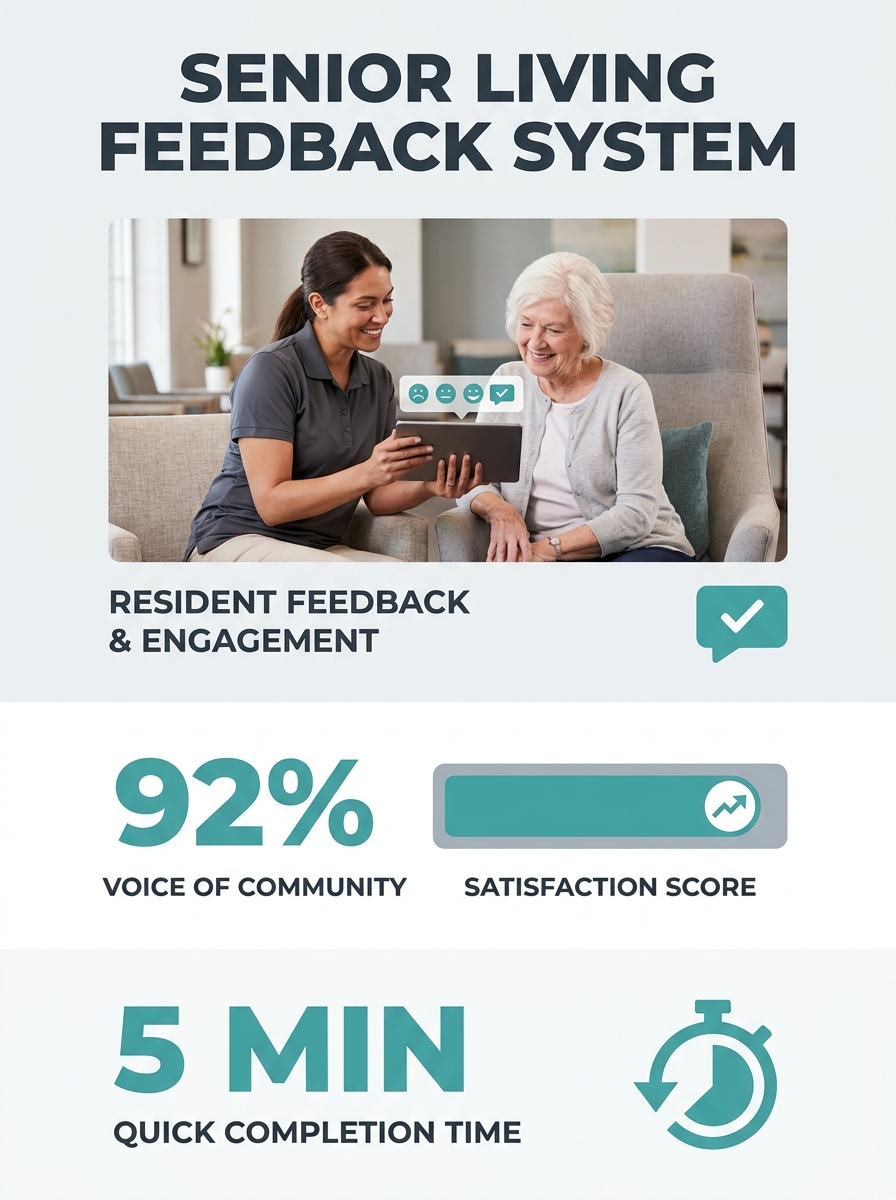
The first strategy recommends replacing annual satisfaction surveys with continuous feedback programs using National Quality Forum-endorsed measures such as CoreQ. The framework specifies a 48-hour response target for any flagged concern, with visible corrective action that residents can observe. “The goal is to gather resident input continuously, then close the loop quickly so people see that speaking up leads to real change,” the publication states.
The guidance references Activated Insights as a vendor supporting real-time, non-anonymous feedback across multiple collection modes including email, text, staff-assisted tablet, and phone calls. This multimode approach addresses response barriers for residents with varying technology comfort levels. The reputation management implications extend beyond internal satisfaction to online review generation, as resolved concerns often translate to positive testimonials.
4Ms Framework as Daily Operations Standard
The framework recommends implementing the Age-Friendly Health Systems movement’s 4Ms protocol—What Matters, Medication, Mentation, and Mobility—across thousands of U.S. care sites. The publication translates these priorities into operational steps: conducting welcome interviews to document individual resident preferences, reviewing medication regimens to eliminate unnecessary sedation, adding daily mobility prompts, and scheduling memory-friendly activities.
The 4Ms structure provides standardized language for staff training and performance evaluation, according to the article. Communities tracking satisfaction data can correlate 4Ms adherence with experience scores to identify which protocol elements drive the strongest resident outcomes.
Dining, Onboarding, and Communication Training
Three operational areas receive dedicated strategic focus in the framework. Dining improvements—including menu choice expansion and cook-to-order options—should be made visible during facility tours because “a plated, appealing meal shapes first impressions more than a brochure,” the publication notes. The culinary experience functions as both a resident satisfaction driver and a family decision-making factor.
The framework establishes a 30-day onboarding window as critical for retention. Recommended tactics include buddy-pairing new residents, scheduling early check-ins tied to survey feedback, and responding immediately when newcomers flag loneliness, confusion, or service gaps. “A smoother move-in supports retention and creates the kind of word-of-mouth that helps fill rooms without relying only on paid marketing,” according to the article.
Staff communication receives detailed guidance covering greeting protocols, room-entry procedures, name usage, and plain-language billing explanations. The publication recommends short, recurring coaching sessions over single extended training events, with real interaction observation and adjustment based on resident and family feedback.
Pricing Transparency and Benchmark Targeting
The framework addresses rising monthly costs through line-item fee transparency, allowing residents and families to see payment breakdowns. “Clear pricing builds trust even when costs go up,” the publication states, framing transparency as a satisfaction driver independent of absolute price levels.
The final strategy recommends tracking CoreQ scores and comment themes monthly, segmented by building, department, or shift when feasible. Rather than attempting simultaneous improvement across all metrics, the framework advises selecting one or two drivers—such as activities programming or staff responsiveness—and setting 90-day improvement targets. “Chasing every metric at once usually moves none of them,” according to the article.
Regulatory Context and Reporting Requirements
The publication notes Florida has adopted a nursing home consumer satisfaction survey rule requiring CoreQ-recognized vendors and establishing formal reporting schedules. The framework positions benchmark tracking as preparation for expanding state-level satisfaction reporting mandates, suggesting more jurisdictions may follow Florida’s regulatory approach.
The guidance does not specify which other states are considering similar rules or provide timeline projections for regulatory expansion. Operators in states without current satisfaction reporting requirements may use the framework for competitive differentiation ahead of potential mandate adoption.
Why This Matters Now
Senior living operators face a strategic inflection point as improving occupancy rates create growth runway while resident expectations simultaneously escalate. The Your Health Magazine framework treats this moment as requiring operational repositioning rather than facility expansion—a departure from growth models that prioritize new construction or amenity upgrades. For administrators evaluating capital allocation, the guidance suggests investing in feedback systems, staff training protocols, and onboarding programs may generate stronger occupancy gains than physical plant improvements.
The framework’s emphasis on measurable experience metrics aligns with broader healthcare consumerism trends, where service quality transparency influences family placement decisions as heavily as clinical capability. Communities that implement continuous satisfaction tracking and visible response protocols position themselves to capture referrals in markets where multiple operators compete for the same prospect pool. The 48-hour concern resolution target and 30-day onboarding structure provide concrete implementation benchmarks that marketing teams can promote during family tours and in content marketing materials.
Florida’s satisfaction reporting rule suggests regulatory pressure may accelerate adoption of standardized experience measurement across senior living segments. Operators who establish CoreQ or equivalent tracking systems ahead of state mandates gain competitive advantage through earlier data accumulation and staff protocol refinement. The framework positions resident experience optimization as both a near-term growth tactic and a compliance preparation strategy for regulatory environments that increasingly mirror acute care’s consumer satisfaction requirements.