
A nursing home chef in McPherson, Kansas eliminated nearly all resident food complaints by asking residents to share their family recipes and rebuilding the facility’s menu around those dishes, according to a viral podcast interview published August 6.
TL;DR: Craig Bowerson, chef at The Cedars nursing home, reduced resident food dissatisfaction from 75% to almost zero by soliciting family recipes and creating personalized menus based on residents’ cooking memories.
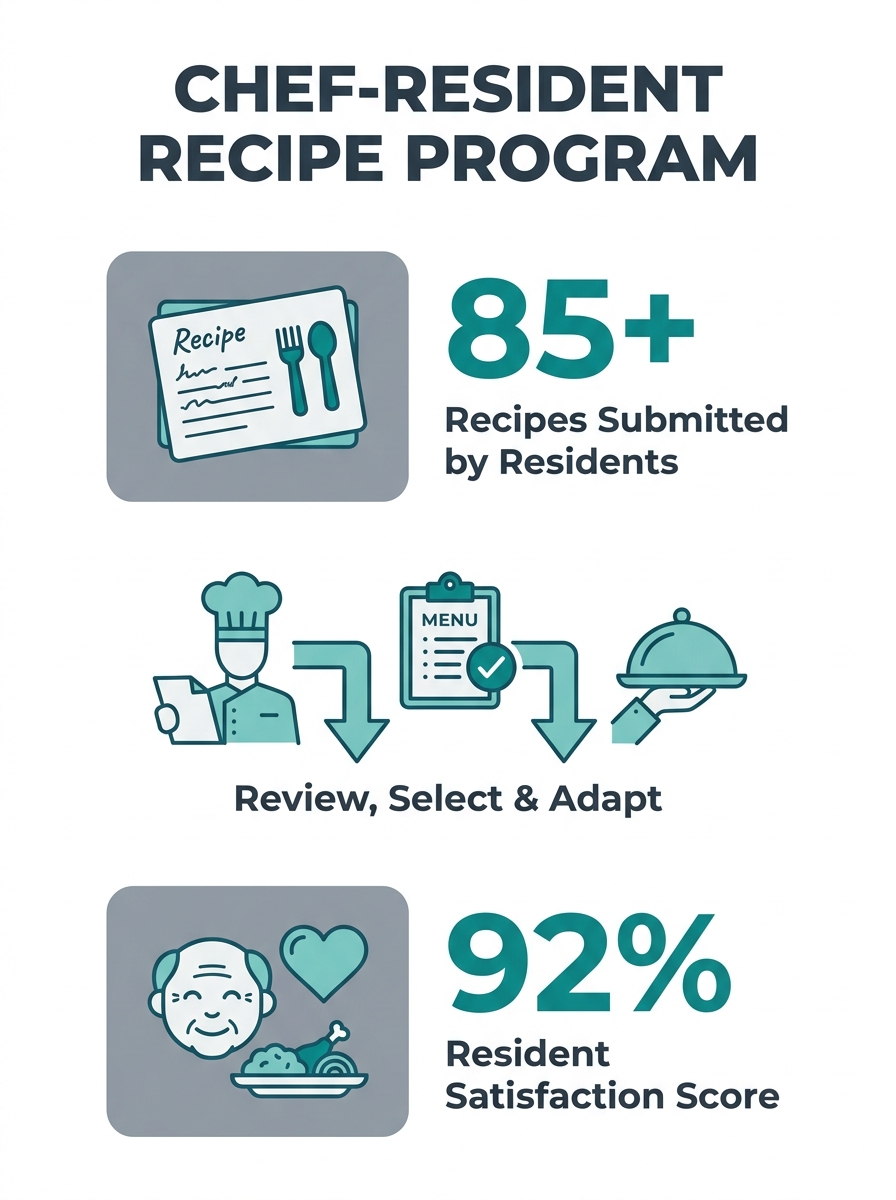
Craig Bowerson told the podcast Owen by the Oven that he received several hundred recipes during his first week of the program at The Cedars, a nursing home where he had faced higher dissatisfaction rates than in his previous 33 years as a chef, according to TODAY.com. The interview clip drew millions of views on social media after publication.
The chef said his approach shifted during the COVID lockdown when increased time with residents revealed that many were former homemakers with detailed memories of meals they had prepared for their families. “Just, ‘Hey, how did you make spaghetti? How did you make lasagna? How did you make your chicken cordon bleu?'” Bowerson said in the interview. “I ended up re-creating a menu just based off of what my residents want.”
How the Recipe Program Works
Bowerson collects recipes in multiple formats—handwritten from memory, printed from vintage magazines, and family originals that have been passed down for decades. Some recipes residents have submitted are more than a century old, according to the chef.
Many residents provide complete meal plans rather than single dishes. “A lot of times, they would give me the main dish with the sides that they served,” Bowerson said. “I found that very helpful.” The approach mirrors reputation management strategies that senior care providers use to address satisfaction concerns through direct resident input.
The program includes creating individualized menus for residents with specific needs. Bowerson described preparing customized dishes for a resident named Bill who had dementia and was regressing to childhood memories. “He used to tell me stories about how his father was a chef in Winnetka, Illinois, and so I ended up contacting the Chamber of Commerce there,” Bowerson said. “I got all the information that I could about that, and we re-created some dishes from his dad.”
The Most-Requested Recipe
One dish has become a permanent menu staple because of frequent resident requests. Bowerson identified it as a chili mac recipe that required two weeks of testing to perfect because the resident who submitted it only had his late wife’s six-item shopping list, not the full recipe.
“He ended up having us add cheese to it, and that was the only thing that wasn’t in the recipe,” Bowerson said. The resident has since died, but the dish remains on the menu rotation. The chef described the recipe as one that “has never let me down.”
Bowerson’s initial approach to the position treated residents as clients in a transactional relationship. “You kind of walk in, and you’re like, ‘This is the client,'” he said of his early perspective. That framework changed as he spent more time in the facility. “When you start getting that personal connection, you realize you’re a guest in their house.”
The Takeaway
The Cedars case demonstrates how operational changes that address resident dissatisfaction can produce measurable outcomes without capital investment. A 75-percentage-point swing in satisfaction scores through menu personalization offers a replicable model for nursing homes and assisted living communities facing food-service complaints that damage family perceptions and online reviews.
The strategy also surfaces a retention insight: many residents enter care facilities with decades of cooking expertise that facilities typically ignore. Bowerson’s program converts that expertise into engagement and satisfaction by repositioning residents as recipe contributors rather than passive menu recipients. Facilities tracking Net Promoter Scores or family satisfaction metrics may find similar approaches applicable beyond dining services—activities programming, room personalization, and care planning all offer parallel opportunities to solicit resident input that shapes daily operations.