
Maplewood Senior Living, Erickson Senior Living, and EverTrue are adding psychiatric-certified nurse practitioners and licensed psychotherapists to clinical teams after seeing what leaders describe as a “meaningful increase” in residents arriving with active depression, anxiety, and post-traumatic stress disorder, according to Senior Housing News. The operational shift, detailed July 22, responds to rising behavioral health needs that emerged during the pandemic and now require “more active clinical support” rather than routine monitoring.
TL;DR: Senior living operators are integrating psychiatric nurse practitioners and talk therapy into care models as nearly 15% of adults 70+ live with mental health conditions—a population historically underserved due to stigma.
Behavioral Health Needs Climb Since Pandemic, Providers Report
Erickson Senior Living has seen “a notable increase” in behavioral health needs among residents, according to Ashley Kinder, vice president and regional medical director for the Baltimore-based provider. Multiple factors drive the trend: emotional challenges from living longer with chronic illness, social isolation, and increased diagnosis rates for depression and anxiety, Kinder told Senior Housing News.
St. Louis-based EverTrue reported a “significant increase” in behavioral health needs since the pandemic, with higher rates of major depressive disorder, anxiety, and PTSD diagnoses, according to Rachel Little, vice president of clinical services. Staff now see more residents arriving with substance use history, prompting the organization to rethink how clinical and lifestyle teams collaborate on mental health support.
Almost 15% of people 70 and older worldwide live with a mental health condition—most commonly anxiety or depression—according to the World Health Organization. Mental health conditions in older adults “often go underrecognized and undertreated” due to stigma around seeking support, the organization noted.
Psychiatrist Shortage Drives Nurse Practitioner Hiring
Maplewood Senior Living, based in Westport, Connecticut, now requires coordination of active mental health services for many residents as part of primary care—a shift from past routine monitoring, according to Tino Popescu, chief clinical officer. Residents increasingly request alternatives to antipsychotic medications due to risks and side effects, Popescu said.
“The clearest challenge industry-wide is access to psychiatric expertise; psychiatrists are in short supply,” Popescu told Senior Housing News.
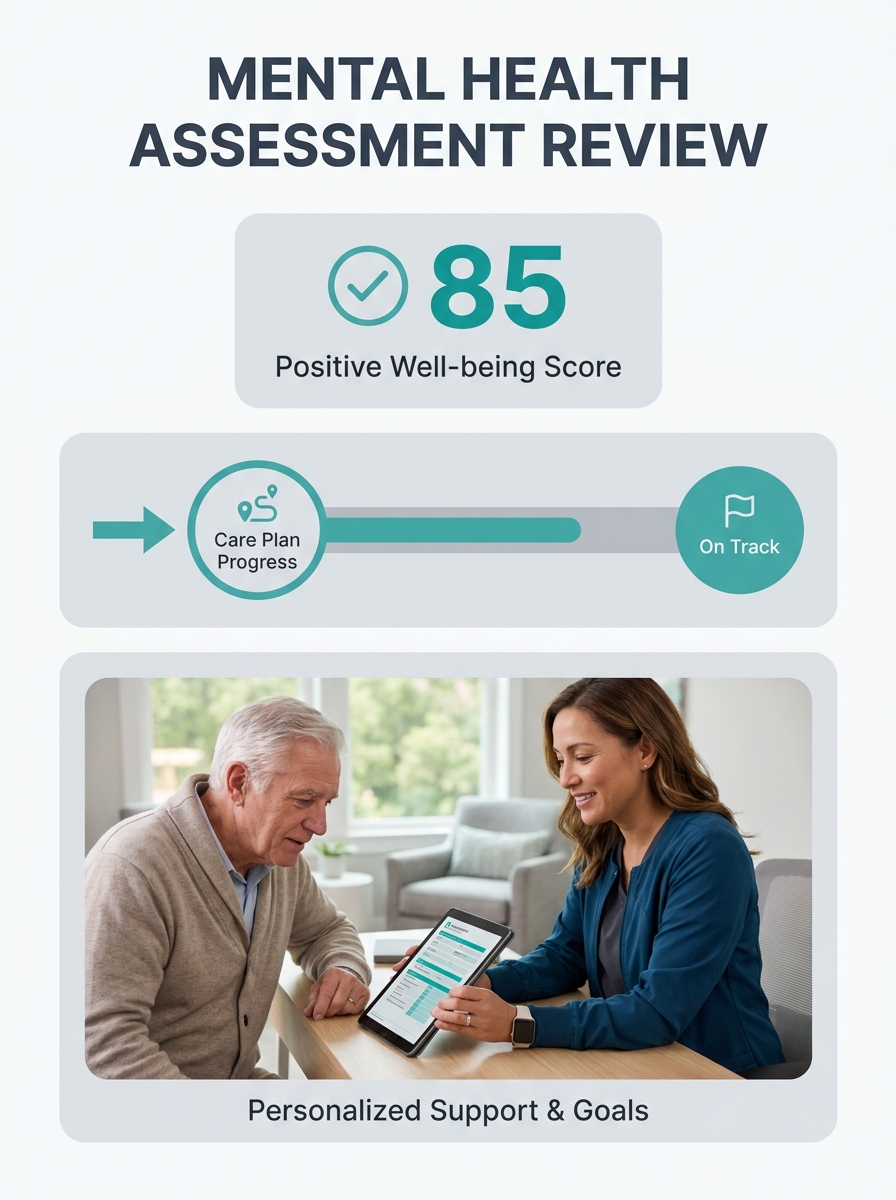
Maplewood expanded its clinical care model to include psychiatric-certified nurse practitioners and talk therapy through licensed psychotherapists. The provider also invested in behavioral health training for staff and focused on employee retention so residents build familiarity with caregivers, according to the report.
EverTrue incorporated the Brief Interview for Mental Status (BIMS) cognitive screening and depression screening tools into assessments. “We’re looking at a much more holistic approach,” Little said, describing plans to build supports and experiences around residents beyond medication responses.
Medical Provider Partnerships Enable Earlier Identification
Continuity with external medical providers helps clinical partners know resident histories and staff, making care transitions smoother and identifying unmet mental health needs sooner, Popescu said. On-site medical centers at Erickson include mental health assessments as part of primary care services, helping “normalize” conversations around mental health and reduce perceived stigma.
“An encouraging trend is that mental health is becoming a more visible and accepted component of overall wellness,” Kinder told Senior Housing News. “Residents are increasingly open to seeking support for mental health concerns, which allows providers to identify needs earlier and intervene more effectively.”
The operational adjustments come as older adults raised in social settings where mental health “weren’t talked about” now represent the population moving into senior living, Little noted. Senior living providers sit on the “leading edge” of people starting to feel comfortable discussing mental health struggles, she added.
Viva Senior Living and Chelsea Senior Living also are integrating behavioral and mental health services into operations, according to the report.
Reading Between the Lines
Behavioral health capability is becoming operational table stakes in 2026—and it’s showing up in how facilities position clinical depth in marketing for rehab care and memory support. Families touring communities now ask whether psychiatric nurse practitioners are on-site, whether depression screenings are routine during intake, and whether talk therapy is available without requiring an outside referral. Providers that can answer “yes” to all three have a positioning advantage in local search visibility and on review platforms where families compare clinical staffing models.
The psychiatrist shortage Popescu flagged creates a service-line differentiation opportunity for operators willing to invest in nurse practitioner hiring and behavioral health training. Facilities that list psychiatric NPs by name on staff pages, describe mental health assessment protocols in admission materials, and document depression screening in Google Business Profile service descriptions signal care-level specificity that generic wellness language doesn’t capture. Families researching at 11 p.m. scan for those specifics—psychiatric credentials, screening tools by name, therapy modalities offered—and the providers that surface them clearly earn the inquiry call.
The normalization trend Kinder described also matters for content strategy. Families once filtered out communities that mentioned mental health support, fearing stigma. Today, they filter out communities that don’t mention it, assuming clinical gaps. Operators that transparently address anxiety, depression, and PTSD management in blog content, video testimonials, and referral partner materials meet families where the care conversation has already shifted.