
Immigration enforcement actions targeting legally authorized foreign-born workers have compounded staffing deficits at U.S. nursing homes, according to industry operators and workforce policy analysts tracking the impact across multiple states. The enforcement wave affects workers from Cuba, Haiti, Nicaragua, and Venezuela who had been employed under Temporary Protected Status and humanitarian parole programs terminated in 2025 and 2026, according to reporting published by Medical Daily on July 3, 2026.
TL;DR: Nursing homes that were already limiting admissions due to staff shortages now face additional losses as legally working foreign-born employees lose authorization, creating overnight gaps in direct care roles that operators say are unsustainable.
Industry Data Shows Foreign-Born Workers Fill Critical Roles
Foreign-born workers make up 21 to 25 percent of the nursing home workforce nationally, with higher concentrations in certified nursing assistant, housekeeping, and direct care positions, according to PHI, a nonprofit focused on the caregiving workforce. Home care aides are 41 percent foreign-born, the organization reported.
Only 19 percent of U.S. nursing homes currently meet minimum staffing levels mandated by the Centers for Medicare & Medicaid Services for 2029, according to research published in JAMA. Nearly half of facilities report limiting admissions because of staffing shortages.
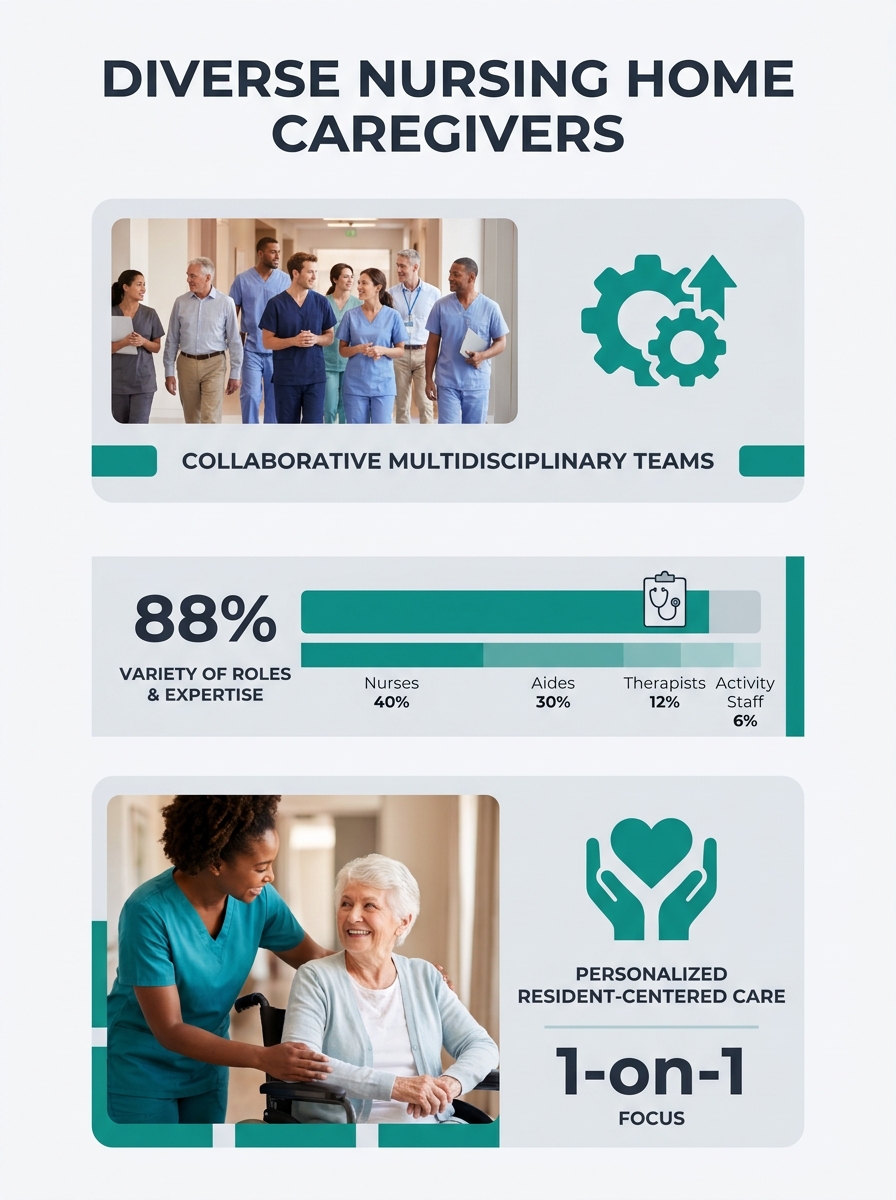
At A.G. Rhodes, which operates three nursing homes in the Atlanta area, immigrants make up approximately 40 percent of staff and represent workers from about three dozen countries. “We feel completely beat up right now,” said Deke Cateau, CEO of A.G. Rhodes and an immigrant from Trinidad and Tobago, in an interview with industry publication McKnight’s. “The pipeline is getting smaller and smaller.”
Facilities Report Overnight Staffing Gaps and Service Reductions
The termination of Temporary Protected Status protections means workers can receive notice of their changed status with less than 24 hours of warning, leaving employers to fill gaps overnight. Some legally authorized workers have stopped coming to work even before their documents expire, paralyzed by confusion and fear, creating staffing losses that exceed those directly attributable to deportation.
Goodwin Living, a nonprofit senior care provider in the Washington, D.C., area, has limited hospice and certified home health service offerings not for lack of patient demand, but for lack of qualified staff to deliver care.
In New Rochelle, New York, Mark Sanchez, chief operating officer of United Hebrew, described the pipeline of international nursing talent shrinking dramatically, with qualified nurses increasingly choosing Canada and Germany over the United States.
Geographic Concentration Creates Regional Disparities
Nursing homes in states with high concentrations of immigrant care workers, including Florida, New York, Georgia, California, New Jersey, Maryland, Wisconsin, Virginia, and Minnesota, are experiencing the most immediate staffing effects. Facilities that have historically recruited from Haitian, Cuban, Venezuelan, Nicaraguan, and Central American communities face disproportionate losses.
The workforce impact carries direct care consequences. Research published by the Centers for Medicare & Medicaid Services and multiple peer-reviewed studies have established consistent connections between short-staffing and worsened patient outcomes: higher rates of pressure ulcers, more frequent falls, more medication errors, higher rates of hospitalizations, and increased infections.
“The impact is not theoretical or long term; it is immediate,” said Amanda Mead, director of workforce policy for LeadingAge, the national association representing nonprofit aging services providers. “When legally authorized workers lose status or face sudden changes in eligibility, providers are forced to fill gaps overnight.”
Research Links Immigration Restrictions to Care Access Losses
Research published by Harvard and MIT economists found that every 1,000 additional immigrants in a metro area leads to approximately 173 additional healthcare workers, including 96 aides, nurses, and doctors. The same research estimated that restricting immigration could cost thousands of American seniors their lives annually through deteriorating care access.
The enforcement actions come as the aging Baby Boomer generation drives demand for long-term care to a generational peak, creating a collision between rising need and contracting workforce supply.
What This Means for Owners
Operators in states with high immigrant worker concentrations face immediate pressure to stabilize care delivery and maintain census levels. Facilities that have relied on TPS-authorized workers for certified nursing assistant, housekeeping, and direct care roles should audit current staff documentation status and build contingency staffing plans for sudden losses.
The workforce pipeline challenge demands both short-term gap-filling and longer-term recruitment strategy shifts. Facilities may need to expand recruitment beyond traditional channels, increase starting wages to compete for a smaller domestic worker pool, or accelerate partnerships with clinical training programs that can build local talent pipelines. Marketing messaging that emphasizes employee experience and career development becomes more critical when every qualified applicant has multiple options.
Owners should also monitor policy developments at the federal level that could restore work authorization for currently affected populations or create new pathways for healthcare workers. In the interim, transparent communication with families about staffing realities and care delivery impacts protects trust and manages expectations during a period of industry-wide constraint.