
Argentum and LifeLoop published a report May 12 positioning social wellness as essential health infrastructure, citing peer-reviewed research that senior living residents incur approximately $340 lower per-member-per-month healthcare costs and experience 18 percent fewer hospitalizations compared to peers aging in place, according to the organizations.
The report, titled “The Case for Social Wellness: Evidence, Impact, and Implications for Senior Living, Healthcare, and Policy,” translates the monthly cost differential into more than $150,000 in potential annual savings per community based on average resident counts. The document was developed with a cross-industry task force of senior living operators, healthcare leaders, technology providers, and policy experts.
For senior care marketers, the findings offer quantifiable talking points to address families’ cost concerns and position communities as health-infrastructure investments rather than lifestyle expenses. The hospitalization reduction and cost data give referral partners—discharge planners, geriatric care managers, insurance navigators—concrete outcomes to reference when steering prospects toward senior living.
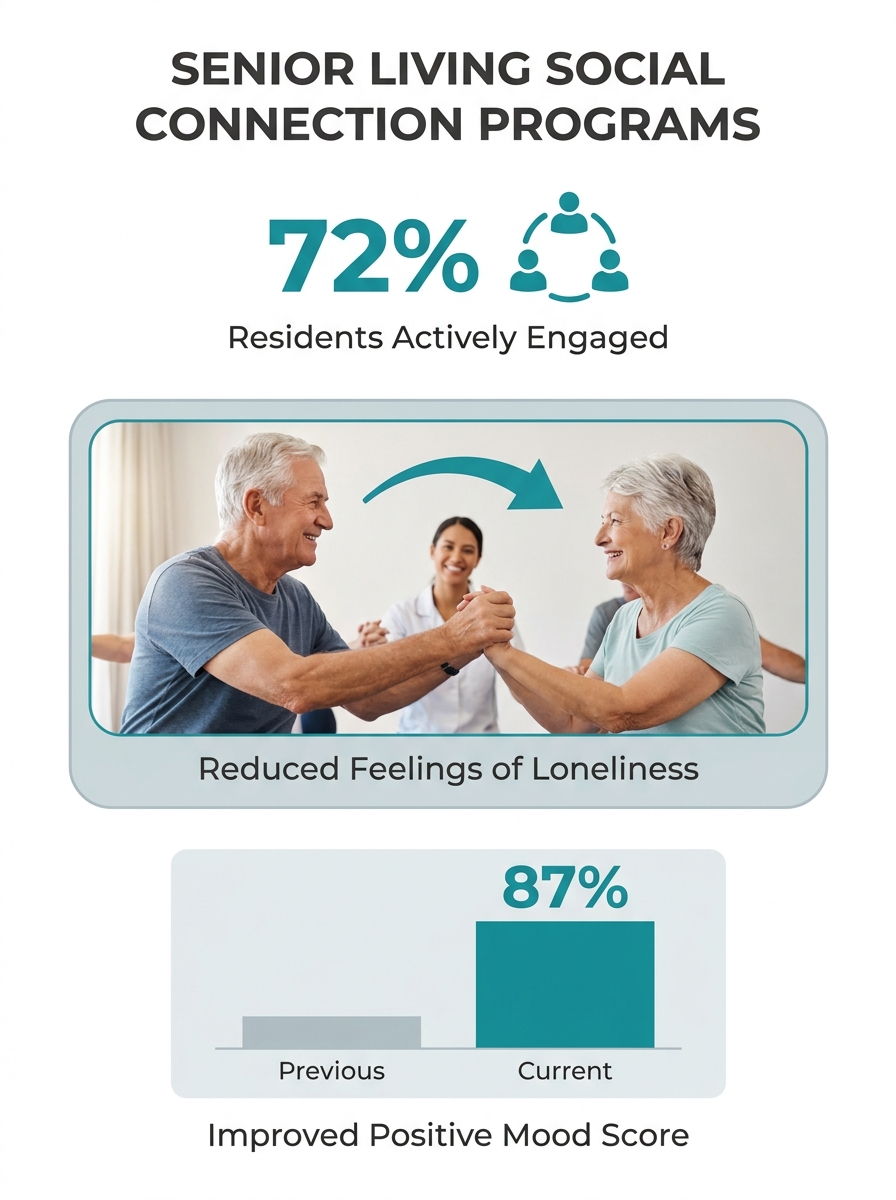
Research Links Social Connection to Survival and Cognitive Health
The report cites multiple peer-reviewed studies documenting that social connection improves survival rates by 50 percent and reduces dementia risk by 38 percent. Dr. Lydia Nguyen, principal researcher at LifeLoop, stated that connection, purpose, and belonging are closely tied to longevity, cognitive health, emotional well-being, and healthcare utilization, yet these factors remain overlooked in conventional care frameworks.
LifeLoop operates an engagement and wellness platform serving more than 4,700 senior living communities across North America. Argentum, the report’s co-author, represents approximately 75 percent of the U.S. senior living industry through its member companies and state partners.
James Balda, CEO of Argentum, noted that senior living communities have long supported social connection but lack consistent measurement frameworks to demonstrate impact. “Senior living is playing an increasingly important role in value-based care,” Balda said, adding that data showing fewer hospitalizations and lower costs can help create a more complete picture of healthcare value.
Marketing and Reputation Implications for Occupancy Teams
The $340 monthly cost differential gives admission coordinators a direct counter to families who dismiss senior living as “too expensive.” The figure represents medical cost avoidance—fewer emergency department visits, shorter hospital stays, reduced readmissions—that compounds over a resident’s tenure. Admission teams can frame the community fee as net-neutral or net-positive when medical savings are factored in.
The 18-percent hospitalization reduction supplies a concrete outcome for Google Business Profile posts, community websites, and referral partner presentations. Families researching senior living often fixate on amenities and activities without connecting those offerings to health outcomes. The report’s findings let marketers reposition social programming as clinical intervention, not entertainment.
For communities competing in saturated markets, the data supports differentiation around whole-person wellness models that integrate social connection into care plans. Families choose care facilities based on trust signals, and third-party research citations carry more weight than unsubstantiated claims in community brochures.
Policy Roadmap Targets Value-Based Care Integration
The report outlines recommendations for operators, healthcare partners, technology providers, and policymakers to operationalize social wellness at scale. Recommendations include developing standardized measurement tools for social wellness outcomes, integrating social health data into electronic health records, and aligning reimbursement structures to recognize non-clinical interventions that reduce hospitalizations.
Argentum and LifeLoop called for cross-industry collaboration to elevate social wellness within value-based care frameworks. The organizations noted that senior living communities already deliver social wellness for millions of older adults but that the impact remains largely invisible without consistent measurement and reporting infrastructure.
The full report is available for download from Argentum and LifeLoop websites. Both organizations indicated the document is intended for use by senior living operators, healthcare systems, insurers, and government agencies evaluating older-adult care models.
The Takeaway
This report hands senior living marketers defensible cost and outcome data for two of the hardest conversations in admissions: why the monthly fee is justified and whether social programming delivers measurable health benefits. The $340 monthly healthcare cost differential—extrapolated to $150,000 annual savings per community—gives families and referral sources a concrete figure to weigh against the community’s monthly rate, reframing the expense as a net investment in medical cost avoidance.
The 18-percent hospitalization reduction supplies a trust signal that goes beyond amenity lists and stock promises of “quality care.” Communities can embed these figures in Google Business Profile posts, referral partner presentations, and website subpages explaining why families choose care facilities based on trust signals rather than feature checklists. For admission coordinators fielding price objections, the data offers a quantified rebuttal that shifts the conversation from monthly cost to total cost of care.
Operators should incorporate the report’s findings into sales training scripts, referral partner materials, and review-response templates. The peer-reviewed citations give marketing claims third-party validation, which carries weight with families researching multiple communities and referral sources managing caseloads. As value-based care models expand, positioning social wellness as essential health infrastructure aligns senior living with healthcare’s reimbursement trajectory rather than leaving it categorized as elective housing.